Wallace Helen M
GeneWatch UK, The Mill House, Tideswell, Buxton, Derbyshire, SK17 8LN, UK.
Theor Biol Med Model. 2006 Oct 9;3:35. doi: 10.1186/1742-4682-3-35.
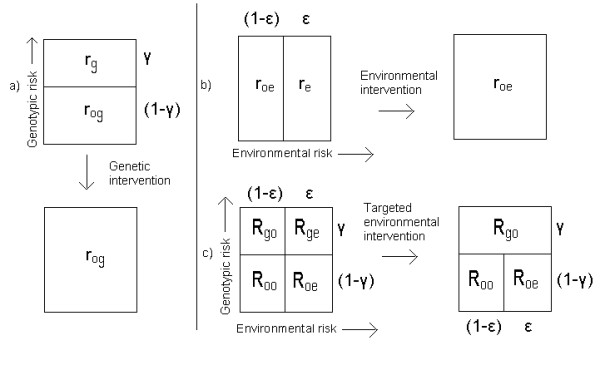
The potential public health benefits of targeting environmental interventions by genotype depend on the environmental and genetic contributions to the variance of common diseases, and the magnitude of any gene-environment interaction. In the absence of prior knowledge of all risk factors, twin, family and environmental data may help to define the potential limits of these benefits in a given population. However, a general methodology to analyze twin data is required because of the potential importance of gene-gene interactions (epistasis), gene-environment interactions, and conditions that break the 'equal environments' assumption for monozygotic and dizygotic twins.
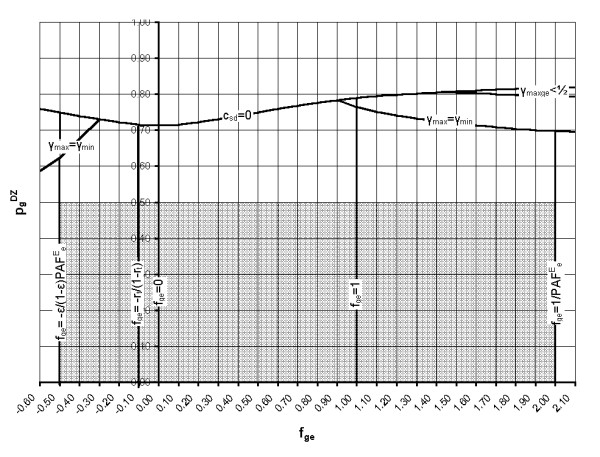
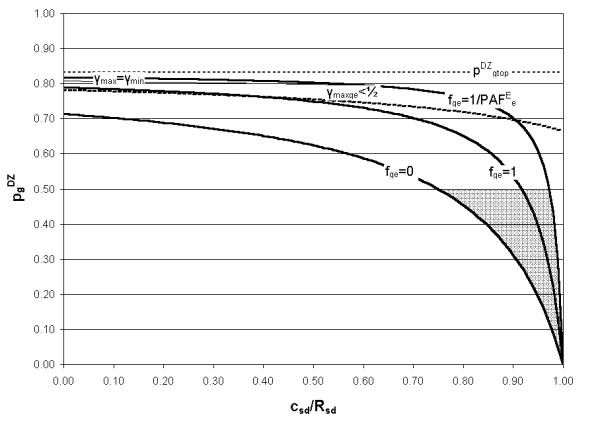
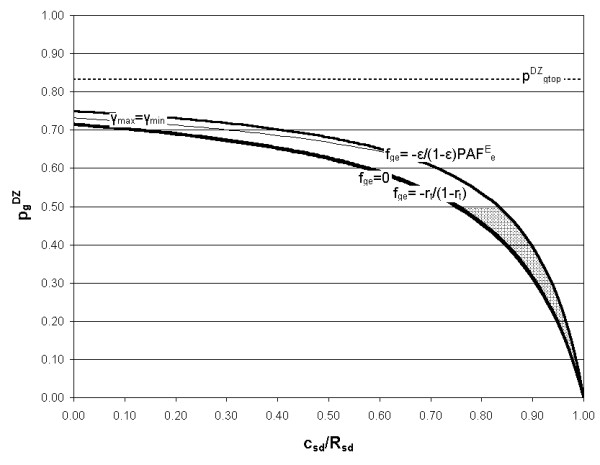
A new model for gene-gene and gene-environment interactions is developed that abandons the assumptions of the classical twin study, including Fisher's (1918) assumption that genes act as risk factors for common traits in a manner necessarily dominated by an additive polygenic term. Provided there are no confounders, the model can be used to implement a top-down approach to quantifying the potential utility of genetic prediction and prevention, using twin, family and environmental data. The results describe a solution space for each disease or trait, which may or may not include the classical twin study result. Each point in the solution space corresponds to a different model of genotypic risk and gene-environment interaction.
The results show that the potential for reducing the incidence of common diseases using environmental interventions targeted by genotype may be limited, except in special cases. The model also confirms that the importance of an individual's genotype in determining their risk of complex diseases tends to be exaggerated by the classical twin studies method, owing to the 'equal environments' assumption and the assumption of no gene-environment interaction. In addition, if phenotypes are genetically robust, because of epistasis, a largely environmental explanation for shared sibling risk is plausible, even if the classical heritability is high. The results therefore highlight the possibility--previously rejected on the basis of twin study results--that inherited genetic variants are important in determining risk only for the relatively rare familial forms of diseases such as breast cancer. If so, genetic models of familial aggregation may be incorrect and the hunt for additional susceptibility genes could be largely fruitless.
根据基因型进行环境干预对公众健康的潜在益处,取决于环境和基因对常见疾病变异的贡献,以及任何基因 - 环境相互作用的程度。在缺乏所有风险因素的先验知识时,双胞胎、家庭和环境数据可能有助于确定在特定人群中这些益处的潜在限度。然而,由于基因 - 基因相互作用(上位性)、基因 - 环境相互作用以及打破同卵双胞胎和异卵双胞胎“同等环境”假设的情况可能具有重要意义,因此需要一种通用的方法来分析双胞胎数据。
开发了一种新的基因 - 基因和基因 - 环境相互作用模型,该模型摒弃了经典双胞胎研究的假设,包括费希尔(1918年)提出的基因作为常见性状风险因素的作用必然由加性多基因项主导的假设。如果不存在混杂因素,该模型可用于采用自上而下的方法,利用双胞胎、家庭和环境数据来量化遗传预测和预防的潜在效用。结果描述了每种疾病或性状的一个解空间,该解空间可能包含也可能不包含经典双胞胎研究结果。解空间中的每个点对应于不同的基因型风险和基因 - 环境相互作用模型。
结果表明,除特殊情况外,通过基于基因型的环境干预降低常见疾病发病率的潜力可能有限。该模型还证实,由于“同等环境”假设和无基因 - 环境相互作用的假设,经典双胞胎研究方法往往会夸大个体基因型在确定其患复杂疾病风险中的重要性。此外,如果由于上位性,表型具有遗传稳健性,那么即使经典遗传率很高,对同胞共享风险的很大一部分基于环境的解释也是合理的。因此,结果突出了一种可能性——这种可能性此前基于双胞胎研究结果而被否定——即遗传变异仅在确定相对罕见的家族性疾病(如乳腺癌)的风险中才重要。如果是这样,家族聚集的遗传模型可能是错误的,寻找其他易感基因可能基本上是徒劳的。