Elmore Susan A
Laboratory of Experimental Pathology, National Institute of Environmental Health Sciences/NIH, 111 Alexander Drive, Research Triangle Park, NC 27709, USA.
Toxicol Pathol. 2006;34(5):648-55. doi: 10.1080/01926230600865523.
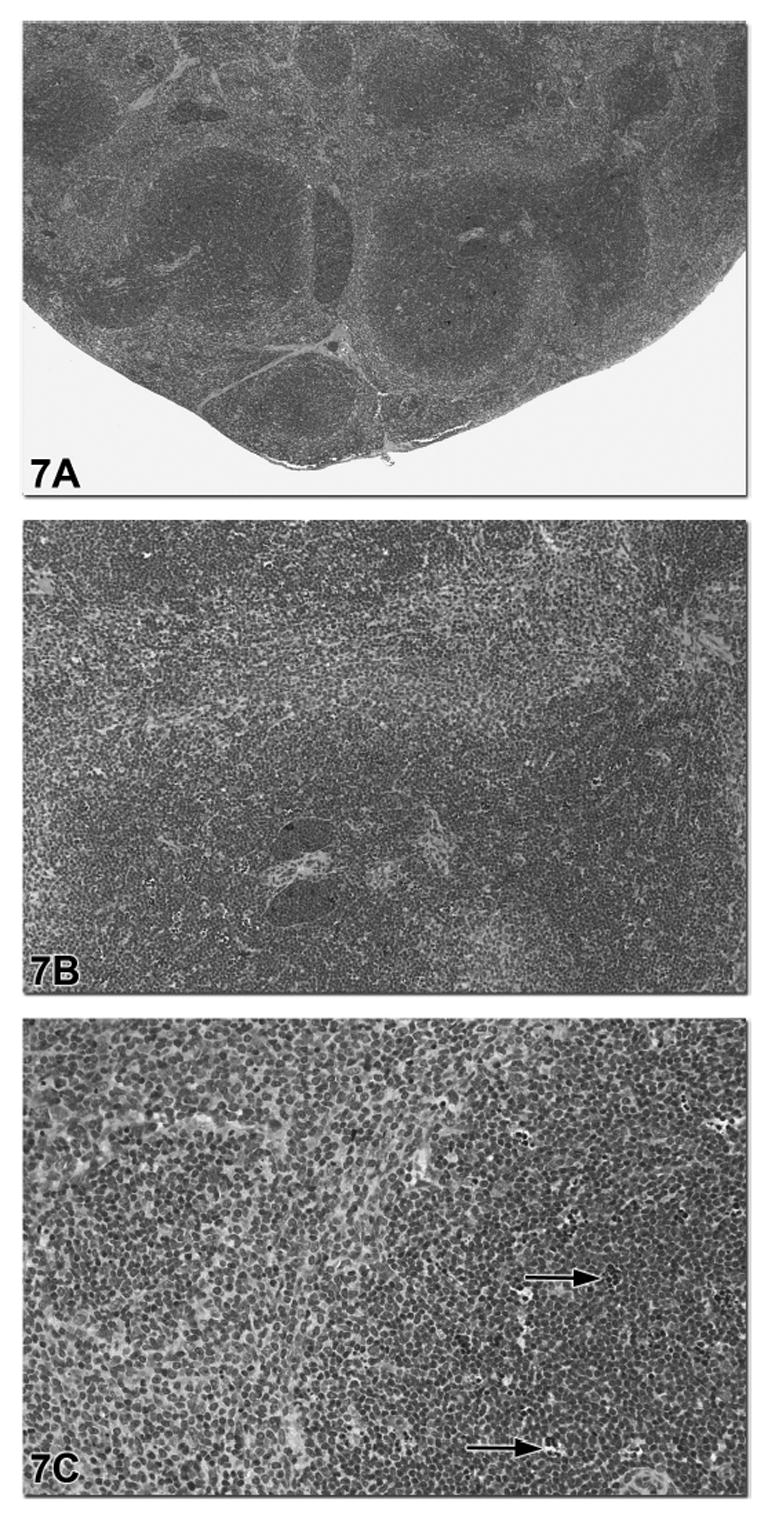
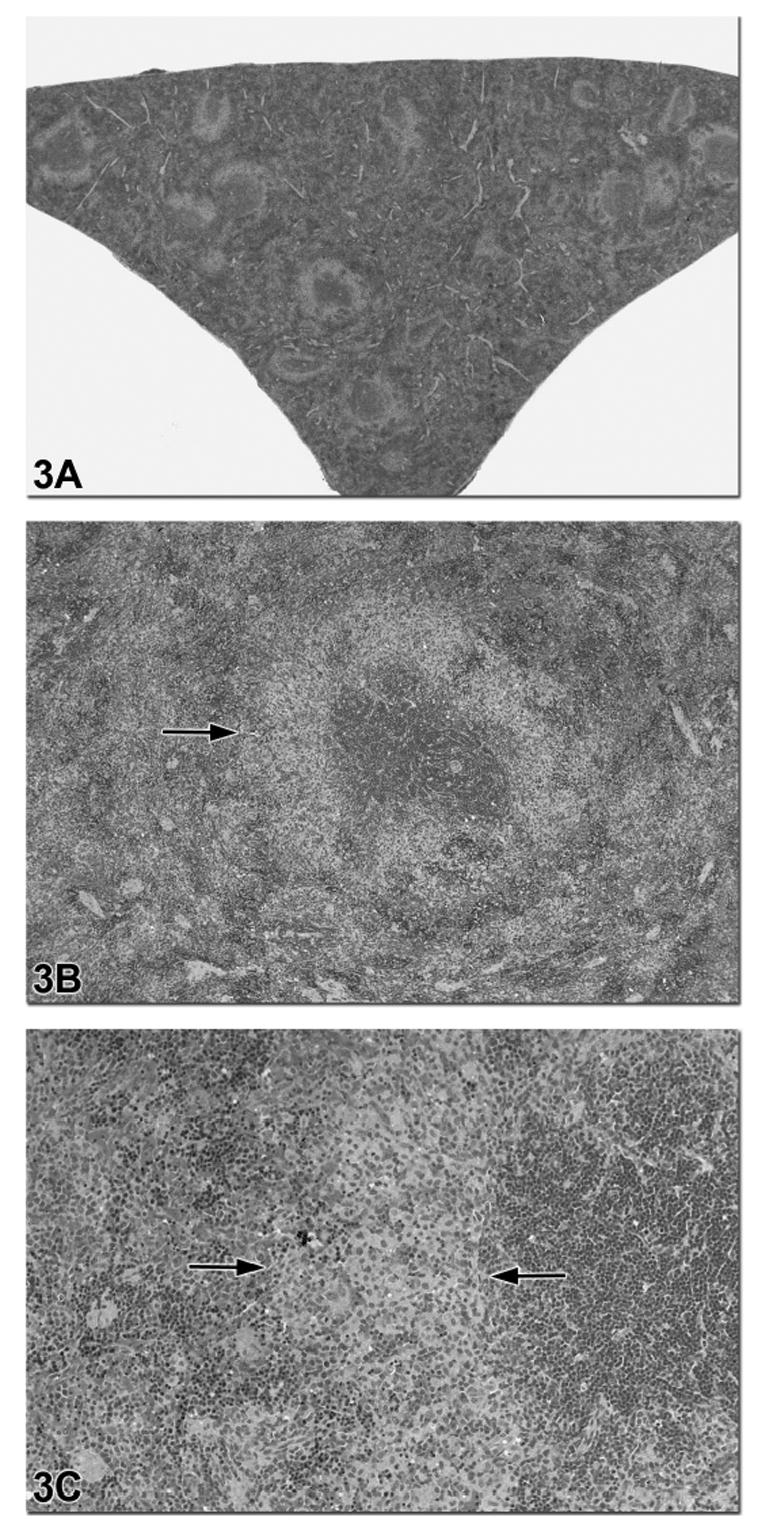
The spleen is the largest secondary lymphoid organ, is considered the draining site for compounds that are administered intravenously, and is therefore considered an important organ to evaluate for treatment-related lesions. Due to the presence of B and T lymphocytes, the immunotoxic effects of xenobiotics or their metabolites on these cell populations may be reflected in the spleen. Therefore it is one of the recommended organs to evaluate for enhanced histopathology of the immune system. The two major functional zones of the spleen are the hematogenous red pulp and the lymphoid white pulp (periarteriolar sheaths, follicles and marginal zones). For enhanced histopathology, these splenic compartments should be evaluated separately for changes in size and cellularity, and descriptive rather than interpretive terminology should be used to characterize any changes (Haley et al., 2005). Moreover, germinal center development within the lymphoid follicles should be noted as increased or decreased.
脾脏是最大的次级淋巴器官,被认为是静脉给药化合物的引流部位,因此被视为评估治疗相关病变的重要器官。由于存在B淋巴细胞和T淋巴细胞,外来化合物或其代谢产物对这些细胞群体的免疫毒性作用可能在脾脏中得到体现。因此,它是推荐用于评估免疫系统组织病理学增强的器官之一。脾脏的两个主要功能区是血源性红髓和淋巴性白髓(动脉周围鞘、滤泡和边缘区)。为了增强组织病理学评估,应分别评估这些脾区的大小和细胞数量变化,并且应用描述性而非解释性术语来描述任何变化(Haley等人,2005年)。此外,应注意淋巴滤泡内生发中心的发育是增加还是减少。