Laudenbach D E, Ehrhardt D, Green L, Grossman A
Department of Plant Biology, Carnegie Institution of Washington, Stanford, California 94305.
J Bacteriol. 1991 May;173(9):2751-60. doi: 10.1128/jb.173.9.2751-2760.1991.
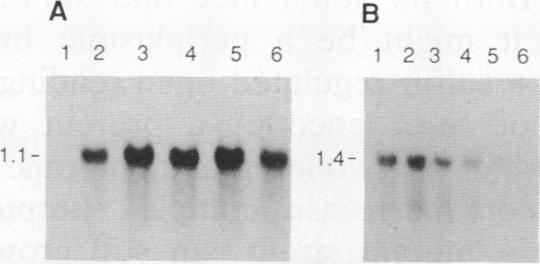
During sulfur-limited growth, the cyanobacterium Synechococcus sp. strain PCC 7942 loses most of its photosynthetic pigments and develops an increased capacity to acquire sulfate. Sulfur deprivation also triggers the synthesis of several soluble polypeptides. We have isolated a prominent polypeptide of 33 kDa that accumulates specifically under sulfur-limiting conditions. This polypeptide was localized to the periplasmic space. The gene for this protein (designated rhdA) was isolated and discovered to lie within a region of the Synechococcus sp. strain PCC 7942 genome that encodes components of the sulfate permease system. The mRNA for the 33-kDa protein accumulates to high levels within an hour after the cells are deprived of sulfur and drops rapidly when sulfur is added back to the cultures. The amino acid sequence of the protein has similarity to bovine liver rhodanese, an enzyme that transfers the thiol group of thiosulfate to a thiophilic acceptor molecule, and a rhodaneselike protein of Saccharopolyspora erythraea. A strain in which rhdA was interrupted by a drug resistance marker exhibited marginally lower levels of rhodanese activity but was still capable of efficiently utilizing a variety of inorganic sulfur sources. The possible role of this protein in the transport of specific sulfur compounds is discussed.
在硫限制生长期间,蓝藻聚球藻属菌株PCC 7942失去大部分光合色素,并增强了获取硫酸盐的能力。硫缺乏还会引发几种可溶性多肽的合成。我们分离出一种33 kDa的显著多肽,它在硫限制条件下特异性积累。这种多肽定位于周质空间。该蛋白质的基因(命名为rhdA)被分离出来,发现位于聚球藻属菌株PCC 7942基因组中编码硫酸盐通透酶系统组分的区域内。在细胞被剥夺硫后一小时内,33 kDa蛋白质的mRNA积累到高水平,而当向培养物中重新添加硫时,其迅速下降。该蛋白质的氨基酸序列与牛肝硫氰酸酶(一种将硫代硫酸盐的硫醇基团转移到亲硫受体分子的酶)以及糖多孢红霉菌的一种类硫氰酸酶蛋白质相似。一株rhdA被耐药标记中断的菌株表现出略低水平的硫氰酸酶活性,但仍能够有效利用多种无机硫源。本文讨论了该蛋白质在特定硫化合物运输中的可能作用。