Nguyen Trung C, Carcillo Joseph A
Texas Children's Hospital, 6621 Fannin St MC2-3450, Houston, TX 770330, USA.
Crit Care. 2006;10(6):235. doi: 10.1186/cc5064.
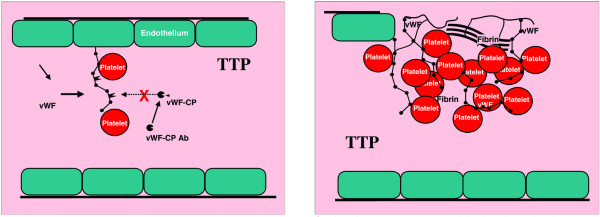
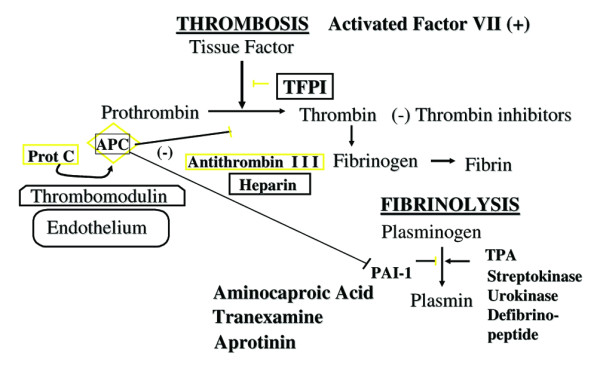
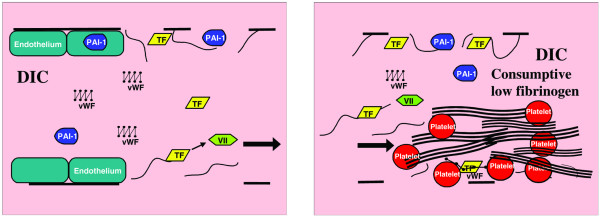
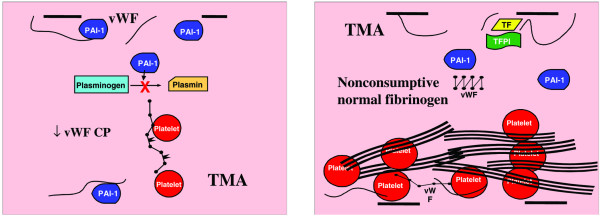
New onset thrombocytopenia and multiple organ failure (TAMOF) presages poor outcome in critical illness. Patients who resolve thrombocytopenia by day 14 are more likely to survive than those who do not. Patients with TAMOF have a spectrum of microangiopathic disorders that includes thrombotic thrombocytopenic purpura (TTP), disseminated intravascular coagulation (DIC) and secondary thrombotic microanigiopathy (TMA). Activated protein C is effective in resolving fibrin-mediated thrombosis (DIC); however, daily plasma exchange is the therapy of choice for removing ADAMTS 13 inhibitors and replenishing ADAMTS 13 activity which in turn resolves platelet: von Willebrand Factor mediated thrombosis (TTP/secondary TMA).
新发血小板减少症和多器官功能衰竭(TAMOF)预示着危重病患者预后不良。在第14天时血小板减少症得到缓解的患者比未缓解的患者更有可能存活。TAMOF患者存在一系列微血管病性疾病,包括血栓性血小板减少性紫癜(TTP)、弥散性血管内凝血(DIC)和继发性血栓性微血管病(TMA)。活化蛋白C对解决纤维蛋白介导的血栓形成(DIC)有效;然而,每日血浆置换是去除ADAMTS 13抑制剂并补充ADAMTS 13活性的首选治疗方法,这反过来又能解决血小板:血管性血友病因子介导的血栓形成(TTP/继发性TMA)。