Cohen Patricia, Chen Henian, Crawford Thomas N, Brook Judith S, Gordon Kathy
Department of Epidemiology, New York State Psychiatric Institute, New York, NY 10032, USA.
Drug Alcohol Depend. 2007 Apr;88 Suppl 1(Suppl 1):S71-84. doi: 10.1016/j.drugalcdep.2006.12.012. Epub 2007 Jan 16.
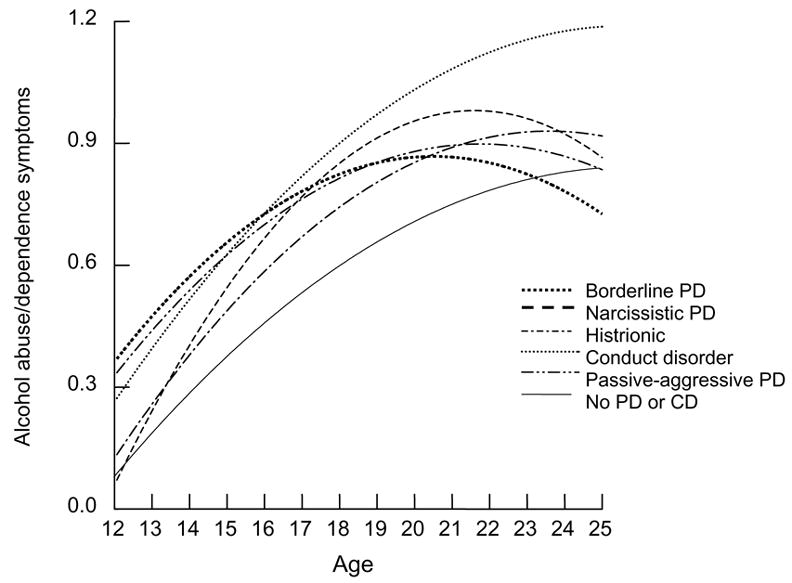
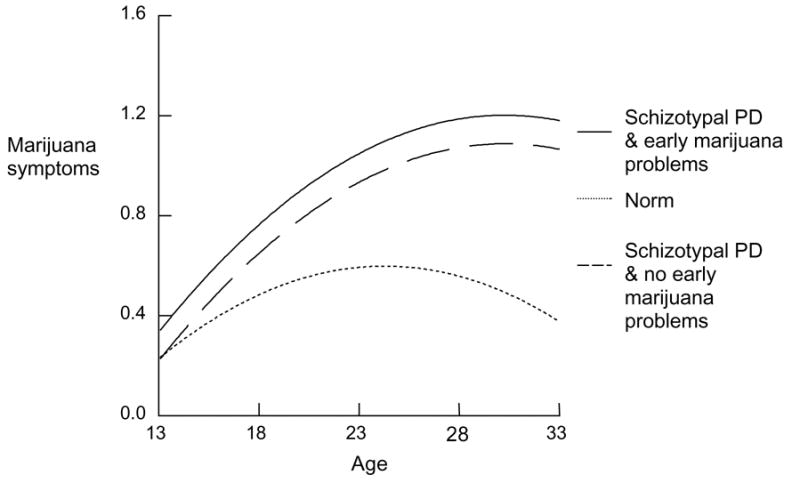
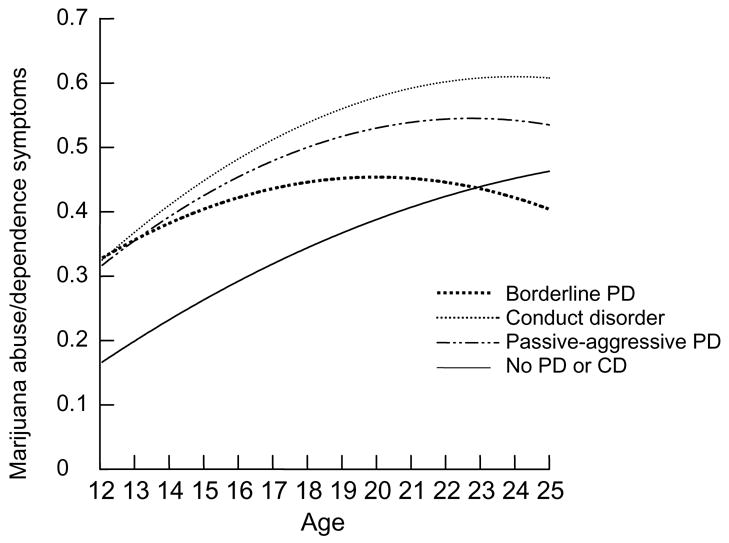
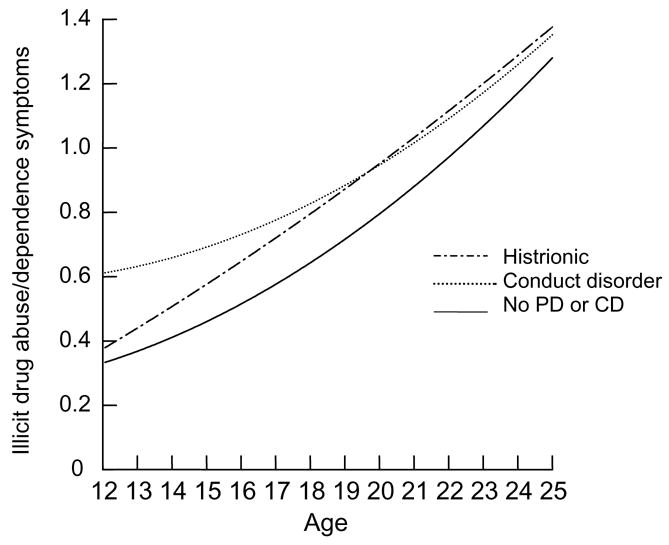
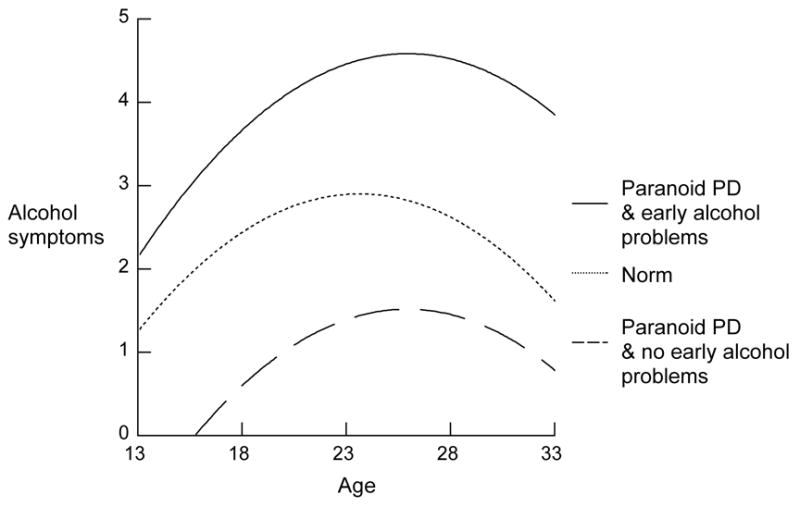
Assessments of personality disorder (PD) and conduct disorder (CD) in a random community sample at mean age 13 were employed to predict subsequent substance abuse disorder (SUD), trajectories of symptoms of abuse or dependence on alcohol, marijuana, or other illicit substances, and hazard of initiating marijuana use over the subsequent decade. Personality disorders and conduct disorder were associated with diagnoses and symptoms of SUDs in every model and their effects were independent of correlated family risks, participant sex, and other Axis I disorders. Specific elevated PD symptoms in early adolescence were also associated with differential trajectories of already initiated SUD symptoms as well as elevated risk for future onset of SUD symptoms. For several models the greatest of these effects were shown for borderline PD and for conduct disorder, the predecessor of adult antisocial PD. Passive-aggressive PD also showed independent elevation effects on substance use symptoms for alcohol and marijuana. Analyses over 30 years suggest that Cluster B PD (borderline, histrionic, narcissistic) are independent risks for development of SUD and warrant clinical attention.
对平均年龄为13岁的随机社区样本进行人格障碍(PD)和品行障碍(CD)评估,以预测随后的物质使用障碍(SUD)、对酒精、大麻或其他非法物质的滥用或依赖症状轨迹,以及在随后十年开始使用大麻的风险。在每个模型中,人格障碍和品行障碍都与物质使用障碍的诊断和症状相关,并且它们的影响独立于相关的家庭风险、参与者性别和其他轴I障碍。青春期早期特定升高的人格障碍症状也与已开始的物质使用障碍症状的不同轨迹以及未来物质使用障碍症状发作的风险升高相关。在几个模型中,这些影响中最大的是边缘型人格障碍和品行障碍,后者是成人反社会人格障碍的前身。被动攻击型人格障碍对酒精和大麻的物质使用症状也显示出独立的升高影响。超过30年的分析表明,B类人格障碍(边缘型、表演型、自恋型)是物质使用障碍发展的独立风险因素,值得临床关注。