French K M, Barnabas R V, Lehtinen M, Kontula O, Pukkala E, Dillner J, Garnett G P
Department of Infectious Disease Epidemiology, Imperial College, Norfolk Place, Paddington, London, W2 1PG, UK.
Br J Cancer. 2007 Feb 12;96(3):514-8. doi: 10.1038/sj.bjc.6603575. Epub 2007 Jan 23.
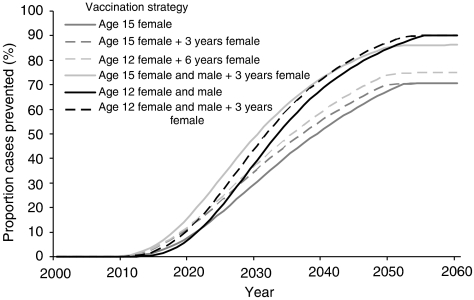
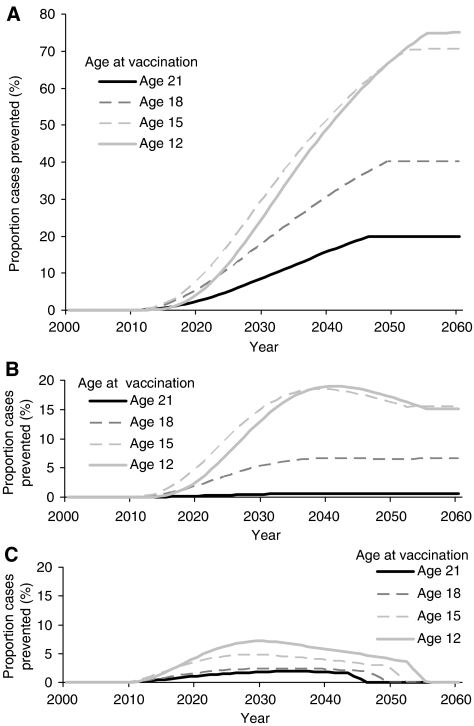
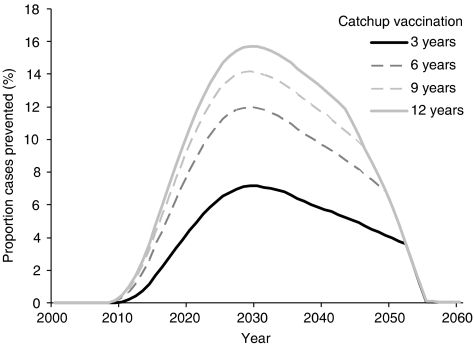
Phase III trials have demonstrated the efficacy of human papillomavirus (HPV) vaccines in preventing transient and persistent high-risk (hr) HPV infection and precancerous lesions. A mathematical model of HPV type 16 infection and progression to cervical cancer, parameterised to represent the infection in Finland, was used to explore the optimal age at vaccination and pattern of vaccine introduction. In the long term, the annual proportion of cervical cancer cases prevented is much higher when early adolescents are targeted. Vaccinating against hr HPV generates greater long-term benefits if vaccine is delivered before the age at first sexual intercourse. However, vaccinating 12 year olds delays the predicted decrease in cervical cancer, compared to vaccinating older adolescents or young adults. Vaccinating males as well as females has more impact on the proportion of cases prevented when vaccinating at younger ages. Implementing catch-up vaccination at the start of a vaccination programme would increase the speed with which a decrease in HPV and cervical cancer incidence is observed.
III期试验已证明人乳头瘤病毒(HPV)疫苗在预防短暂性和持续性高危(hr)HPV感染及癌前病变方面的有效性。利用一个针对16型HPV感染及发展为宫颈癌的数学模型(该模型的参数代表芬兰的感染情况)来探索最佳接种年龄和疫苗引入模式。从长远来看,若将目标设定为青春期早期少女,每年预防的宫颈癌病例比例会高得多。如果在首次性行为年龄之前接种针对hr HPV的疫苗,会产生更大的长期益处。然而,与给年龄较大的青少年或年轻成年人接种疫苗相比,给12岁的儿童接种疫苗会延迟宫颈癌预测发病率的下降。在较年轻年龄段接种疫苗时,给男性和女性同时接种对预防病例的比例有更大影响。在疫苗接种计划开始时实施补种疫苗将加快观察到HPV和宫颈癌发病率下降的速度。