Das Debanu, Xu Qian Steven, Lee Jonas Y, Ankoudinova Irina, Huang Candice, Lou Yun, DeGiovanni Andy, Kim Rosalind, Kim Sung-Hou
Berkeley Structural Genomics Center, Physical Biosciences Division, Lawrence Berkeley National Laboratory, USA.
J Struct Biol. 2007 Jun;158(3):494-502. doi: 10.1016/j.jsb.2006.12.004. Epub 2006 Dec 24.
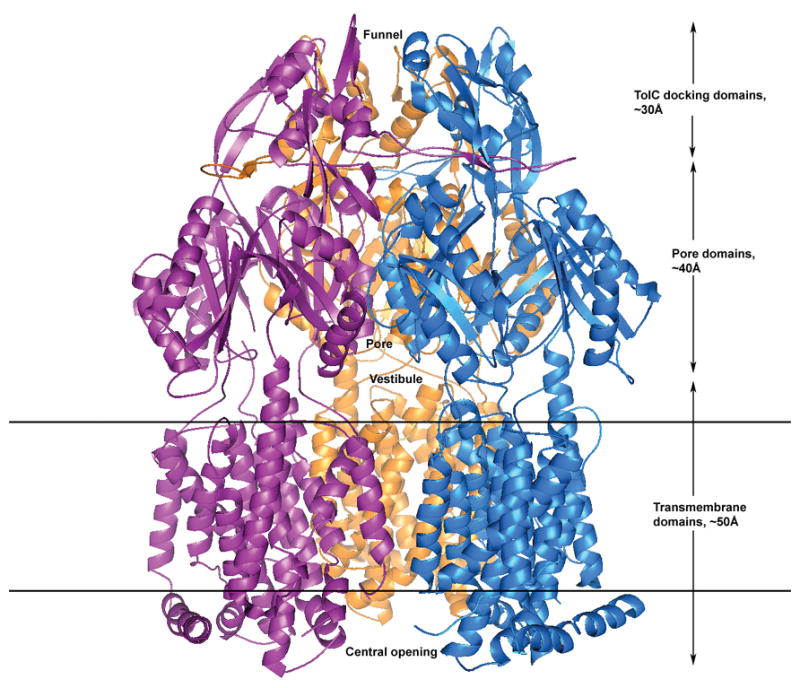
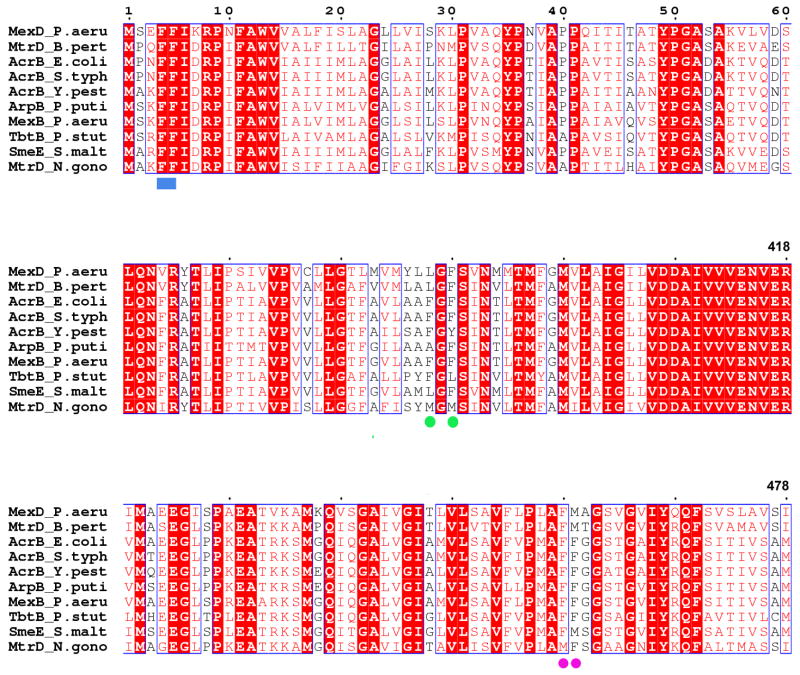
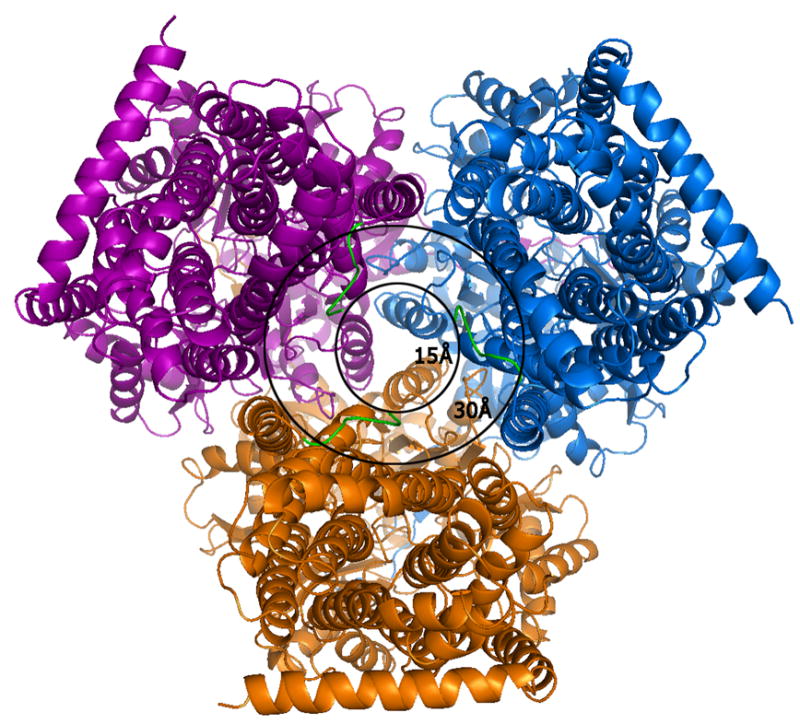
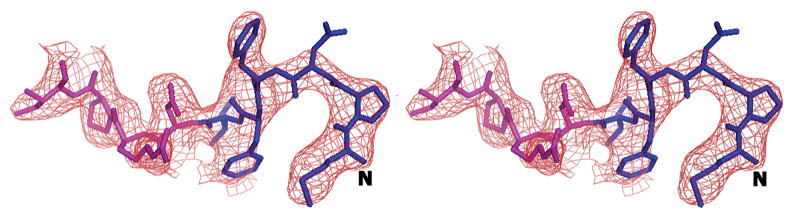
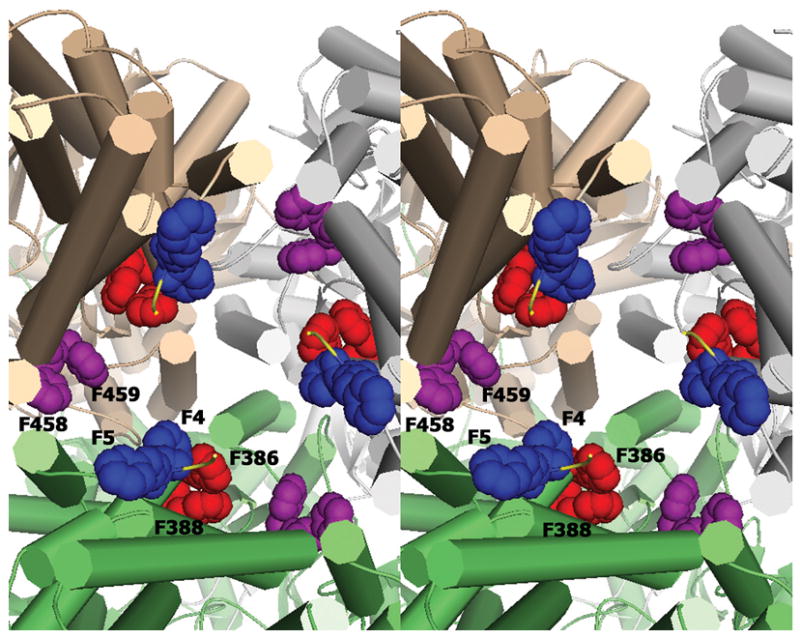
Crystal structures of the bacterial multidrug transporter AcrB in R32 and C2 space groups showing both symmetric and asymmetric trimeric assemblies, respectively, supplemented with biochemical investigations, have provided most of the structural basis for a molecular level understanding of the protein structure and mechanisms for substrate uptake and translocation carried out by this 114-kDa inner membrane protein. They suggest that AcrB captures ligands primarily from the periplasm. Substrates can also enter the inner cavity of the transporter from the cytoplasm, but the exact mechanism of this remains undefined. Analysis of the amino acid sequences of AcrB and its homologs revealed the presence of conserved residues at the N-terminus including two phenylalanines which may be exposed to the cytoplasm. Any potential role that these conserved residues may play in function has not been addressed by existing biochemical or structural studies. Since phenylalanine residues elsewhere in the protein have been implicated in ligand binding, we explored the structure of this N-terminal region to investigate structural determinants near the cytoplasmic opening that may mediate drug uptake. Our structure of AcrB in R32 space group reveals an N-terminus loop, reducing the diameter of the central opening to approximately 15 A as opposed to the previously reported value of approximately 30 A for crystal structures in this space group with disordered N-terminus. Recent structures of the AcrB in C2 space group have revealed a helical conformation of this N-terminus but have not discussed its possible implications. We present the crystal structure of AcrB that reveals the structure of the N-terminus containing the conserved residues. We hope that the structural information provides a structural basis for others to design further biochemical investigation of the role of this portion of AcrB in mediating cytoplasmic ligand discrimination and uptake.
细菌多药转运蛋白AcrB在R32和C2空间群中的晶体结构分别展示了对称和不对称三聚体组装,并辅以生化研究,为从分子水平理解这种114 kDa内膜蛋白的结构以及底物摄取和转运机制提供了大部分结构基础。这些结构表明,AcrB主要从周质捕获配体。底物也可以从细胞质进入转运蛋白的内腔,但其确切机制仍不明确。对AcrB及其同源物氨基酸序列的分析揭示了N端存在保守残基,包括两个可能暴露于细胞质的苯丙氨酸。现有生化或结构研究尚未探讨这些保守残基在功能中可能发挥的任何潜在作用。由于蛋白质其他部位的苯丙氨酸残基与配体结合有关,我们研究了该N端区域的结构,以探究靠近细胞质开口处可能介导药物摄取的结构决定因素。我们在R32空间群中得到的AcrB结构揭示了一个N端环,使中央开口的直径减小到约15 Å,而此前报道的该空间群中N端无序的晶体结构的值约为30 Å。最近在C2空间群中得到的AcrB结构揭示了该N端的螺旋构象,但未讨论其可能的影响。我们展示了AcrB的晶体结构,揭示了包含保守残基的N端结构。我们希望这些结构信息为其他人进一步开展生化研究提供结构基础,以探究AcrB这一部分在介导细胞质配体识别和摄取中的作用。