Koo Sung I, Noh Sang K
Department of Nutritional Sciences, University of Connecticut, Storrs, CT 06269-4017, USA.
J Nutr Biochem. 2007 Mar;18(3):179-83. doi: 10.1016/j.jnutbio.2006.12.005.
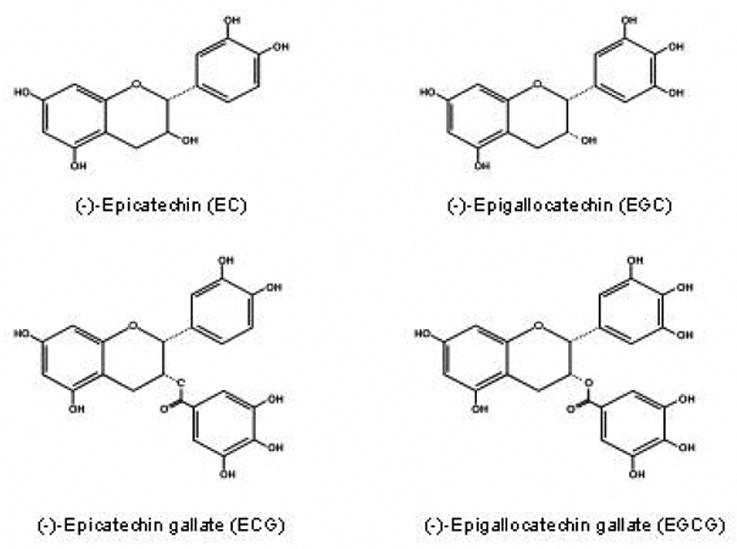
Animal and epidemiological studies suggest that green tea catechins may reduce the risk of cardiovascular diseases [e.g., coronary heart disease (CHD)]. The health benefit of green tea has been attributed to its antioxidant and anti-inflammatory properties; however, considerable evidence suggests that green tea and its catechins may reduce the risk of CHD by lowering the plasma levels of cholesterol and triglyceride. Although the mechanism underlying such effect of green tea is yet to be determined, it is evident from in vitro and in vivo studies that green tea or catechins inhibit the intestinal absorption of dietary lipids. Studies in vitro indicate that green tea catechins, particularly (-)-epigallocatechin gallate, interfere with the emulsification, digestion, and micellar solubilization of lipids, critical steps involved in the intestinal absorption of dietary fat, cholesterol, and other lipids. Based on the observations, it is likely that green tea or its catechins lower the absorption and tissue accumulation of other lipophilic organic compounds. The available information strongly suggests that green tea or its catechins may be used as safe and effective lipid-lowering therapeutic agents.
动物研究和流行病学研究表明,绿茶儿茶素可能降低心血管疾病(如冠心病)的风险。绿茶的健康益处归因于其抗氧化和抗炎特性;然而,大量证据表明,绿茶及其儿茶素可能通过降低血浆胆固醇和甘油三酯水平来降低冠心病风险。尽管绿茶产生这种作用的机制尚待确定,但体外和体内研究表明,绿茶或儿茶素会抑制膳食脂质的肠道吸收。体外研究表明,绿茶儿茶素,尤其是(-)-表没食子儿茶素没食子酸酯,会干扰脂质的乳化、消化和胶束增溶,这些是膳食脂肪、胆固醇和其他脂质肠道吸收的关键步骤。基于这些观察结果,绿茶或其儿茶素很可能会降低其他亲脂性有机化合物的吸收和组织蓄积。现有信息有力地表明,绿茶或其儿茶素可用作安全有效的降脂治疗药物。