
从实验台到病床的综述:急性呼吸窘迫综合征中的远端气道
Bench-to-bedside review: distal airways in acute respiratory distress syndrome.
作者信息
Jain Manu, Sznajder J Iasha
机构信息
Division of Pulmonary and Critical Care, Feinberg School of Medicine, Northwestern University, Chicago, IL 60611, USA.
出版信息
Crit Care. 2007;11(1):206. doi: 10.1186/cc5159.
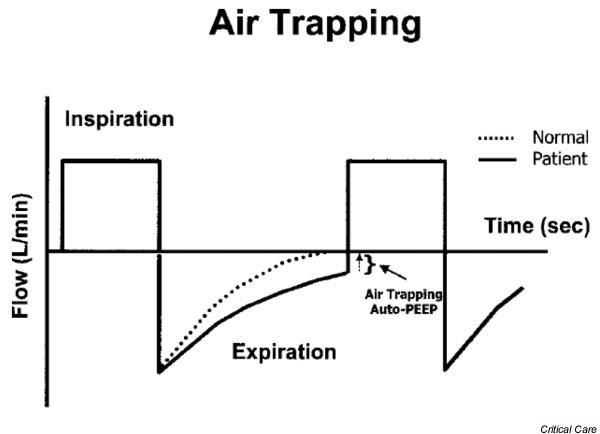
Distal airways are less than 2 mm in diameter, comprising a relatively large cross-sectional area that allows for slower, laminar airflow. The airways include both membranous bronchioles and gas exchange ducts, and have been referred to in the past as the 'quiet zone', in part because these structures were felt to contribute little to lung mechanics and in part because they were difficult to study directly. More recent data suggest that distal airway dysfunction plays a significant role in acute respiratory distress syndrome. In addition, injurious mechanical ventilation strategies may contribute to distal airway dysfunction. The presence of elevated airway resistance, intrinsic positive end-expiratory pressure or a lower inflection point on a pressure-volume curve of the respiratory system may indicate the presence of impaired distal airway function. There are no proven specific treatments for distal airway dysfunction, and protective ventilation strategies to minimize distal airway injury may be the best therapeutic approach at this time.
远端气道直径小于2毫米,其横截面积相对较大,可实现较慢的层流气流。这些气道包括膜性细支气管和气体交换管道,过去曾被称为“安静区”,部分原因是这些结构被认为对肺力学贡献不大,部分原因是它们难以直接研究。最新数据表明,远端气道功能障碍在急性呼吸窘迫综合征中起重要作用。此外,有害的机械通气策略可能导致远端气道功能障碍。气道阻力升高、内源性呼气末正压或呼吸系统压力-容积曲线上较低的拐点可能表明存在远端气道功能受损。目前尚无经证实的针对远端气道功能障碍的特异性治疗方法,采取保护性通气策略以尽量减少远端气道损伤可能是目前最佳的治疗方法。


 Zotero 插件