Villafuerte Blanca E Pelcastre, Gómez Laura L Tirado, Betancourt Alejandro Mohar, Cervantes Malaquías López
Centro de Investigación en Sistemas de Salud, Instituto Nacional de Salud Pública, Secretaría de Salud, México, Av, Universidad 655, Santa María Ahuacatitlán, C.P. 62508, Cuernavaca, Morelos, México.
Reprod Health. 2007 Mar 1;4:2. doi: 10.1186/1742-4755-4-2.
In 2002, cervical cancer was one of the leading causes of death in Mexico. Quantitative techniques allowed for the identification of socioeconomic, behavioral and biological characteristics that are part of its etiology. However such characteristics, are inadequate to explain sufficiently the role that emotions, family networks and socially-constructed categories such as gender play in the demand and utilization of health services for cervical cancer diagnosis and treatment and neither the timely undertaking of preventive actions, such as getting a PAP smear or seeking adequate and continuous treatment.
A qualitative study was carried out to analyze the role of different social and cultural factors in the timely detection of cervical cancer. As part of a multi-level, multi-method research effort, this particular study was based on individual interviews with women diagnosed with cervical cancer (identified as the "cases"), their female friends and relatives (identified as the "controls") and the cases' husbands.
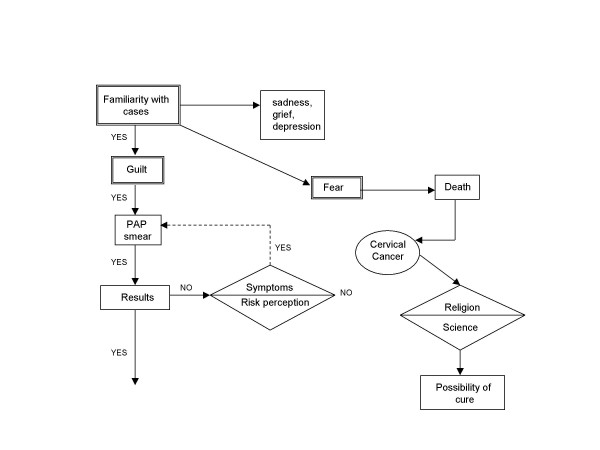
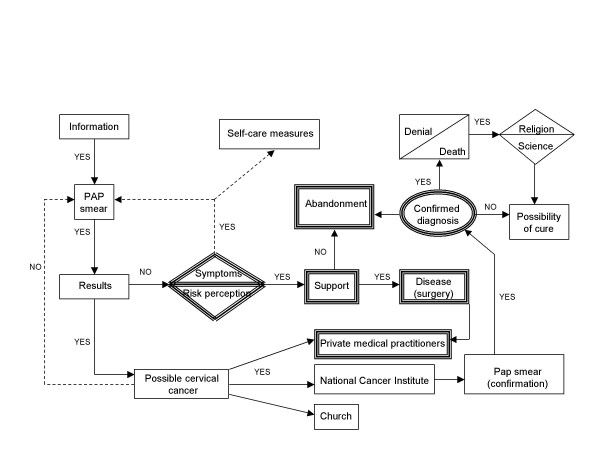
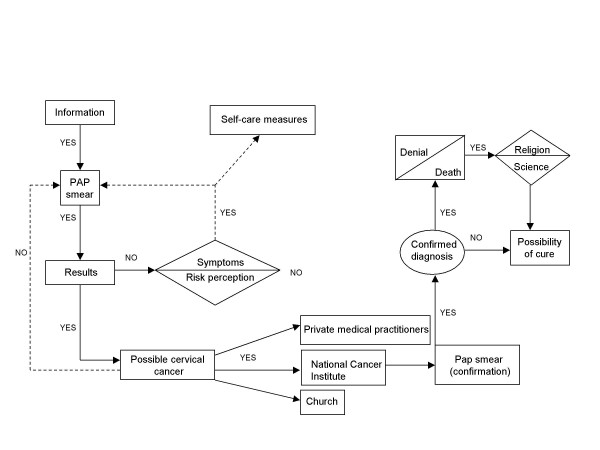
The results showed that both: denial and fear are two important components that regulate the behavior of both the women and their partners. Women with a small support network may have limited opportunities for taking action in favor of their own health and wellbeing.
Women tend not to worry about their health, in general and neither about cervical cancer in particular, as a consequence of their conceptualizations regarding their body and feminine identify - both of which are socially determined. Furthermore, it is necessary to improve the quality of information provided in health services.
2002年,宫颈癌是墨西哥主要死因之一。定量技术有助于识别其病因中的社会经济、行为和生物学特征。然而,这些特征不足以充分解释情绪、家庭网络以及诸如性别等社会建构类别在宫颈癌诊断和治疗的医疗服务需求及利用方面所起的作用,也无法解释诸如进行巴氏涂片检查或寻求充分持续治疗等预防行动未能及时开展的原因。
开展了一项定性研究,以分析不同社会和文化因素在宫颈癌早期检测中的作用。作为多层次、多方法研究工作的一部分,这项具体研究基于对被诊断为宫颈癌的女性(被认定为“病例”)、她们的女性朋友和亲属(被认定为“对照”)以及病例的丈夫进行的个人访谈。
结果显示,否认和恐惧是调节女性及其伴侣行为的两个重要因素。支持网络较小的女性采取有利于自身健康和福祉行动的机会可能有限。
总体而言,女性往往不担心自己的健康,尤其不担心宫颈癌,这是由于她们对自己身体和女性身份的认知——而这两者都是由社会决定的。此外,有必要提高医疗服务所提供信息的质量。