Falcón-Pérez Juan M, Dell'Angelica Esteban C
Department of Human Genetics, David Geffen School of Medicine, University of California, Los Angeles, CA 90095, USA.
Exp Cell Res. 2007 Apr 15;313(7):1473-83. doi: 10.1016/j.yexcr.2007.02.006. Epub 2007 Feb 15.
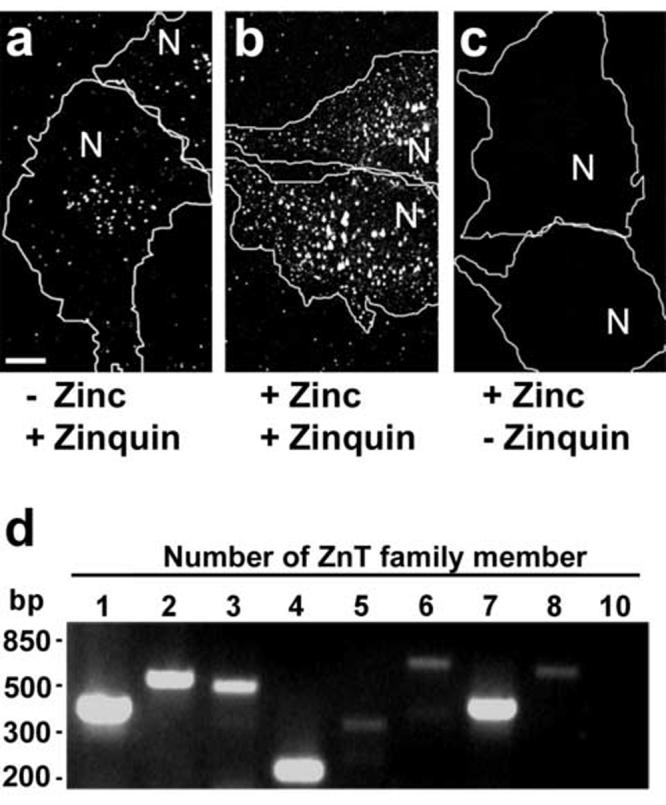
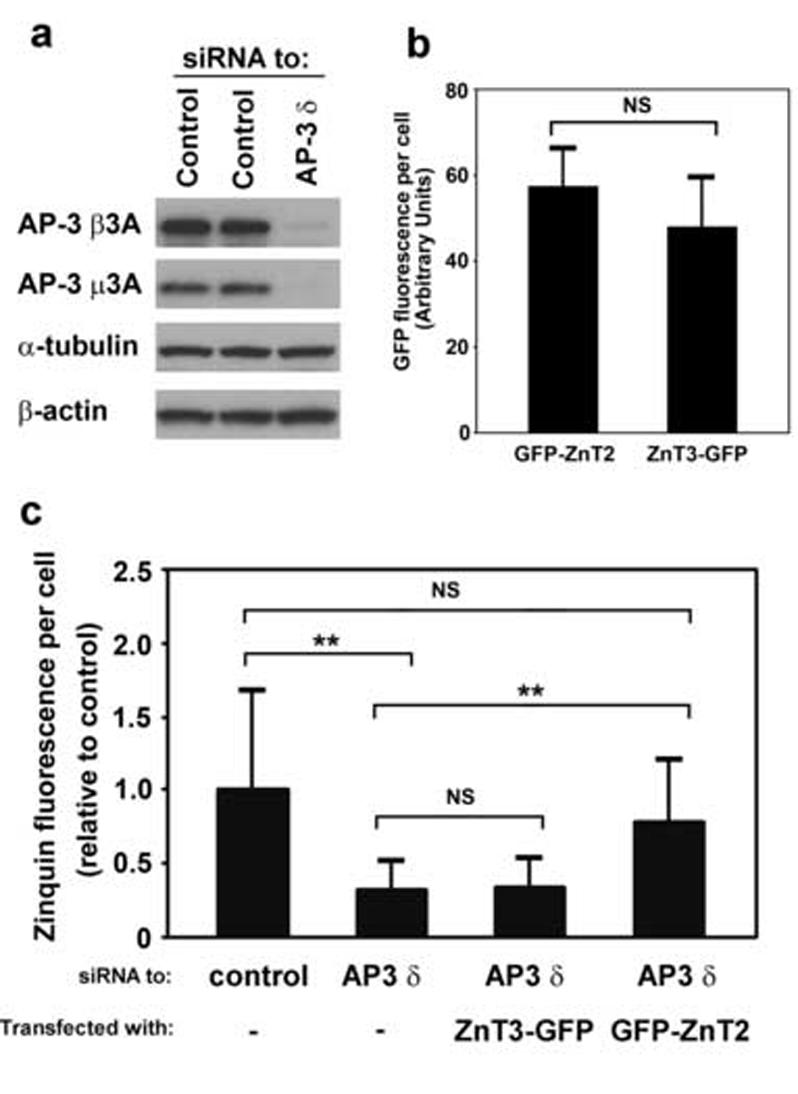
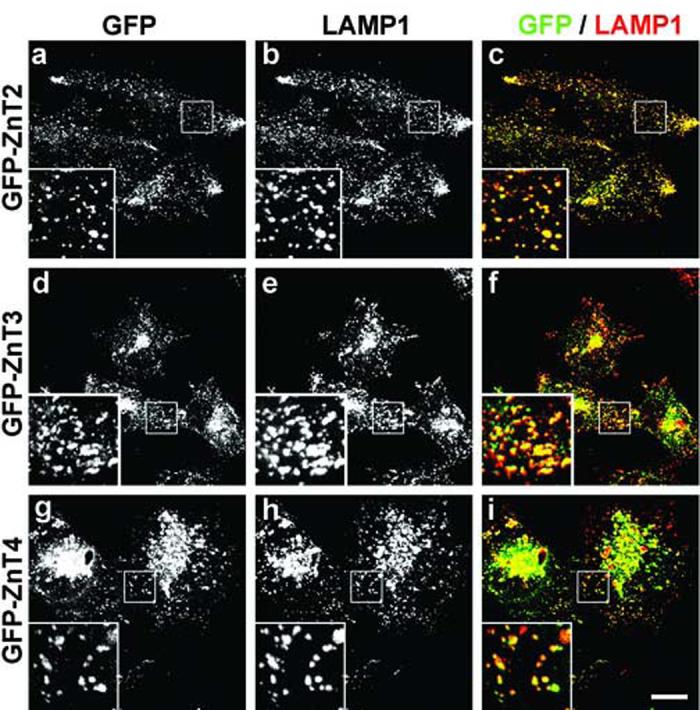
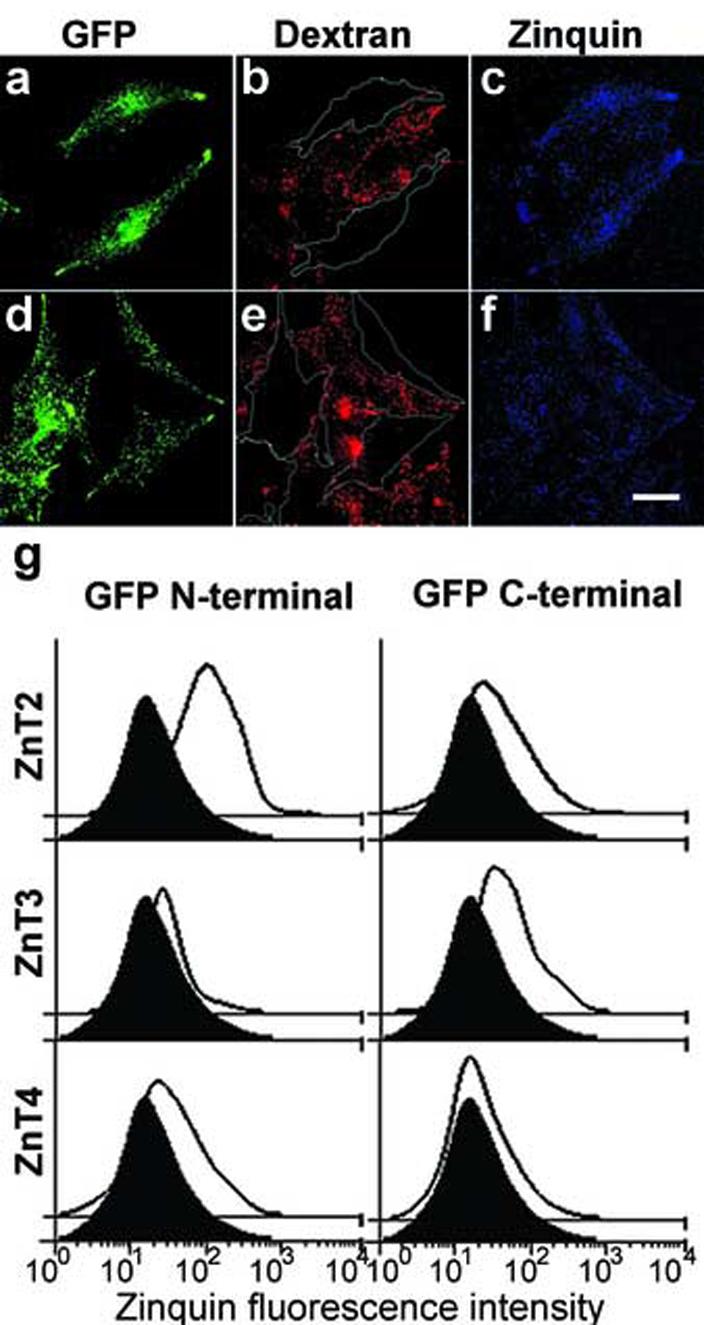
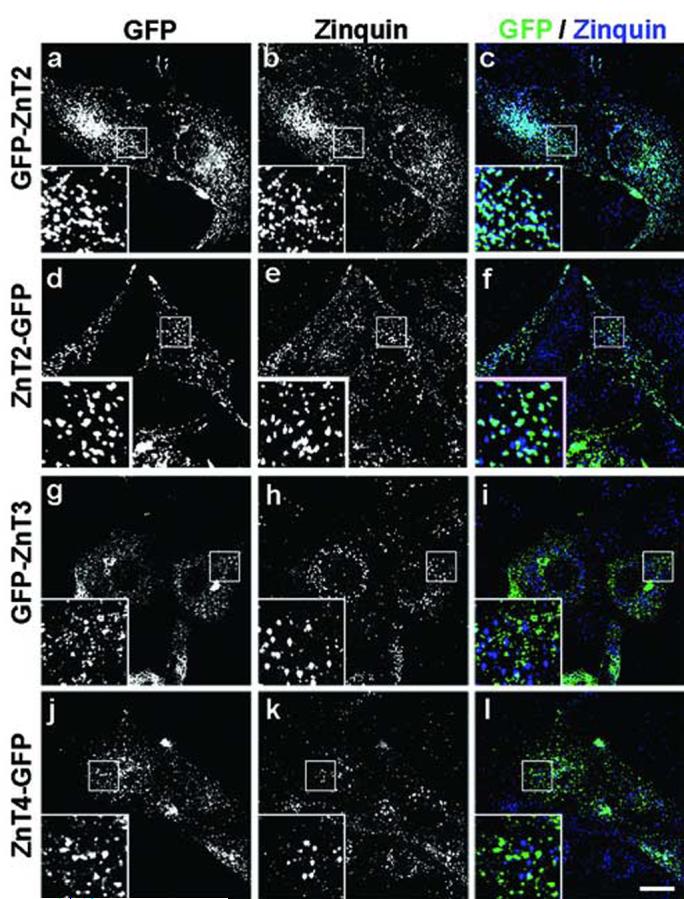
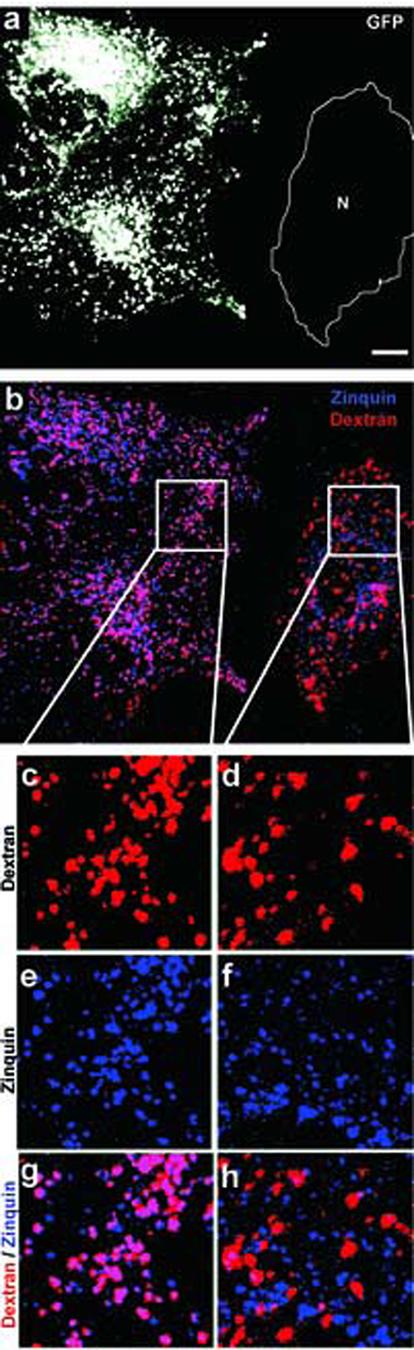
Zinc accumulation in the lumen of cytoplasmic vesicles is one of the mechanisms by which cells can store significant amounts of this essential but potentially toxic biometal. Previous studies had demonstrated reduced vesicular zinc levels in fibroblasts from mutant mice deficient in adaptor protein 3 (AP-3), a complex involved in protein trafficking to late endosomes and lysosomes. We have observed a similar phenotype in the human fibroblastoid cell line, M1, upon small interference RNA-mediated AP-3 knockdown. A survey of the expression and localization of zinc transporter (ZnT) family members identified ZnT2, ZnT3, and ZnT4 as likely mediators of vesicular zinc accumulation in M1 cells. Expression of green fluorescence protein (GFP)-tagged ZnT2 and ZnT3 promoted accumulation of vesicular zinc as visualized using the indicator zinquin. Moreover, GFP-ZnT2 overexpression elicited a significant accumulation of zinc within mature lysosomes, which in untransfected M1 cells contained little or no chelatable zinc, and restored the zinc storage capability of AP-3-deficient cells. These results suggest that ZnT2 can facilitate vesicular zinc accumulation independently of AP-3 function, and validate the M1 fibroblastoid line as a human cell culture system amenable to the study of vesicular zinc regulation using techniques compatible with functional genomic approaches.
锌在细胞质囊泡腔中的积累是细胞储存大量这种必需但可能有毒的生物金属的机制之一。先前的研究表明,在缺乏衔接蛋白3(AP-3)的突变小鼠的成纤维细胞中,囊泡锌水平降低,AP-3是一种参与蛋白质转运至晚期内体和溶酶体的复合物。在小干扰RNA介导的AP-3敲低后,我们在人成纤维细胞样细胞系M1中观察到了类似的表型。对锌转运蛋白(ZnT)家族成员的表达和定位进行的一项调查确定,ZnT2、ZnT3和ZnT4可能是M1细胞中囊泡锌积累的介导因子。使用锌荧光探针zinquin观察到,绿色荧光蛋白(GFP)标记的ZnT2和ZnT3的表达促进了囊泡锌的积累。此外,GFP-ZnT2的过表达导致成熟溶酶体内锌的显著积累,在未转染的M1细胞中,成熟溶酶体几乎不含或不含可螯合的锌,并且恢复了AP-3缺陷细胞的锌储存能力。这些结果表明,ZnT2可以独立于AP-3功能促进囊泡锌的积累,并验证了M1成纤维细胞样细胞系作为一种人类细胞培养系统,适用于使用与功能基因组学方法兼容的技术来研究囊泡锌的调节。