Snykers Sarah, Vanhaecke Tamara, De Becker Ann, Papeleu Peggy, Vinken Mathieu, Van Riet Ivan, Rogiers Vera
Dept. Toxicology, Vrije Universiteit Brussel, Laarbeeklaan 103, B-1090, Brussels, Belgium.
BMC Dev Biol. 2007 Apr 2;7:24. doi: 10.1186/1471-213X-7-24.
The capability of human mesenchymal stem cells (hMSC) derived of adult bone marrow to undergo in vitro hepatic differentiation was investigated.
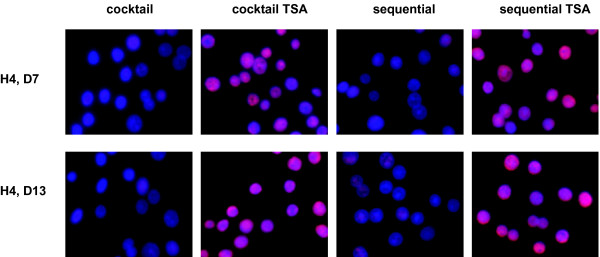
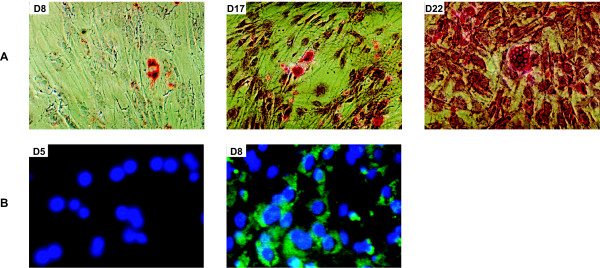
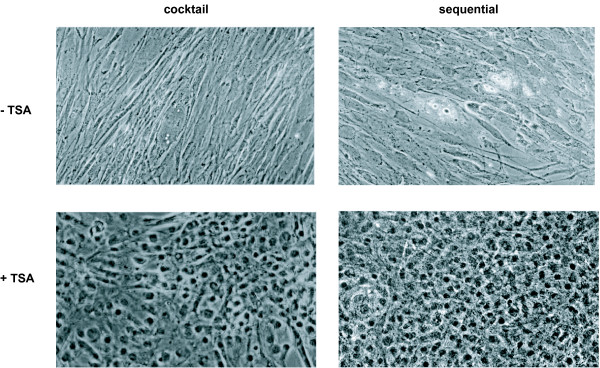
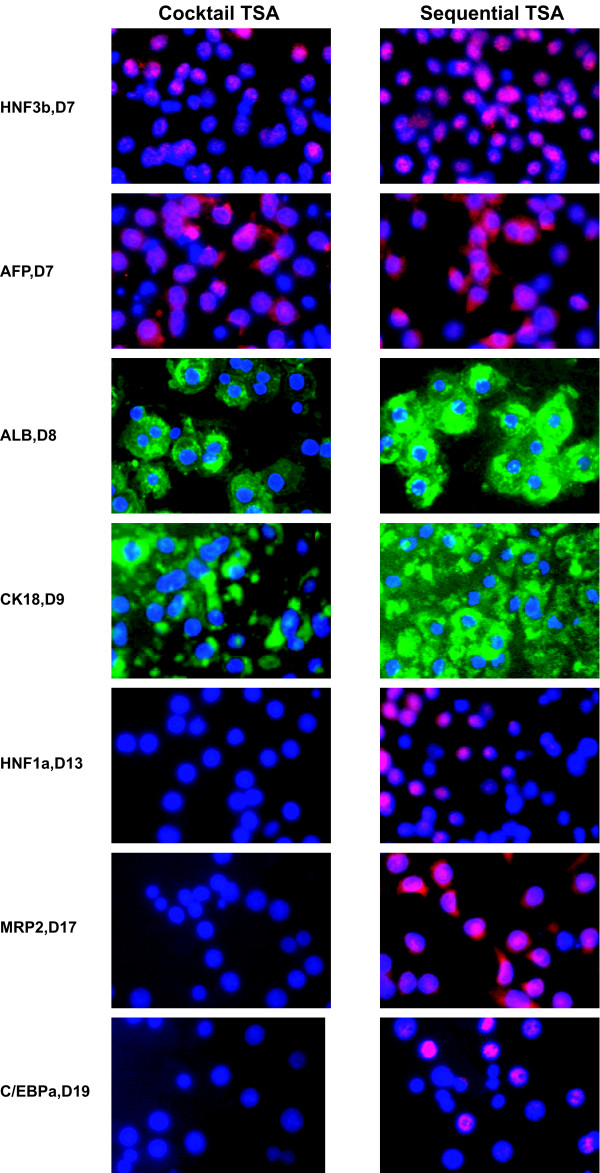
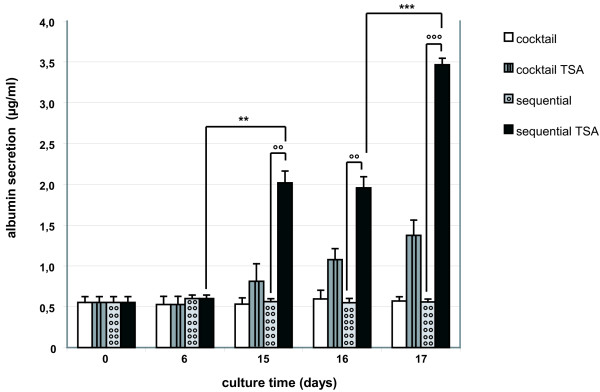
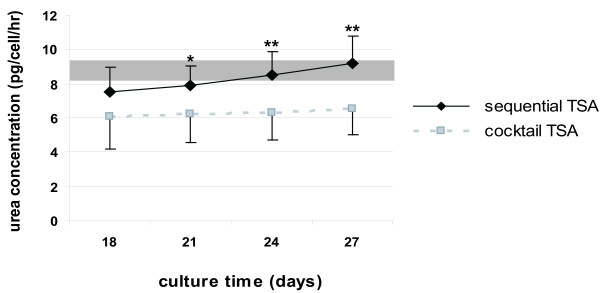
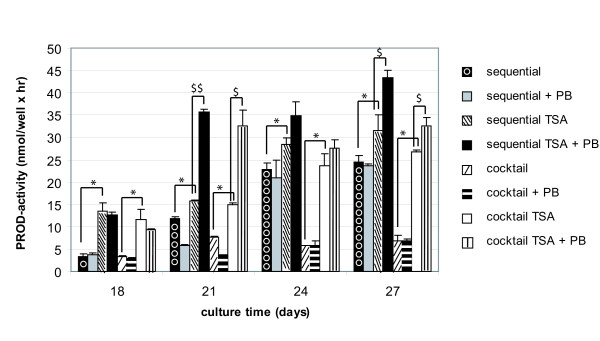
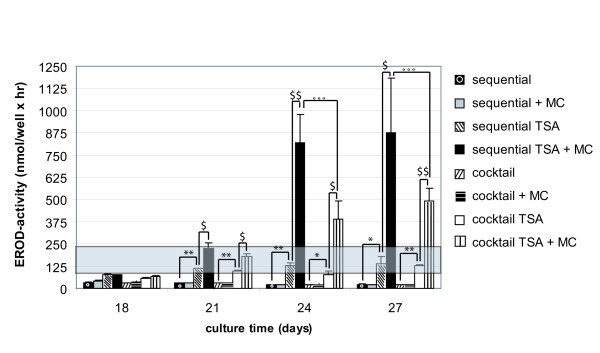
Exposure of hMSC to a cocktail of hepatogenic factors [(fibroblast growth factor-4 (FGF-4), hepatocyte growth factor (HGF), insulin-transferrin-sodium-selenite (ITS) and dexamethasone)] failed to induce hepatic differentiation. Sequential exposure to these factors (FGF-4, followed by HGF, followed by HGF+ITS+dexamethasone), however, resembling the order of secretion during liver embryogenesis, induced both glycogen-storage and cytokeratin (CK)18 expression. Additional exposure of the cells to trichostatin A (TSA) considerably improved endodermal differentiation, as evidenced by acquisition of an epithelial morphology, chronological expression of hepatic proteins, including hepatocyte-nuclear factor (HNF)-3beta, alpha-fetoprotein (AFP), CK18, albumin (ALB), HNF1alpha, multidrug resistance-associated protein (MRP)2 and CCAAT-enhancer binding protein (C/EBP)alpha, and functional maturation, i.e. upregulated ALB secretion, urea production and inducible cytochrome P450 (CYP)-dependent activity.
hMSC are able to undergo mesenchymal-to-epithelial transition. TSA is hereby essential to promote differentiation of hMSC towards functional hepatocyte-like cells.
研究了源自成人骨髓的人间充质干细胞(hMSC)在体外进行肝分化的能力。
将hMSC暴露于一组肝源性因子[成纤维细胞生长因子-4(FGF-4)、肝细胞生长因子(HGF)、胰岛素-转铁蛋白-亚硒酸钠(ITS)和地塞米松]未能诱导肝分化。然而,按照这些因子在肝脏胚胎发生过程中的分泌顺序依次暴露(FGF-4,接着是HGF,然后是HGF+ITS+地塞米松),诱导了糖原储存和细胞角蛋白(CK)18表达。细胞进一步暴露于曲古抑菌素A(TSA)显著改善了内胚层分化,表现为获得上皮形态、肝脏蛋白的时序性表达,包括肝细胞核因子(HNF)-3β、甲胎蛋白(AFP)、CK18、白蛋白(ALB)、HNF1α、多药耐药相关蛋白(MRP)2和CCAAT增强子结合蛋白(C/EBP)α,以及功能成熟,即上调的ALB分泌、尿素生成和诱导型细胞色素P450(CYP)依赖性活性。
hMSC能够经历间充质-上皮转变。在此,TSA对于促进hMSC向功能性肝细胞样细胞的分化至关重要。