Serras Ana S, Rodrigues Joana S, Cipriano Madalena, Rodrigues Armanda V, Oliveira Nuno G, Miranda Joana P
Research Institute for Medicines (iMed.ULisboa), Faculty of Pharmacy, Universidade de Lisboa, Lisbon, Portugal.
Fraunhofer Institute for Interfacial Engineering and Biotechnology IGB, Stuttgart, Germany.
Front Cell Dev Biol. 2021 Feb 22;9:626805. doi: 10.3389/fcell.2021.626805. eCollection 2021.
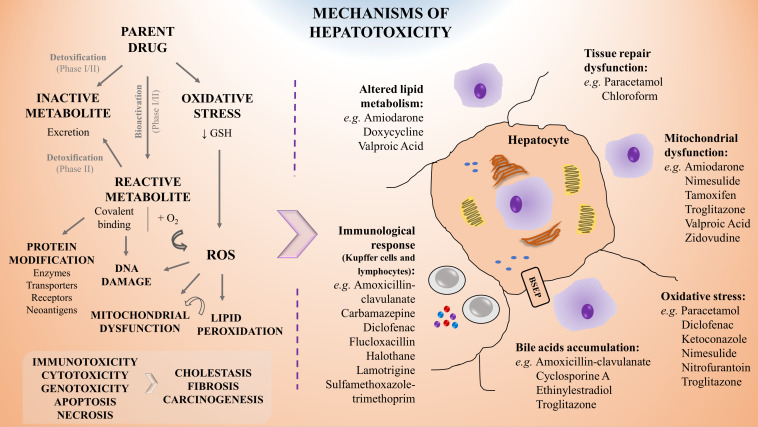
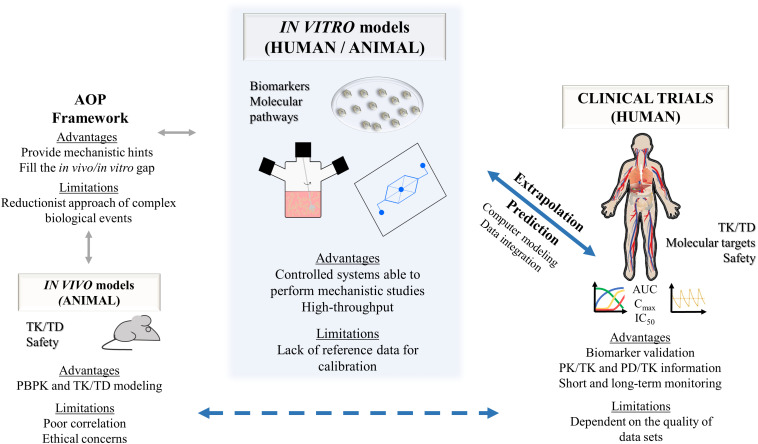
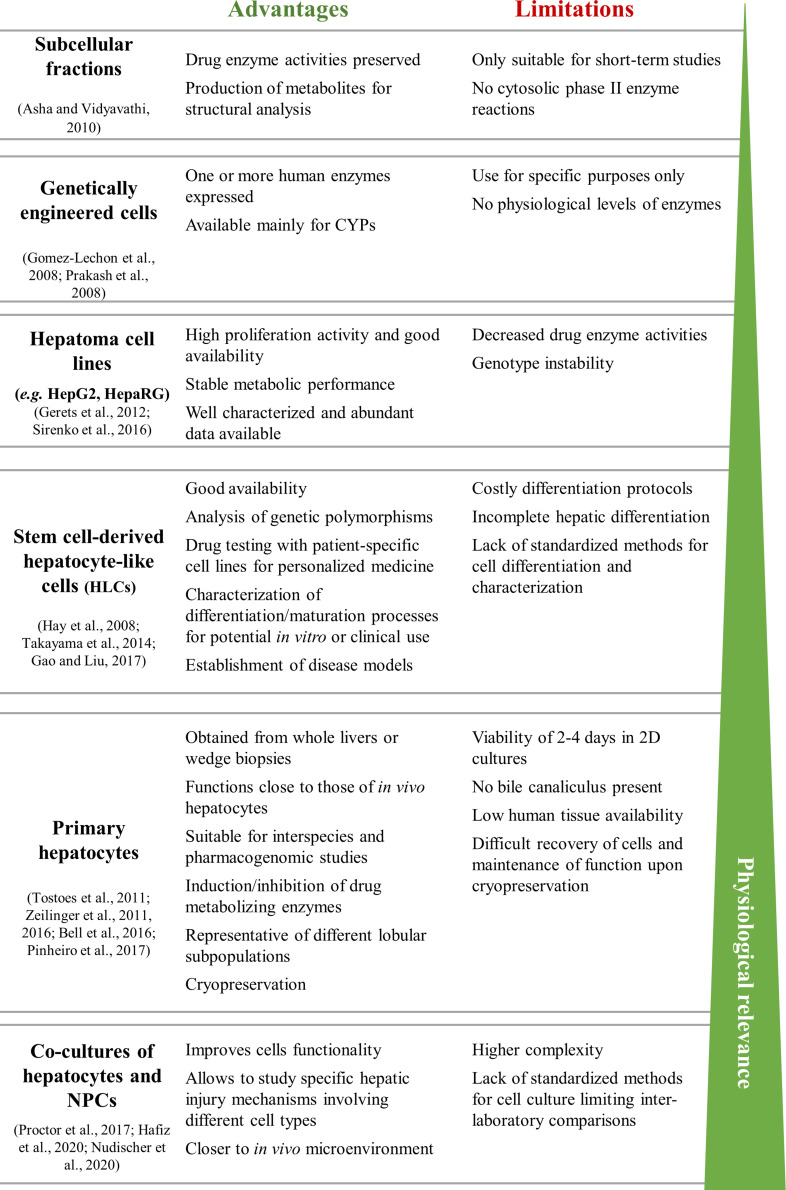
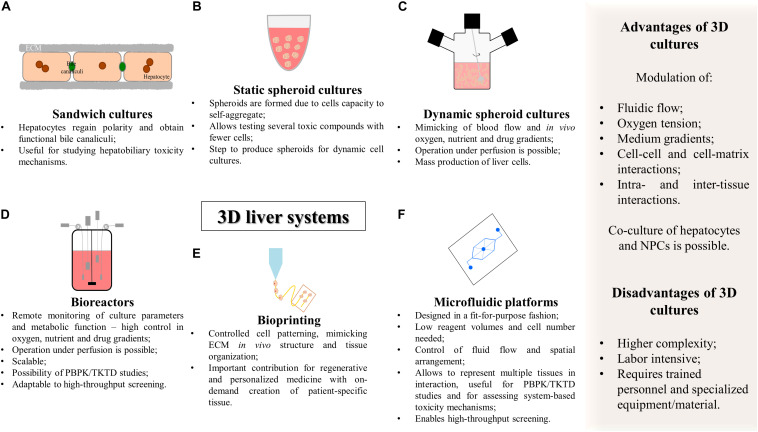
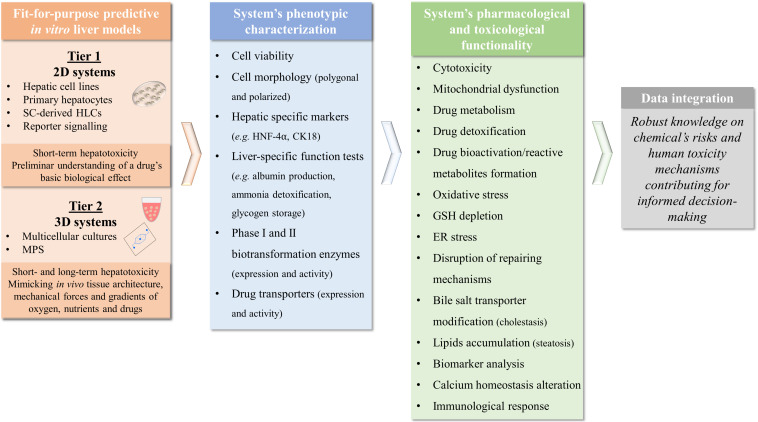
The poor predictability of human liver toxicity is still causing high attrition rates of drug candidates in the pharmaceutical industry at the non-clinical, clinical, and post-marketing authorization stages. This is in part caused by animal models that fail to predict various human adverse drug reactions (ADRs), resulting in undetected hepatotoxicity at the non-clinical phase of drug development. In an effort to increase the prediction of human hepatotoxicity, different approaches to enhance the physiological relevance of hepatic systems are being pursued. Three-dimensional (3D) or microfluidic technologies allow to better recapitulate hepatocyte organization and cell-matrix contacts, to include additional cell types, to incorporate fluid flow and to create gradients of oxygen and nutrients, which have led to improved differentiated cell phenotype and functionality. This comprehensive review addresses the drug-induced hepatotoxicity mechanisms and the currently available 3D liver models, their characteristics, as well as their advantages and limitations for human hepatotoxicity assessment. In addition, since toxic responses are greatly dependent on the culture model, a comparative analysis of the toxicity studies performed using two-dimensional (2D) and 3D strategies with recognized hepatotoxic compounds, such as paracetamol, diclofenac, and troglitazone is performed, further highlighting the need for harmonization of the respective characterization methods. Finally, taking a step forward, we propose a roadmap for the assessment of drugs hepatotoxicity based on fully characterized fit-for-purpose models, taking advantage of the best of each model, which will ultimately contribute to more informed decision-making in the drug development and risk assessment fields.
人类肝脏毒性的预测性较差,这在制药行业的非临床、临床和上市后授权阶段仍然导致候选药物的高淘汰率。部分原因是动物模型无法预测各种人类药物不良反应(ADR),从而在药物开发的非临床阶段导致未检测到的肝毒性。为了提高对人类肝毒性的预测,人们正在探索不同的方法来增强肝脏系统的生理相关性。三维(3D)或微流控技术能够更好地重现肝细胞组织和细胞与基质的接触,纳入更多细胞类型,引入流体流动,并创建氧气和营养物质的梯度,这已导致分化细胞表型和功能得到改善。这篇综述全面探讨了药物性肝毒性机制以及当前可用的3D肝脏模型、它们的特点,以及在评估人类肝毒性方面的优缺点。此外,由于毒性反应在很大程度上取决于培养模型,因此对使用二维(2D)和3D策略以及公认的肝毒性化合物(如对乙酰氨基酚、双氯芬酸和曲格列酮)进行的毒性研究进行了比较分析,进一步凸显了统一各自表征方法的必要性。最后,更进一步,我们基于充分表征且适合用途的模型,利用每个模型的优点,提出了一个评估药物肝毒性的路线图,这最终将有助于在药物开发和风险评估领域做出更明智的决策。