Merkl Rainer
Institut für Biophysik und Physikalische Biochemie, Universität Regensburg, Regensburg, Germany.
BMC Evol Biol. 2007 Apr 10;7:59. doi: 10.1186/1471-2148-7-59.
Microorganisms and plants are able to produce tryptophan. Enzymes catalysing the last seven steps of tryptophan biosynthesis are encoded in the canonical trp operon. Among the trp genes are most frequently trpA and trpB, which code for the alpha and beta subunit of tryptophan synthase. In several prokaryotic genomes, two variants of trpB (named trpB1 or trpB2) occur in different combinations. The evolutionary history of these trpB genes is under debate.
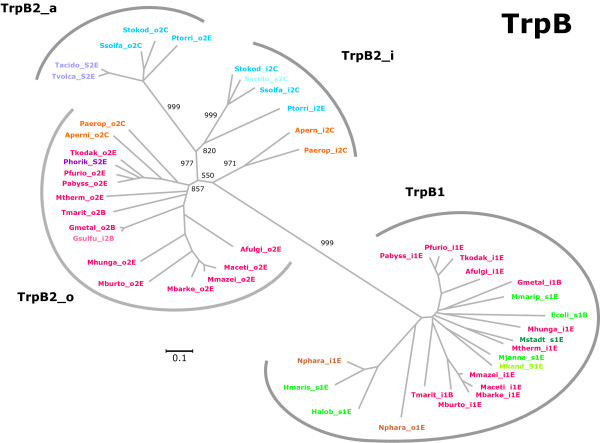
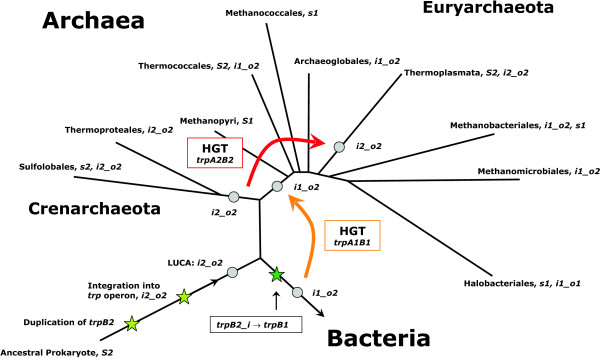
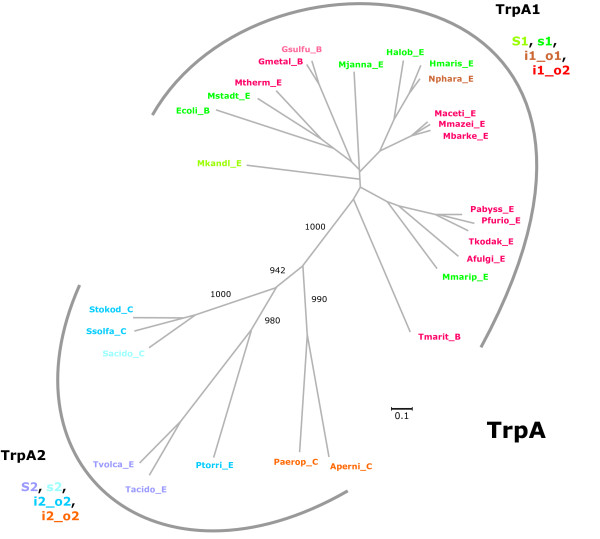
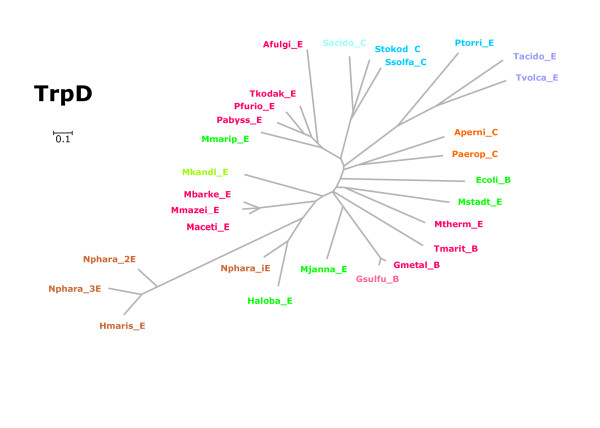
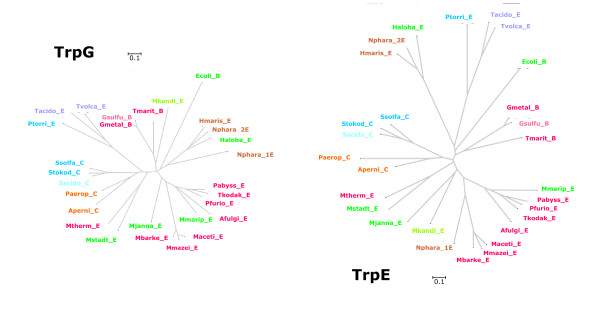
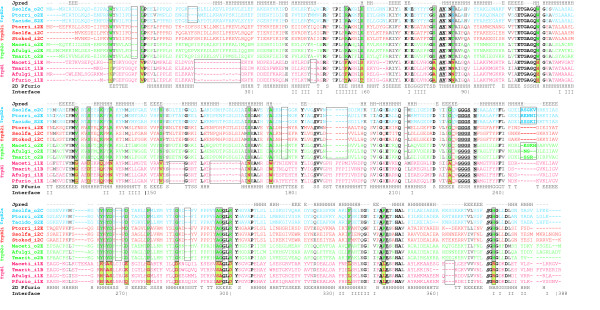
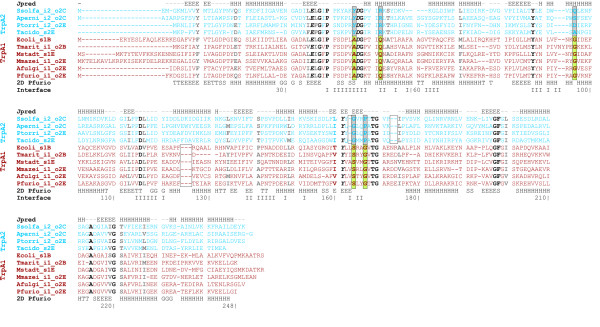
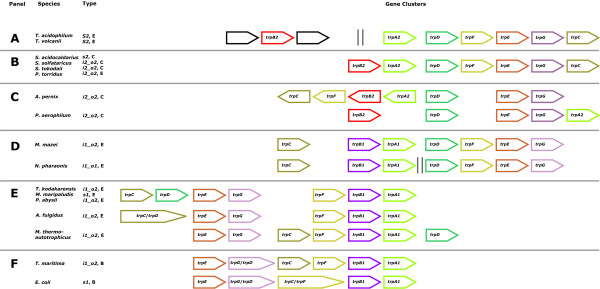
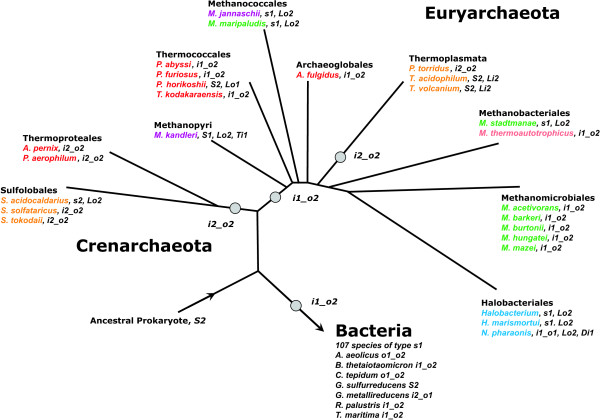
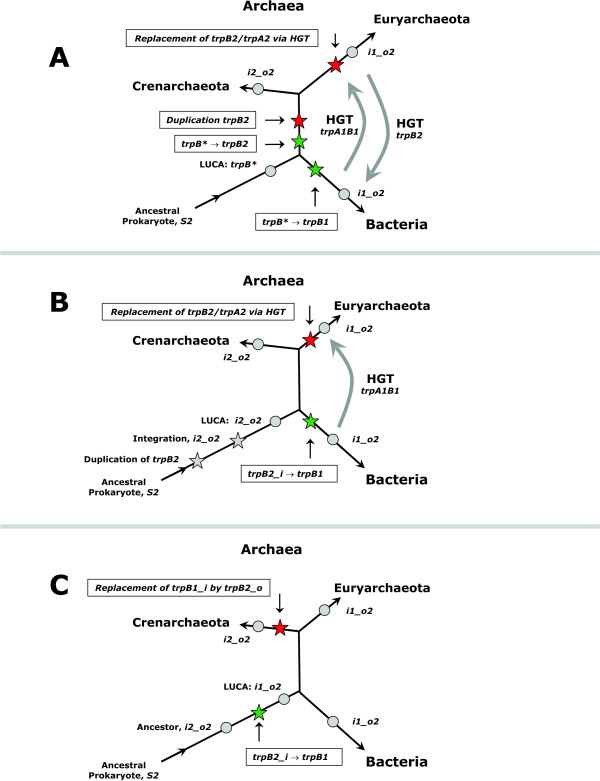
In order to study the evolution of trp genes, completely sequenced archeal and bacterial genomes containing trpB were analysed. Phylogenetic trees indicated that TrpB sequences constitute four distinct groups; their composition is in agreement with the location of respective genes. The first group consisted exclusively of trpB1 genes most of which belonged to trp operons. Groups two to four contained trpB2 genes. The largest group (trpB2_o) contained trpB2 genes all located outside of operons. Most of these genes originated from species possessing an operon-based trpB1 in addition. Groups three and four pertain to trpB2 genes of those genomes containing exclusively one or two trpB2 genes, but no trpB1. One group (trpB2_i) consisted of trpB2 genes located inside, the other (trpB2_a) of trpB2 genes located outside the trp operon. TrpA and TrpB form a heterodimer and cooperate biochemically. In order to characterise trpB variants and stages of TrpA/TrpB cooperation in silico, several approaches were combined. Phylogenetic trees were constructed for all trp genes; their structure was assessed via bootstrapping. Alternative models of trpB evolution were evaluated with parsimony arguments. The four groups of trpB variants were correlated with archeal speciation. Several stages of TrpA/TrpB cooperation were identified and trpB variants were characterised. Most plausibly, trpB2 represents the predecessor of the modern trpB gene, and trpB1 evolved in an ancestral bacterium.
In archeal genomes, several stages of trpB evolution, TrpA/TrpB cooperation, and operon formation can be observed. Thus, archeal trp genes may serve as a model system for studying the evolution of protein-protein interactions and operon formation.
微生物和植物能够合成色氨酸。催化色氨酸生物合成最后七个步骤的酶由典型的色氨酸操纵子编码。在色氨酸基因中,最常见的是trpA和trpB,它们分别编码色氨酸合酶的α亚基和β亚基。在一些原核生物基因组中,trpB存在两种变体(分别命名为trpB1或trpB2),且以不同组合形式出现。这些trpB基因的进化历程仍存在争议。
为了研究色氨酸基因的进化,对已完成全序列测定且包含trpB的古菌和细菌基因组进行了分析。系统发育树表明,TrpB序列构成四个不同的组;它们的组成与各自基因的位置一致。第一组仅由trpB1基因组成,其中大多数属于色氨酸操纵子。第二组至第四组包含trpB2基因。最大的一组(trpB2_o)包含所有位于操纵子之外的trpB2基因。这些基因中的大多数还源自另外拥有基于操纵子的trpB1的物种。第三组和第四组涉及那些仅包含一个或两个trpB2基因但没有trpB1的基因组中的trpB2基因。一组(trpB2_i)由位于操纵子内部的trpB2基因组成,另一组(trpB2_a)由位于色氨酸操纵子之外的trpB2基因组成。TrpA和TrpB形成异源二聚体并在生化过程中协同作用。为了在计算机上表征trpB变体以及TrpA/TrpB协同作用的阶段,综合了多种方法。构建了所有色氨酸基因的系统发育树;通过自展法评估其结构。用简约论据评估了trpB进化的替代模型。trpB变体的四组与古菌物种形成相关。确定了TrpA/TrpB协同作用的几个阶段,并对trpB变体进行了表征。最有可能的是,trpB2代表现代trpB基因的前身,而trpB1在一种原始细菌中进化而来。
在古菌基因组中,可以观察到trpB进化、TrpA/TrpB协同作用以及操纵子形成的几个阶段。因此,古菌色氨酸基因可作为研究蛋白质 - 蛋白质相互作用进化和操纵子形成的模型系统。