Kowluru Vibhuti, Kowluru Renu A
Department of Ophthalmology, Kresge Eye Institute, Wayne State University, Detroit, MI 48201, USA.
Mol Vis. 2007 Apr 19;13:602-10.
Increased superoxide levels are implicated in the pathogenesis of diabetic retinopathy. We have shown that functional activation of a small molecular weight G-protein, H-Ras, is one of the signaling steps involved in glucose-induced apoptosis of retinal capillary cells. The goal of this study was to elucidate the mechanism(s) by which oxidative stress could result in the activation of H-Ras in diabetes.
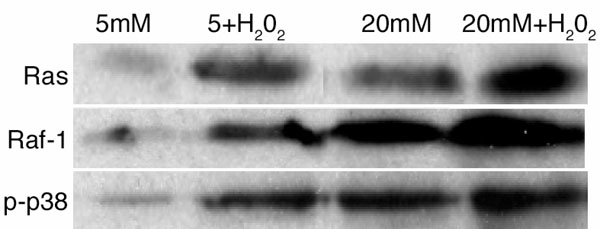
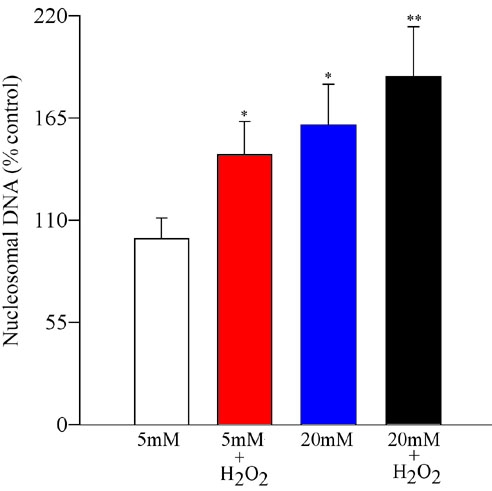
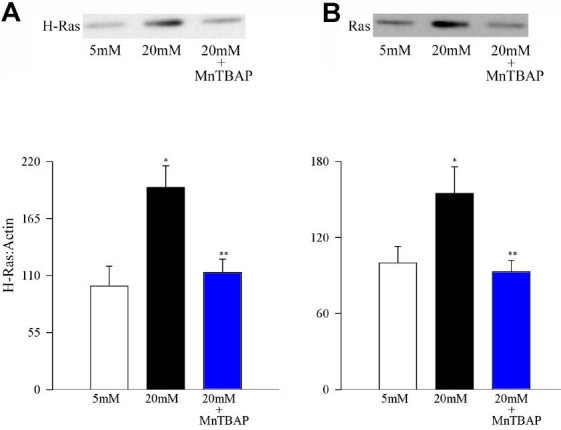
Experiments were performed in isolated retinal endothelial cells that were treated with H(2)O(2), or the cells in which glucose-induced superoxide accumulation was inhibited either by superoxide dismutase mimetic (MnTBAP) or by overexpressing mitochondrial superoxide dismutase (MnSOD). The in vitro experiments were complemented with in vivo experiments using the retina from mice overexpressing MnSOD.
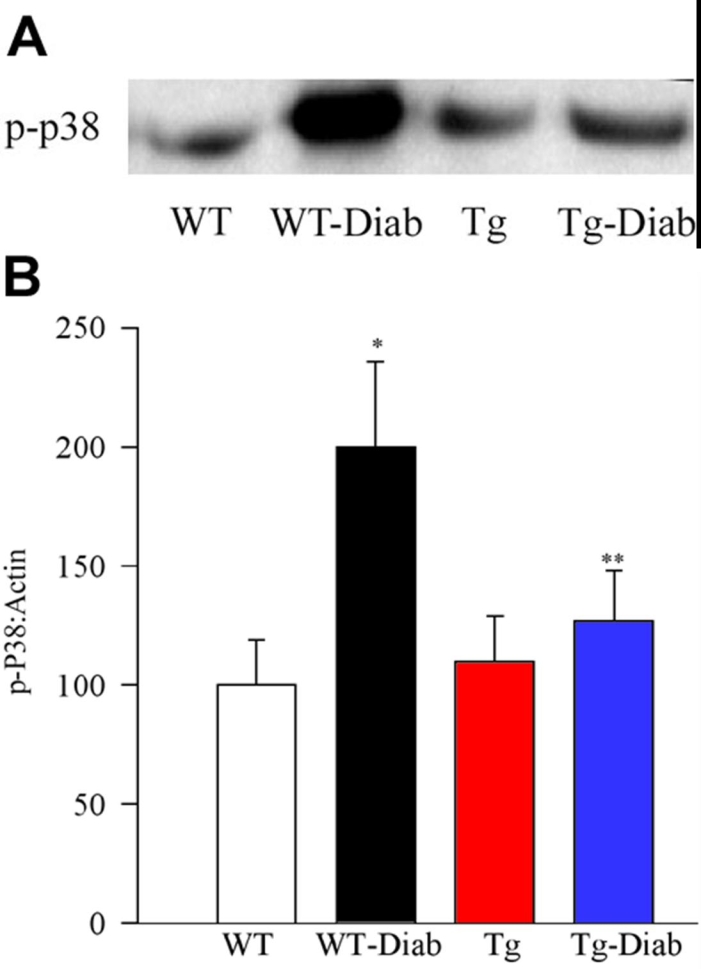
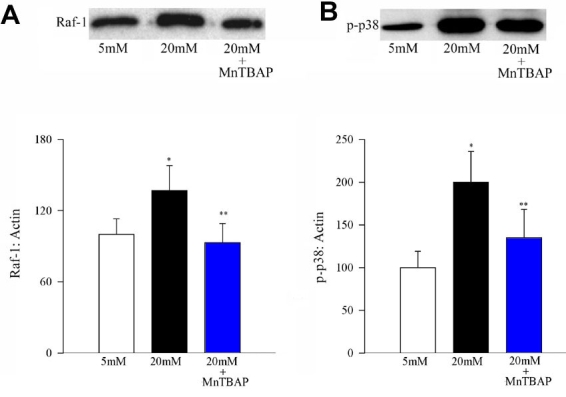
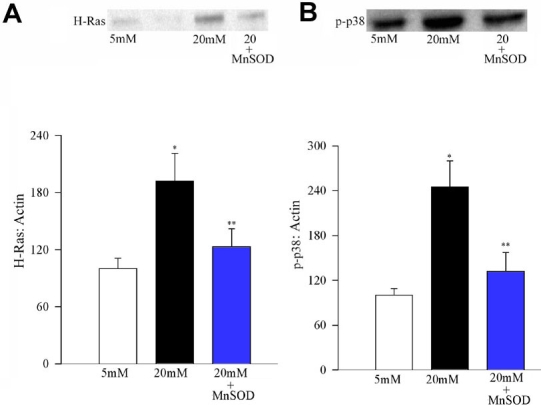
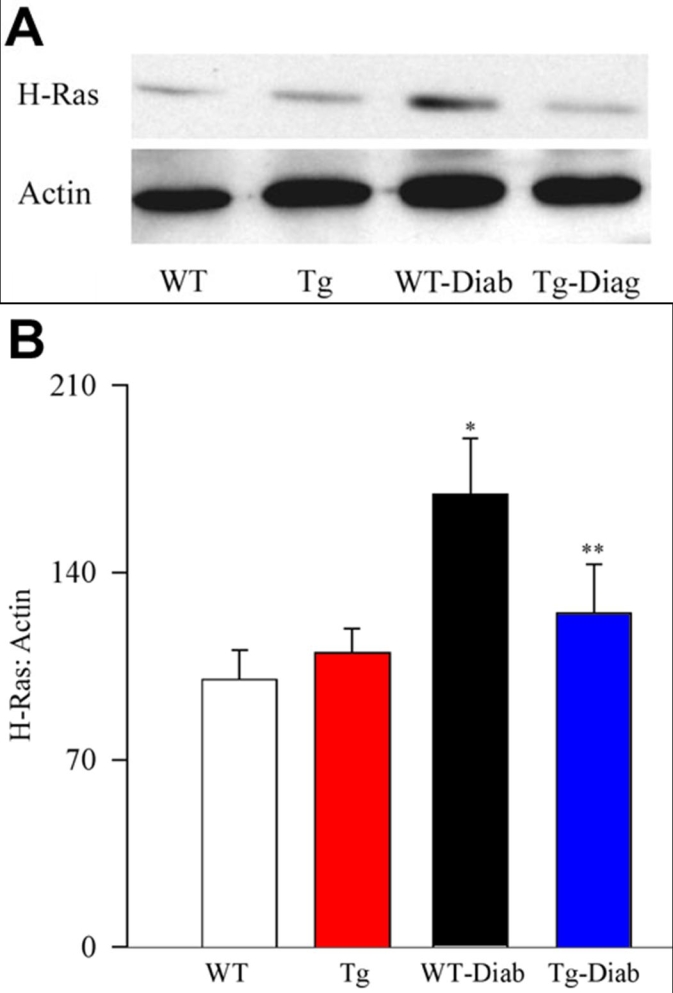
H(2)O(2) activated H-Ras and its downstream signaling pathway, including Raf-1 and phosphorylation of p38 (p-p38) MAP kinase. Inhibition of superoxide significantly attenuated glucose-induced activation of H-Ras, Raf-1 and p-p38 MAP kinase. Overexpression of MnSOD in mice prevented diabetes-induced activation of both H-Ras and p-p38 MAP kinase.
Our results clearly indicate that the activation of H-Ras and its downstream signaling pathway in the retina and its vasculature could be under the control of superoxide, and H-Ras activation in diabetes can be prevented by inhibiting superoxide accumulation.
超氧化物水平升高与糖尿病视网膜病变的发病机制有关。我们已经表明,小分子量G蛋白H-Ras的功能激活是葡萄糖诱导的视网膜毛细血管细胞凋亡所涉及的信号传导步骤之一。本研究的目的是阐明氧化应激在糖尿病中导致H-Ras激活的机制。
实验在分离的视网膜内皮细胞中进行,这些细胞用H₂O₂处理,或者用超氧化物歧化酶模拟物(MnTBAP)或通过过表达线粒体超氧化物歧化酶(MnSOD)抑制葡萄糖诱导的超氧化物积累的细胞。体外实验通过使用过表达MnSOD的小鼠的视网膜进行体内实验得到补充。
H₂O₂激活了H-Ras及其下游信号通路,包括Raf-1和p38(p-p38)丝裂原活化蛋白激酶的磷酸化。超氧化物的抑制显著减弱了葡萄糖诱导的H-Ras、Raf-1和p-p38丝裂原活化蛋白激酶的激活。小鼠中MnSOD的过表达阻止了糖尿病诱导的H-Ras和p-p38丝裂原活化蛋白激酶的激活。
我们的结果清楚地表明,视网膜及其血管系统中H-Ras及其下游信号通路的激活可能受超氧化物的控制,并且通过抑制超氧化物积累可以预防糖尿病中H-Ras的激活。