Dröge Wulf, Schipper Hyman M
Immunotec Research Ltd., 300 Joseph-Carrier, Vaudreuil-Dorion, Quebec, Canada J7V 5V5.
Aging Cell. 2007 Jun;6(3):361-70. doi: 10.1111/j.1474-9726.2007.00294.x.
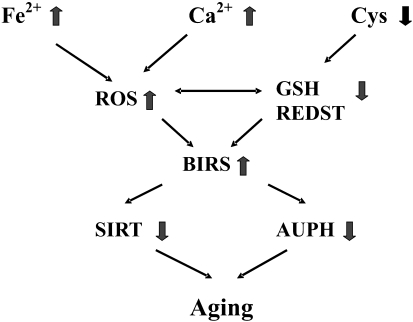
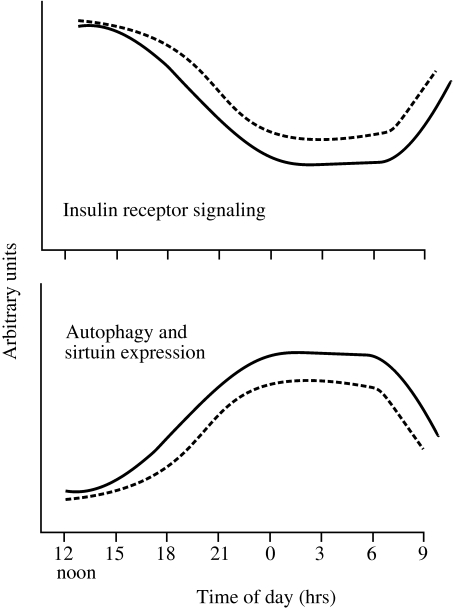
Brain aging is associated with a progressive imbalance between antioxidant defenses and intracellular concentrations of reactive oxygen species (ROS) as exemplified by increases in products of lipid peroxidation, protein oxidation, and DNA oxidation. Oxidative conditions cause not only structural damage but also changes in the set points of redox-sensitive signaling processes including the insulin receptor signaling pathway. In the absence of insulin, the otherwise low insulin receptor signaling is strongly enhanced by oxidative conditions. Autophagic proteolysis and sirtuin activity, in turn, are downregulated by the insulin signaling pathway, and impaired autophagic activity has been associated with neurodegeneration. In genetic studies, impairment of insulin receptor signaling causes spectacular lifespan extension in nematodes, fruit flies, and mice. The predicted effects of age-related oxidative stress on sirtuins and autophagic activity and the corresponding effects of antioxidants remain to be tested experimentally. However, several correlates of aging have been shown to be ameliorated by antioxidants. Oxidative damage to mitochondrial DNA and the electron transport chain, perturbations in brain iron and calcium homeostasis, and changes in plasma cysteine homeostasis may altogether represent causes and consequences of increased oxidative stress. Aging and cognitive decline thus appear to involve changes at multiple nodes within a complex regulatory network.
脑衰老与抗氧化防御和细胞内活性氧(ROS)浓度之间的渐进性失衡有关,脂质过氧化、蛋白质氧化和DNA氧化产物的增加就是例证。氧化状态不仅会导致结构损伤,还会改变包括胰岛素受体信号通路在内的氧化还原敏感信号转导过程的设定点。在没有胰岛素的情况下,原本较低的胰岛素受体信号会因氧化状态而显著增强。反过来,自噬蛋白水解和沉默调节蛋白活性会被胰岛素信号通路下调,而自噬活性受损与神经退行性变有关。在遗传学研究中,胰岛素受体信号受损会导致线虫、果蝇和小鼠的寿命显著延长。与年龄相关的氧化应激对沉默调节蛋白和自噬活性的预期影响以及抗氧化剂的相应作用仍有待实验验证。然而,已有研究表明抗氧化剂可改善衰老的几个相关因素。线粒体DNA和电子传递链的氧化损伤、脑铁和钙稳态的紊乱以及血浆半胱氨酸稳态的变化可能共同构成氧化应激增加的原因和后果。因此,衰老和认知衰退似乎涉及复杂调节网络中多个节点的变化。