Yamaguchi Hiroo, Shen Jie
Center for Neurologic Diseases, Brigham & Women's Hospital, Program in Neuroscience, Harvard Medical School, Boston, MA, 02115, USA.
Mol Neurodegener. 2007 May 29;2:10. doi: 10.1186/1750-1326-2-10.
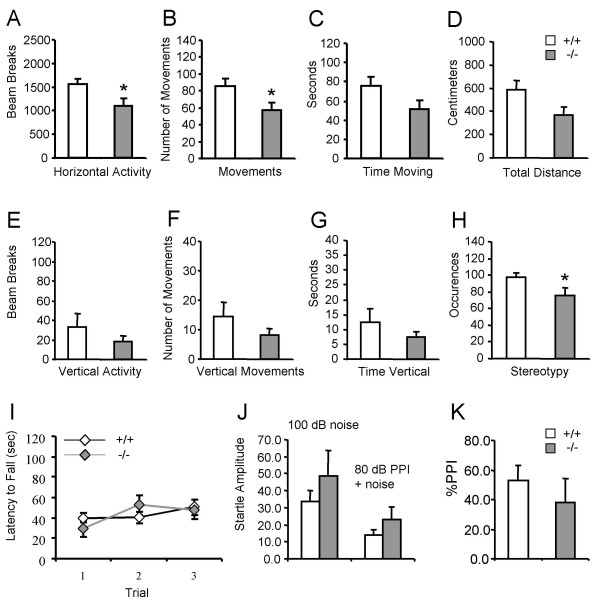
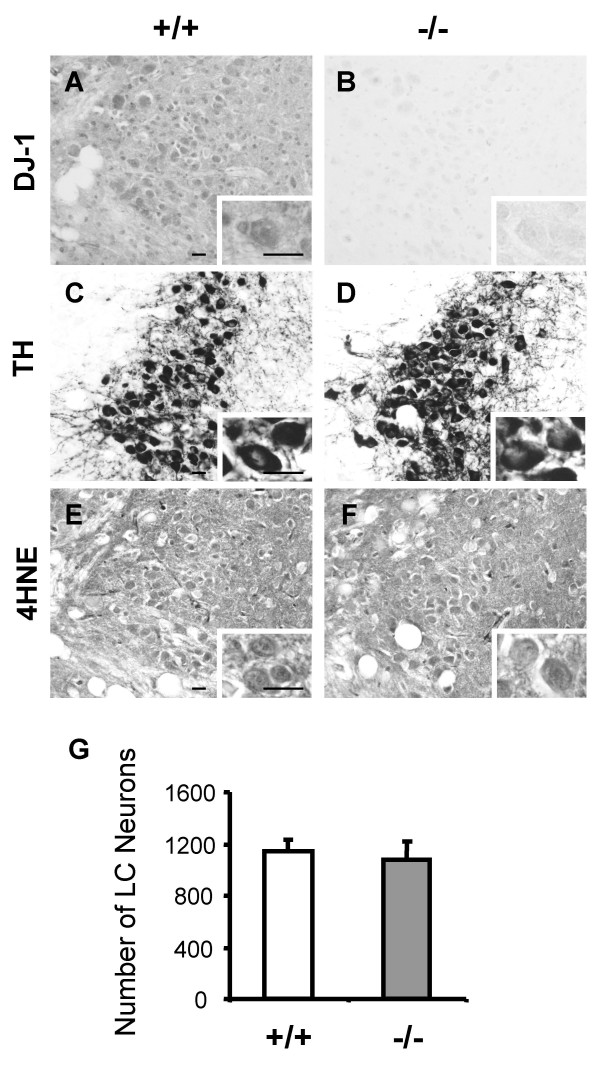
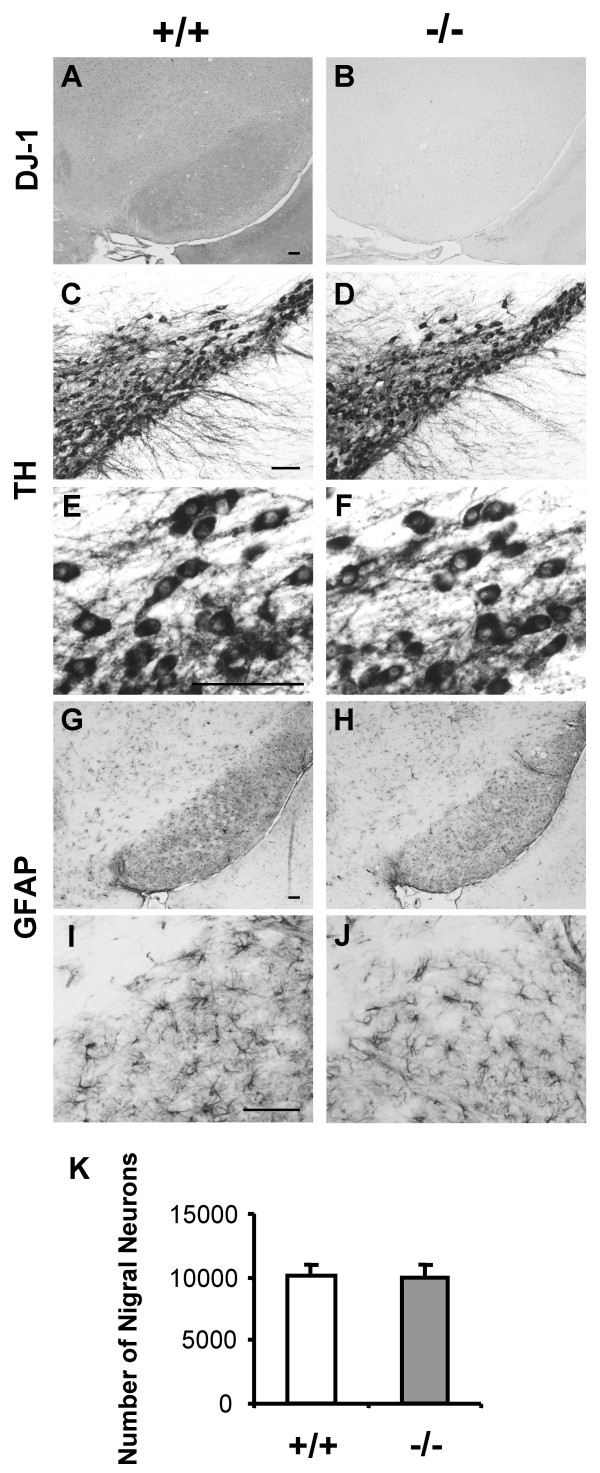
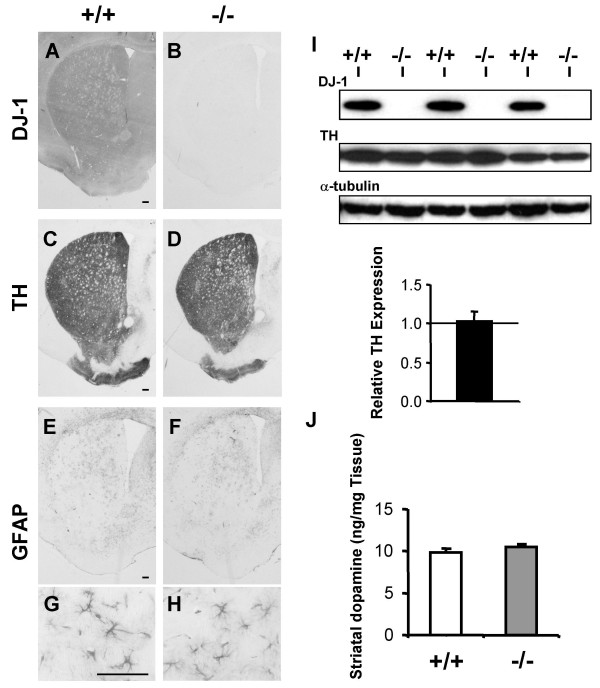
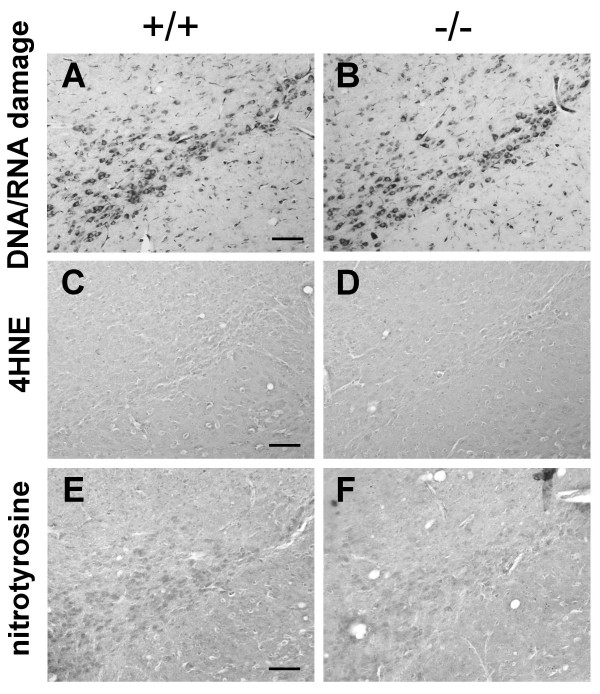
Parkinson's disease is the most common movement disorder characterized by dopaminergic dysfunction and degeneration. Loss-of-function mutations in the DJ-1 gene have been linked to autosomal recessive forms of early-onset familial Parkinson's disease. DJ-1 is thought to play roles in protection of cells against oxidative stress and in maintenance of the normal dopaminergic function in the nigrostriatal pathway. Here we investigate the consequence of both DJ-1 inactivation and aging in mice. We found that DJ-1-/- mice at the age of 24-27 months have normal numbers of dopaminergic neurons in the substantia nigra and normal levels of dopamine and its major metabolites in the striatum. The number of noradrenergic neurons in the locus coeruleus is also unchanged in DJ-1-/- mice. Moreover, there is no accumulation of oxidative damage or inclusion bodies in aged DJ-1-/- brains. Together, these results indicate that loss of DJ-1 function alone is insufficient to cause nigral degeneration and oxidative damage in the life span of mice.
帕金森病是最常见的运动障碍,其特征为多巴胺能功能障碍和退化。DJ-1基因的功能丧失突变与早发性家族性帕金森病的常染色体隐性形式有关。DJ-1被认为在保护细胞免受氧化应激以及维持黑质纹状体通路的正常多巴胺能功能方面发挥作用。在此,我们研究了DJ-1失活和衰老在小鼠中的后果。我们发现,24至27月龄的DJ-1基因敲除小鼠黑质中多巴胺能神经元数量正常,纹状体中多巴胺及其主要代谢产物水平正常。DJ-1基因敲除小鼠蓝斑中的去甲肾上腺素能神经元数量也未改变。此外,衰老的DJ-1基因敲除小鼠大脑中没有氧化损伤或包涵体的积累。这些结果共同表明,仅DJ-1功能丧失不足以在小鼠寿命期间导致黑质退化和氧化损伤。