Wygrecka Malgorzata, Morty Rory E, Markart Philipp, Kanse Sandip M, Andreasen Peter A, Wind Troels, Guenther Andreas, Preissner Klaus T
Department of Biochemistry, Faculty of Medicine, Justus-Liebig-University Giessen, Giessen, Germany.
J Biol Chem. 2007 Jul 27;282(30):21671-82. doi: 10.1074/jbc.M610748200. Epub 2007 May 31.
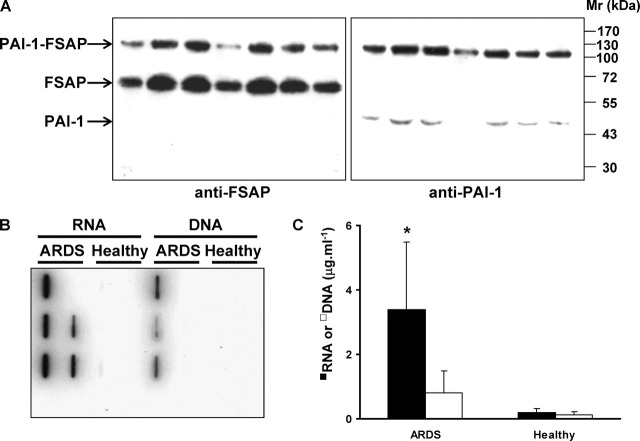
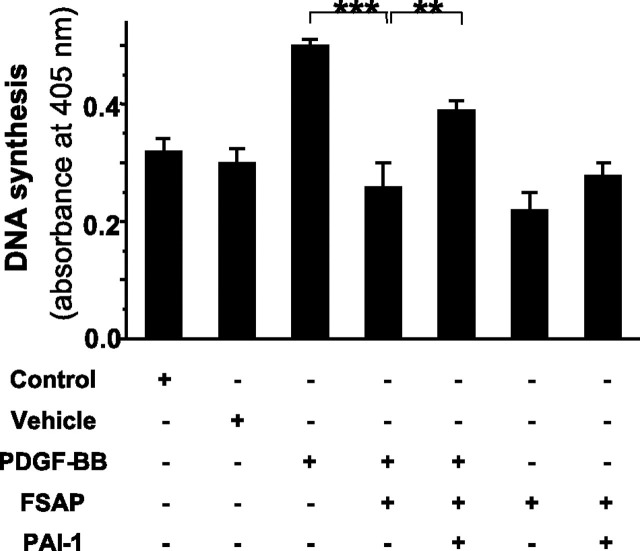
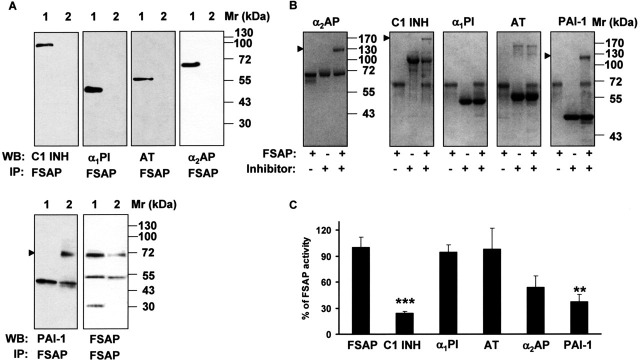
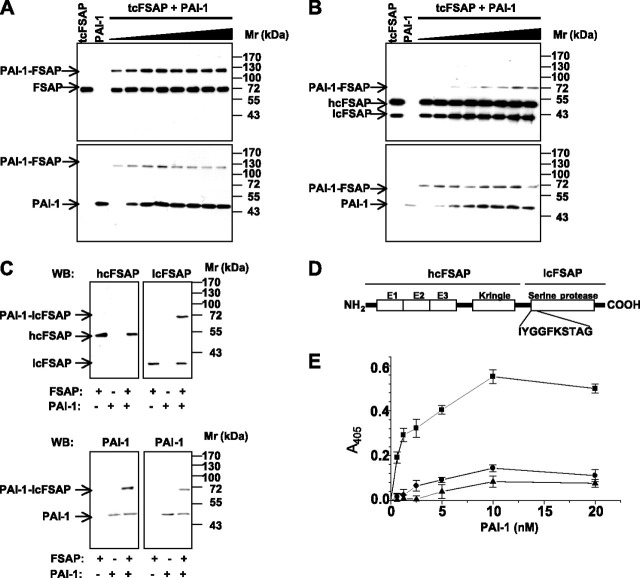
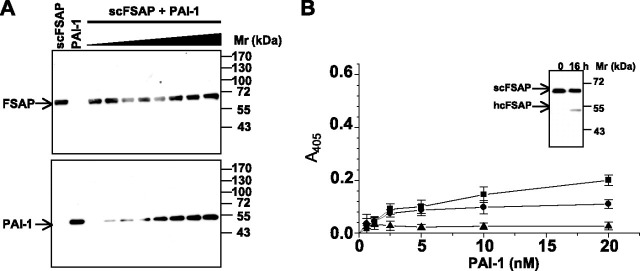
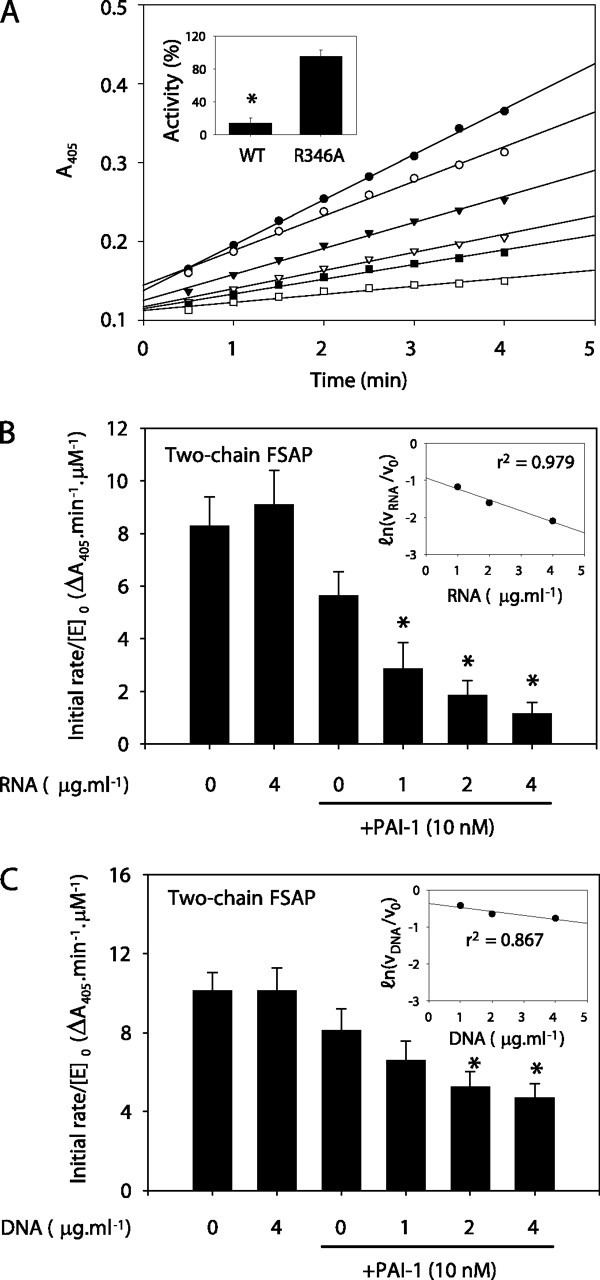
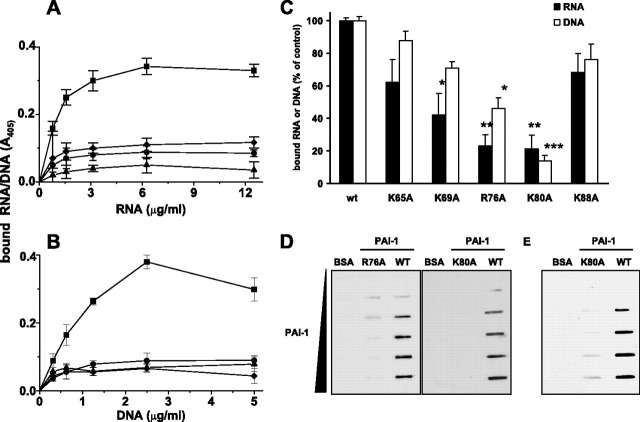
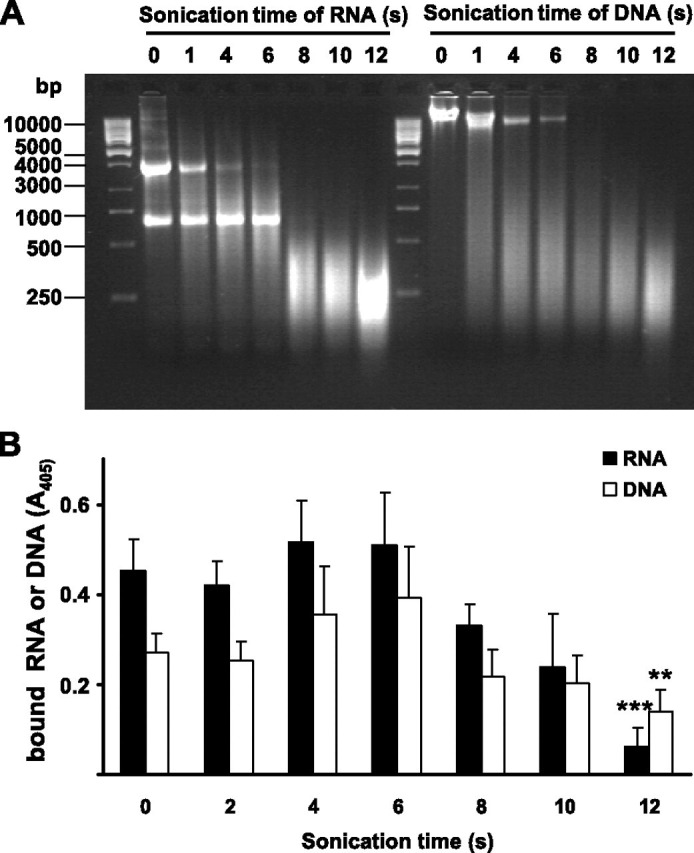
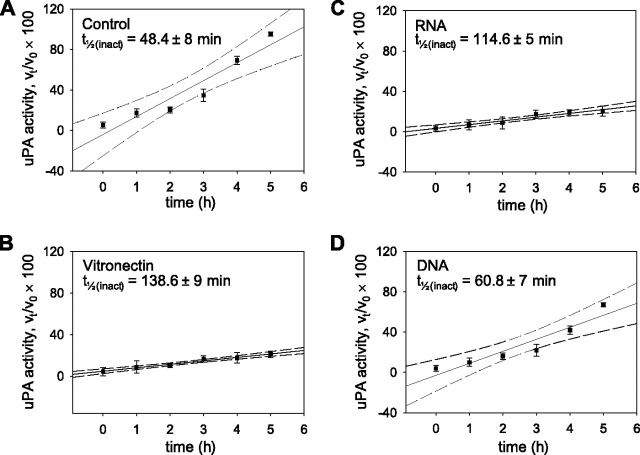
Factor VII-activating protease (FSAP) is a novel plasma-derived serine protease structurally homologous to tissue-type and urokinase-type plasminogen activators. We demonstrate that plasminogen activator inhibitor-1 (PAI-1), the predominant inhibitor of tissue-type and urokinase-type plasminogen activators in plasma and tissues, is an inhibitor of FSAP as well. We detected PAI-1.FSAP complexes in addition to high levels of extracellular RNA, an important FSAP cofactor, in bronchoalveolar lavage fluids from patients with acute respiratory distress syndrome. Hydrolytic activity of FSAP was inhibited by PAI-1 with a second-order inhibition rate constant (K(a)) of 3.38 +/- 1.12 x 10(5) m(-1).s(-1). Residue Arg(346) was a critical recognition element on PAI-1 for interaction with FSAP. RNA, but not DNA, fragments (>400 nucleotides in length) dramatically enhanced the reactivity of PAI-1 with FSAP, and 4 microg.ml(-1) RNA increased the K(a) to 1.61 +/- 0.94 x 10(6) m(-1).s(-1). RNA also stabilized the active conformation of PAI-1, increasing the half-life for spontaneous conversion of active to latent PAI-1 from 48.4 +/- 8 min to 114.6 +/- 5 min. In contrast, little effect of DNA on PAI-1 stability was apparent. Residues Arg(76) and Lys(80) in PAI-1 were key elements mediating binding of nucleic acids to PAI-1. FSAP-driven inhibition of vascular smooth muscle cell proliferation was antagonized by PAI-1, suggesting functional consequences for the FSAP-PAI-1 interaction. These data indicate that extracellular RNA and PAI-1 can regulate FSAP activity, thereby playing a potentially important role in hemostasis and cell functions under various pathophysiological conditions, such as acute respiratory distress syndrome.
凝血因子 VII 激活蛋白酶(FSAP)是一种新的源自血浆的丝氨酸蛋白酶,在结构上与组织型和尿激酶型纤溶酶原激活剂同源。我们证明,血浆和组织中组织型和尿激酶型纤溶酶原激活剂的主要抑制剂纤溶酶原激活剂抑制剂 -1(PAI -1)也是 FSAP 的抑制剂。在急性呼吸窘迫综合征患者的支气管肺泡灌洗液中,除了高水平的细胞外 RNA(一种重要的 FSAP 辅因子)外,我们还检测到了 PAI -1.FSAP 复合物。PAI -1 对 FSAP 的水解活性具有抑制作用,其二级抑制速率常数(K(a))为 3.38 ± 1.12 × 10(5) m(-1).s(-1)。残基 Arg(346)是 PAI -1 上与 FSAP 相互作用的关键识别元件。RNA 片段(长度 >400 个核苷酸)而非 DNA 片段显著增强了 PAI -1 与 FSAP 的反应性,4 μg.ml(-1) 的 RNA 将 K(a)提高到 1.61 ± 0.94 × 10(6) m(-1).s(-1)。RNA 还稳定了 PAI -1 的活性构象,将活性 PAI -1 自发转化为潜伏性 PAI -1 的半衰期从 48.4 ± 8 分钟延长至 114.6 ± 5 分钟。相比之下,DNA 对 PAI -1 稳定性的影响不明显。PAI -1 中的残基 Arg(76)和 Lys(80)是介导核酸与 PAI -1 结合的关键元件。PAI -1 拮抗 FSAP 驱动的血管平滑肌细胞增殖抑制作用,提示 FSAP - PAI -1 相互作用具有功能后果。这些数据表明,细胞外 RNA 和 PAI -1 可以调节 FSAP 活性,从而在各种病理生理条件下(如急性呼吸窘迫综合征)的止血和细胞功能中发挥潜在的重要作用。