Department of Immunopathology, Sanquin Research at CLB and Landsteiner Laboratory of AMC, Plesmanlaan 125, 1066 CX Amsterdam, The Netherlands.
Crit Care. 2011;15(2):R110. doi: 10.1186/cc10131. Epub 2011 Apr 5.
Cell death is a central event in the pathogenesis of sepsis and is reflected by circulating nucleosomes. Circulating nucleosomes were suggested to play an important role in inflammation and were demonstrated to correlate with severity and outcome in sepsis patients. We recently showed that plasma can release nucleosomes from late apoptotic cells. Factor VII-activating protease (FSAP) was identified to be the plasma serine protease responsible for nucleosome release. The aim of this study was to investigate FSAP activation in patients suffering from various inflammatory diseases of increasing severity.
We developed ELISAs to measure FSAP-C1-inhibitor and FSAP-α2-antiplasmin complexes in plasma. FSAP-inhibitor complexes were measured in the plasma of 20 adult patients undergoing transhiatal esophagectomy, 32 adult patients suffering from severe sepsis and 8 from septic shock and 38 children suffering from meningococcal sepsis.
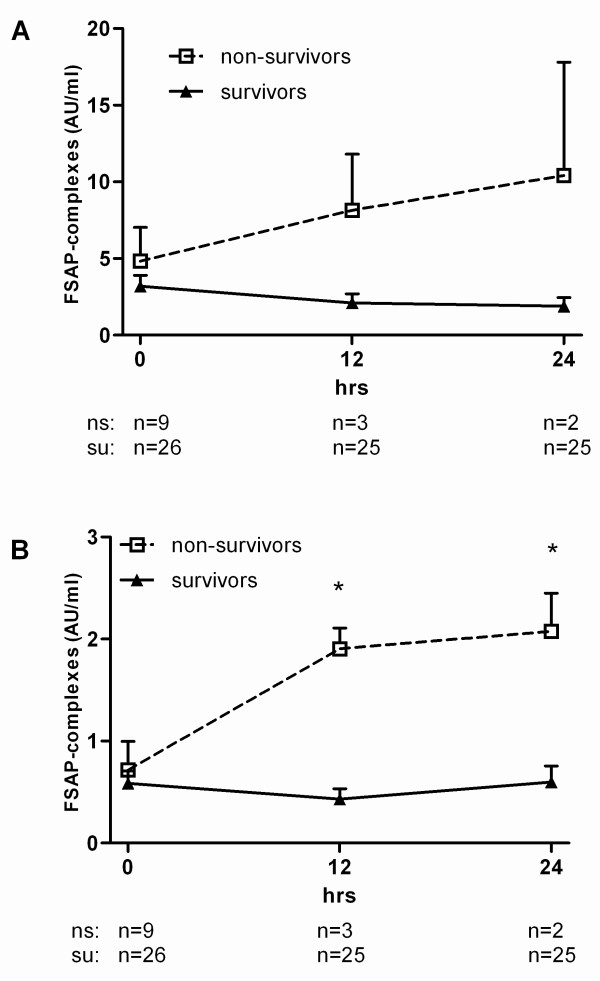
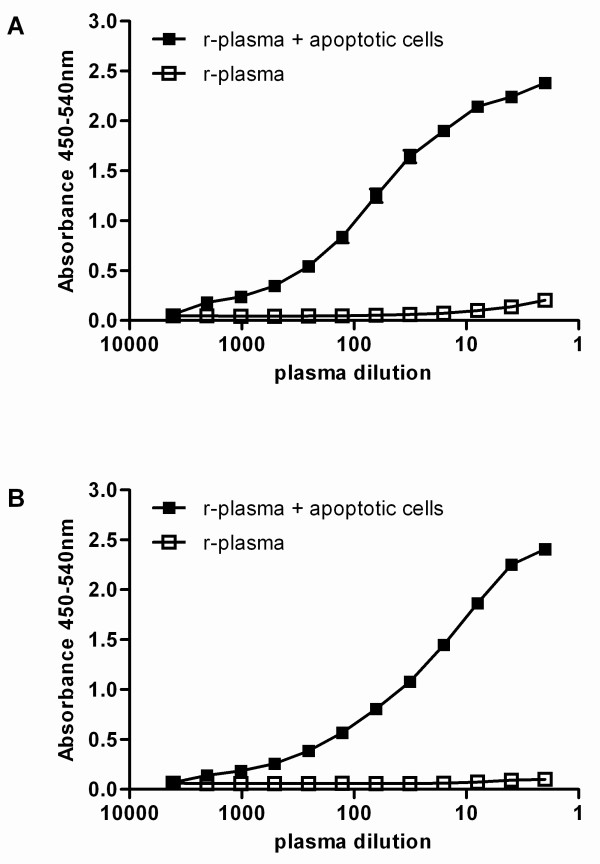
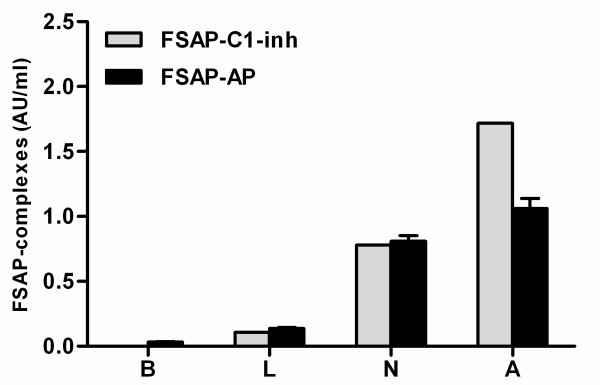
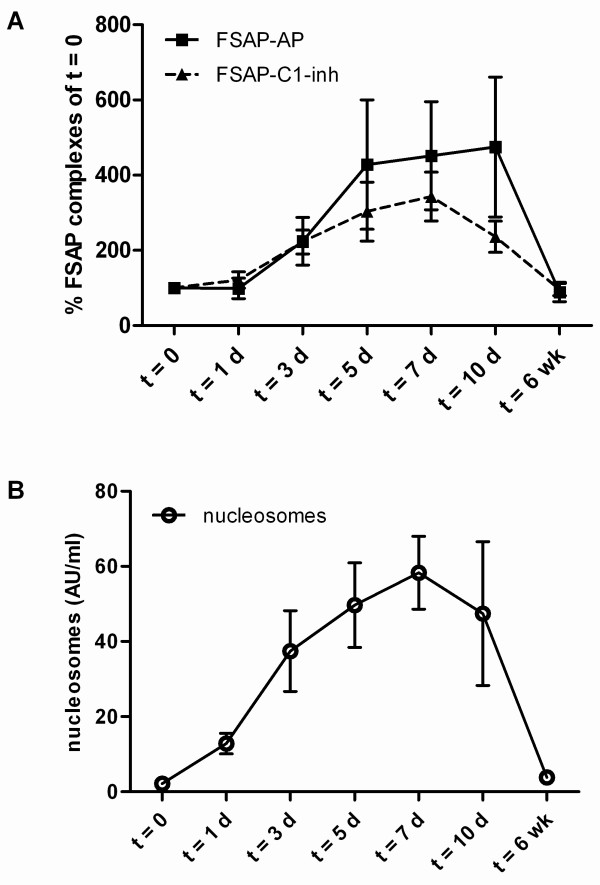
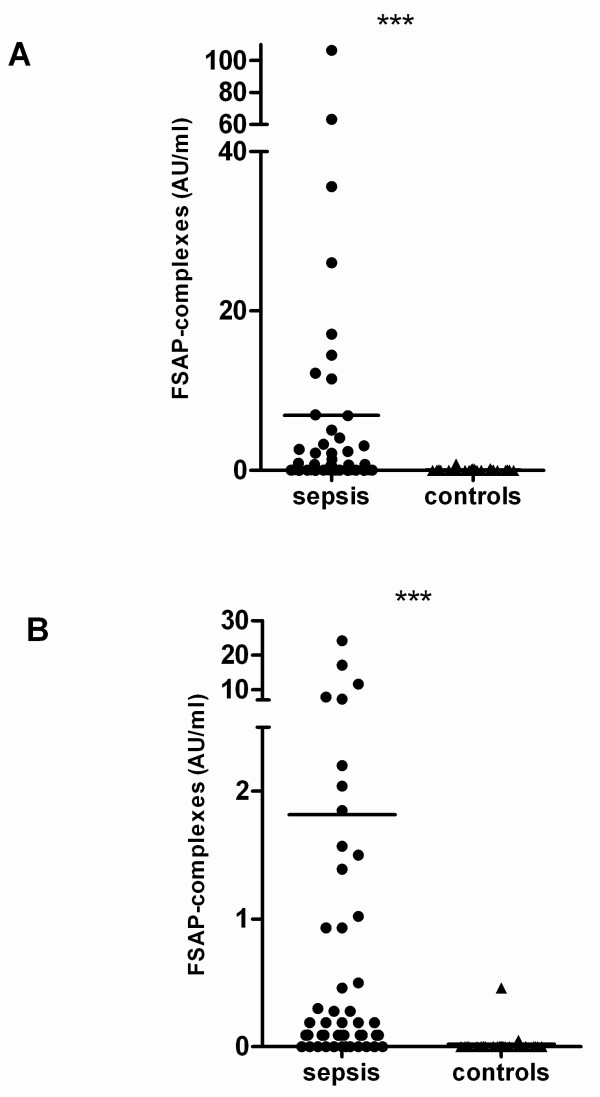
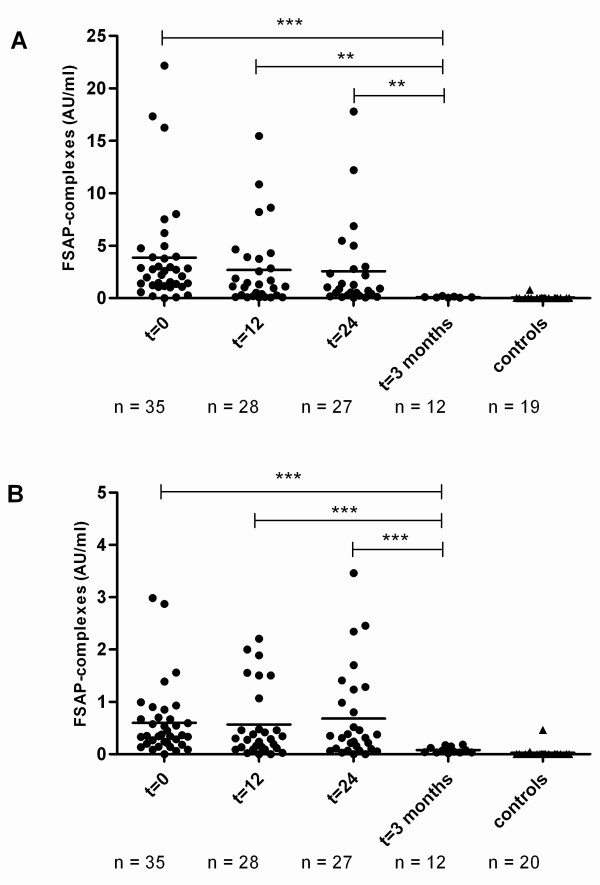
We demonstrate plasma FSAP to be activated upon contact with apoptotic and necrotic cells by an assay detecting complexes between FSAP and its target serpins α2-antiplasmin and C1-inhibitor, respectively. By means of that assay we demonstrate FSAP activation in post-surgery patients, patients suffering from severe sepsis, septic shock and meningococcal sepsis. Levels of FSAP-inhibitor complexes correlate with nucleosome levels and correlate with severity and mortality in these patients.
These results suggest FSAP activation to be a sensor for cell death in the circulation and that FSAP activation in sepsis might be involved in nucleosome release, thereby contributing to lethality.
细胞死亡是脓毒症发病机制中的一个核心事件,并且可以通过循环核小体反映出来。循环核小体被认为在炎症中起重要作用,并被证明与脓毒症患者的严重程度和预后相关。我们最近发现,血浆可以从晚期凋亡细胞中释放核小体。因子 VII 激活蛋白酶(FSAP)被鉴定为负责核小体释放的血浆丝氨酸蛋白酶。本研究旨在研究患有各种炎症性疾病的患者中 FSAP 的激活情况,这些疾病的严重程度逐渐增加。
我们开发了 ELISA 来测量血浆中的 FSAP-C1 抑制剂和 FSAP-α2 抗纤溶酶复合物。我们测量了 20 例接受经食管切除术的成年患者、32 例严重脓毒症患者和 8 例脓毒性休克患者以及 38 例脑膜炎球菌性脓毒症儿童的血浆中 FSAP 抑制剂复合物。
我们通过检测 FSAP 与其靶蛋白丝氨酸蛋白酶抑制剂 α2-抗纤溶酶和 C1 抑制剂之间的复合物,证明了在与凋亡和坏死细胞接触时血浆 FSAP 被激活。通过该测定法,我们证明了手术后患者、严重脓毒症、脓毒性休克和脑膜炎球菌性脓毒症患者的 FSAP 激活。FSAP-抑制剂复合物的水平与核小体水平相关,并与这些患者的严重程度和死亡率相关。
这些结果表明 FSAP 激活是循环中细胞死亡的传感器,脓毒症中的 FSAP 激活可能与核小体释放有关,从而导致死亡率增加。