Asojo Oluwatoyin A, Homma Kohei, Sedlacek Meghan, Ngamelue Michelle, Goud Gaddam N, Zhan Bin, Deumic Vehid, Asojo Oluyomi, Hotez Peter J
Department of Pathology and Microbiology, College of Medicine Nebraska Medical Center, Omaha, NE 68198-6495, USA.
BMC Struct Biol. 2007 Jun 26;7:42. doi: 10.1186/1472-6807-7-42.
Human hookworm infection is a major cause of anemia and malnutrition of adults and children in the developing world. As part of on-going efforts to control hookworm infection, The Human Hookworm Vaccine Initiative has identified candidate vaccine antigens from the infective L3 larval stages and adult stages of the parasite. Adult stage antigens include the cytosolic glutathione-S-transferases (GSTs). Nematode GSTs facilitate the inactivation and degradation of a variety of electrophilic substrates (drugs) via the nucleophilic addition of reduced glutathione. Parasite GSTs also play significant roles in multi-drug resistance and the modulation of host-immune defense mechanisms.
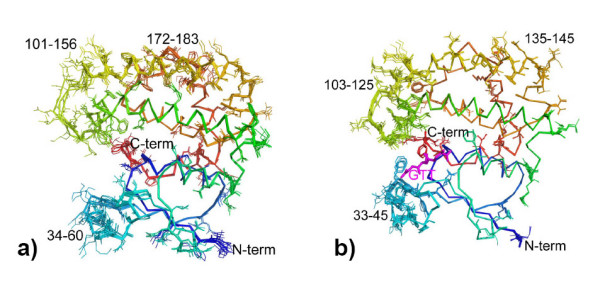
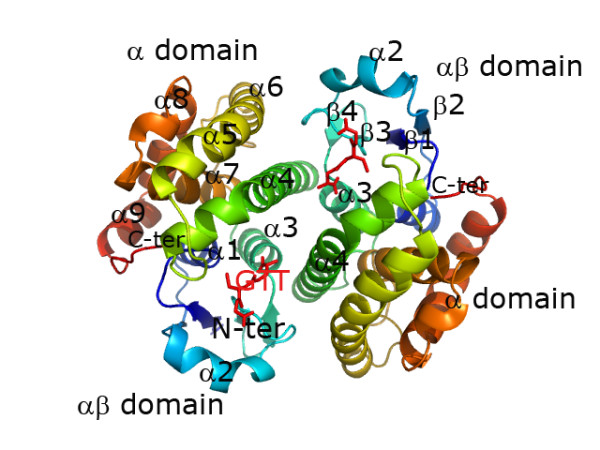
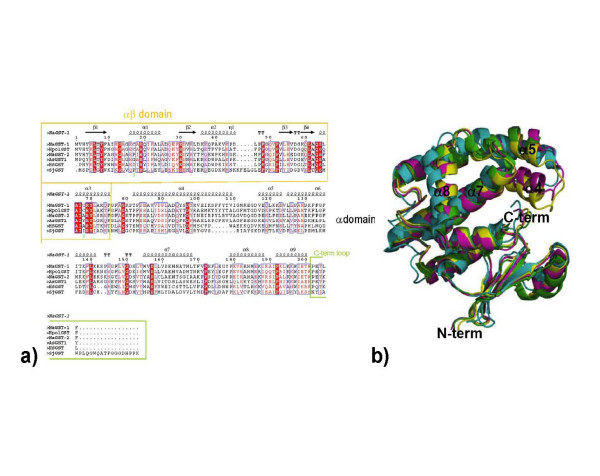
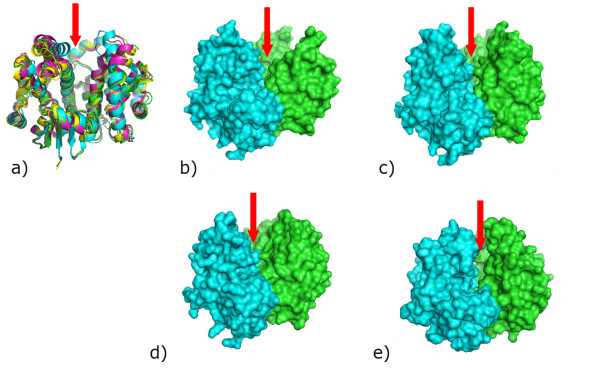
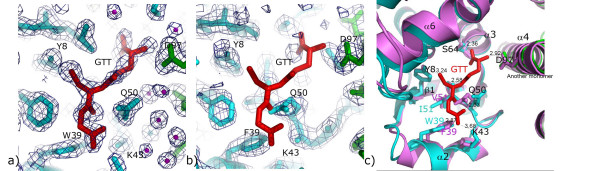
The crystal structures of Na-GST-1 and Na-GST-2, two major GSTs from Necator americanus the main human hookworm parasite, have been solved at the resolution limits of 2.4 A and 1.9 A respectively. The structure of Na-GST-1 was refined to R-factor 18.9% (R-free 28.3%) while that of Na-GST-2 was refined to R-factor 17.1% (R-free 21.7%). Glutathione usurped during the fermentation process in bound in the glutathione binding site (G-site) of each monomer of Na-GST-2. Na-GST-1 is uncomplexed and its G-site is abrogated by Gln 50. These first structures of human hookworm parasite GSTs could aid the design of novel hookworm drugs.
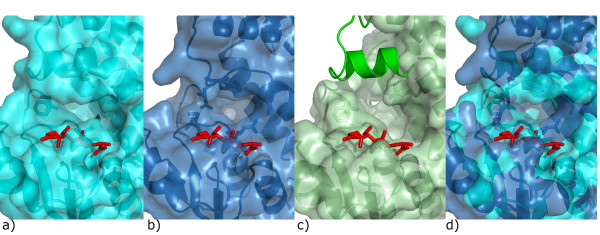
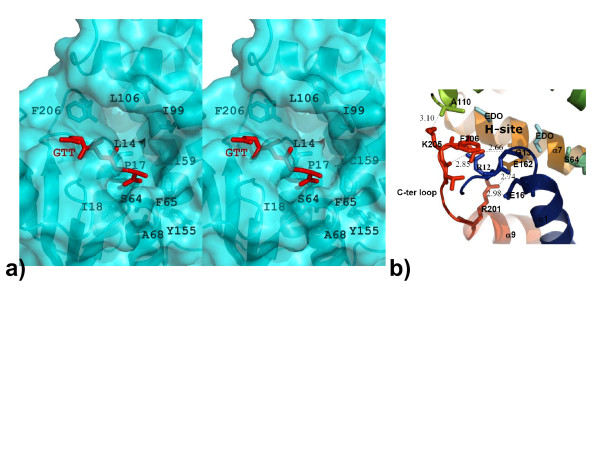
The 3-dimensional structures of Na-GST-1 and Na-GST-2 show two views of human hookworm GSTs. While the GST-complex structure of Na-GST-2 reveals a typical GST G-site that of Na-GST-1 suggests that there is some conformational flexibility required in order to bind the substrate GST. In addition, the overall binding cavities for both are larger, more open, as well as more accessible to diverse ligands than those of GSTs from organisms that have other major detoxifying mechanisms. The results from this study could aid in the design of novel drugs and vaccine antigens.
人体钩虫感染是发展中世界成人和儿童贫血及营养不良的主要原因。作为控制钩虫感染持续努力的一部分,人类钩虫疫苗倡议组织已从该寄生虫的感染性L3幼虫阶段和成虫阶段鉴定出候选疫苗抗原。成虫阶段抗原包括胞质谷胱甘肽 - S - 转移酶(GSTs)。线虫GSTs通过还原型谷胱甘肽的亲核加成促进多种亲电底物(药物)的失活和降解。寄生虫GSTs在多药耐药性以及宿主免疫防御机制的调节中也发挥着重要作用。
已分别在2.4 Å和1.9 Å的分辨率极限下解析了来自主要人体钩虫美洲板口线虫的两种主要GSTs即Na - GST - 1和Na - GST - 2的晶体结构。Na - GST - 1的结构精修至R因子18.9%(自由R因子28.3%),而Na - GST - 2的结构精修至R因子17.1%(自由R因子21.7%)。在发酵过程中夺取的谷胱甘肽结合在Na - GST - 2每个单体的谷胱甘肽结合位点(G位点)。Na - GST - 1未形成复合物,其G位点被Gln 50消除。这些人体钩虫寄生虫GSTs的首批结构有助于新型钩虫药物的设计。
Na - GST - 1和Na - GST - 2的三维结构展示了人体钩虫GSTs的两种视图。虽然Na - GST - 2的GST - 复合物结构揭示了典型的GST G位点,但Na - GST - 1的结构表明为了结合底物GST需要一些构象灵活性。此外,与具有其他主要解毒机制的生物体的GSTs相比,两者的整体结合腔更大、更开放,并且对多种配体更易接近。本研究结果有助于新型药物和疫苗抗原的设计。