Sen Sarma Moushumi, Whitfield Charles W, Robinson Gene E
Neuroscience Program, Institute for Genomic Biology, Department of Entomology, University of Illinois, Urbana, Illinois 61801, USA.
BMC Genomics. 2007 Jun 29;8:202. doi: 10.1186/1471-2164-8-202.
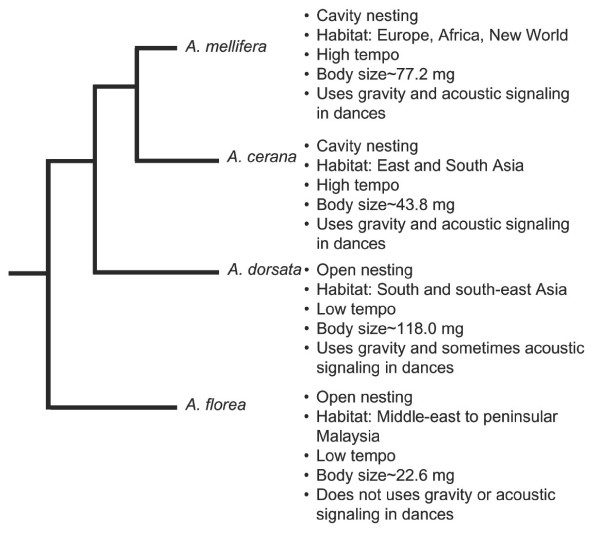
Honey bees are known for several striking social behaviors, including a complex pattern of behavioral maturation that gives rise to an age-related colony division of labor and a symbolic dance language, by which successful foragers communicate the location of attractive food sources to their nestmates. Our understanding of honey bees is mostly based on studies of the Western honey bee, Apis mellifera, even though there are 9-10 other members of genus Apis, showing interesting variations in social behavior relative to A. mellifera. To facilitate future in-depth genomic and molecular level comparisons of behavior across the genus, we performed a microarray analysis of brain gene expression for A. mellifera and three key species found in Asia, A. cerana, A. florea and A. dorsata.
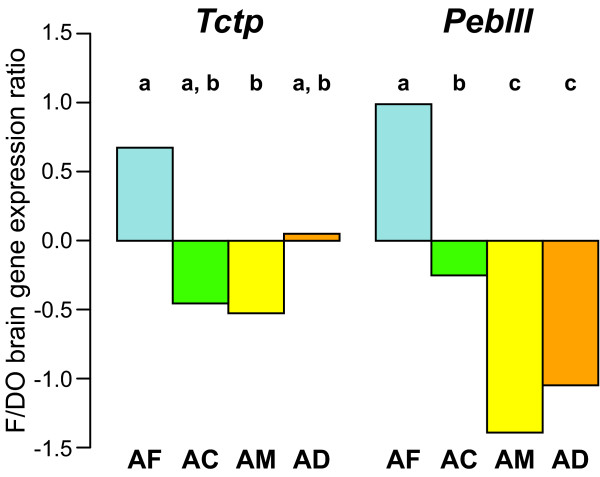
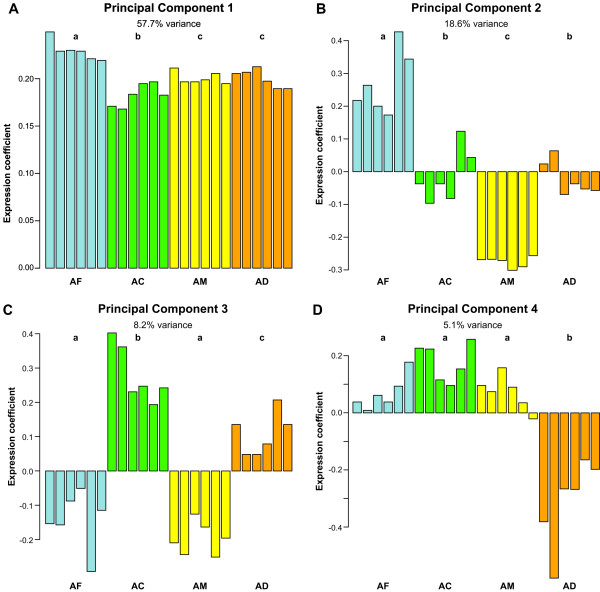
For each species we compared brain gene expression patterns between foragers and adult one-day-old bees on an A. mellifera cDNA microarray and calculated within-species gene expression ratios to facilitate cross-species analysis. The number of cDNA spots showing hybridization fluorescence intensities above the experimental threshold was reduced by an average of 16% in the Asian species compared to A. mellifera, but an average of 71% of genes on the microarray were available for analysis. Brain gene expression profiles between foragers and one-day-olds showed differences that are consistent with a previous study on A. mellifera and were comparable across species. Although 1772 genes showed significant differences in expression between foragers and one-day-olds, only 218 genes showed differences in forager/one-day-old expression between species (p < 0.001). Principal Components Analysis revealed dominant patterns of expression that clearly distinguished between the four species but did not reflect known differences in behavior and ecology. There were species differences in brain expression profiles for functionally related groups of genes.
We conclude that the A. mellifera cDNA microarray can be used effectively for cross-species comparisons within the genus. Our results indicate that there is a widespread conservation of the molecular processes in the honey bee brain underlying behavioral maturation. Species differences in brain expression profiles for functionally related groups of genes provide possible clues to the basis of behavioral variation in the genus.
蜜蜂以多种引人注目的社会行为而闻名,包括一种复杂的行为成熟模式,这种模式导致了与年龄相关的蜂群劳动分工以及一种象征性的舞蹈语言,通过这种语言,成功的觅食者能够向其巢伴传达有吸引力的食物来源的位置。尽管蜜蜂属还有9 - 10个其他成员,它们在社会行为方面相对于西方蜜蜂(意大利蜜蜂)表现出有趣的差异,但我们对蜜蜂的了解大多基于对西方蜜蜂(意大利蜜蜂)的研究。为了便于未来在基因组和分子水平上对该属内的行为进行深入比较,我们对意大利蜜蜂以及在亚洲发现的三个关键物种——中华蜜蜂、小蜜蜂和大蜜蜂的大脑基因表达进行了微阵列分析。
对于每个物种,我们在意大利蜜蜂cDNA微阵列上比较了觅食者和一日龄成年蜜蜂之间的大脑基因表达模式,并计算了种内基因表达比率以促进跨物种分析。与意大利蜜蜂相比,亚洲物种中显示杂交荧光强度高于实验阈值的cDNA斑点数量平均减少了16%,但微阵列上平均71%的基因可用于分析。觅食者和一日龄蜜蜂之间的大脑基因表达谱显示出的差异与之前对意大利蜜蜂的研究一致,并且在不同物种之间具有可比性。尽管有1772个基因在觅食者和一日龄蜜蜂之间表现出显著的表达差异,但只有218个基因在不同物种的觅食者/一日龄表达中表现出差异(p < 0.001)。主成分分析揭示了明显区分这四个物种的主要表达模式,但并未反映出已知的行为和生态差异。在功能相关的基因组中,大脑表达谱存在物种差异。
我们得出结论,意大利蜜蜂cDNA微阵列可有效地用于该属内的跨物种比较。我们的结果表明,蜜蜂大脑中行为成熟背后的分子过程存在广泛的保守性。功能相关基因组的大脑表达谱中的物种差异为该属内行为变异的基础提供了可能的线索。