Parmar Malin, Li Meng
Institute for Stem Cell Research, University of Edinburgh, Edinburgh, UK.
BMC Dev Biol. 2007 Jul 18;7:86. doi: 10.1186/1471-213X-7-86.
Understanding how lineage choices are made during embryonic stem (ES) cell differentiation is critical for harnessing strategies for controlled production of therapeutic somatic cell types for cell transplantation and pharmaceutical drug screens. The in vitro generation of dopaminergic neurons, the type of cells lost in Parkinson's disease patients' brains, requires the inductive molecules sonic hedgehog and FGF8, or an unknown stromal cell derived inducing activity (SDIA). However, the exact identity of the responding cells and the timing of inductive activity that specify a dopaminergic fate in neural stem/progenitors still remain elusive.
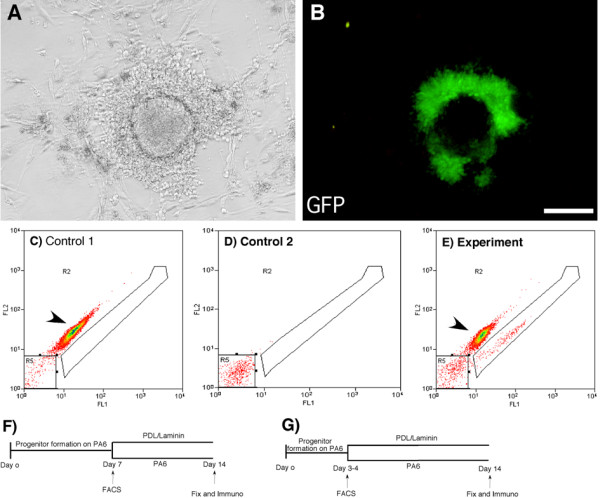
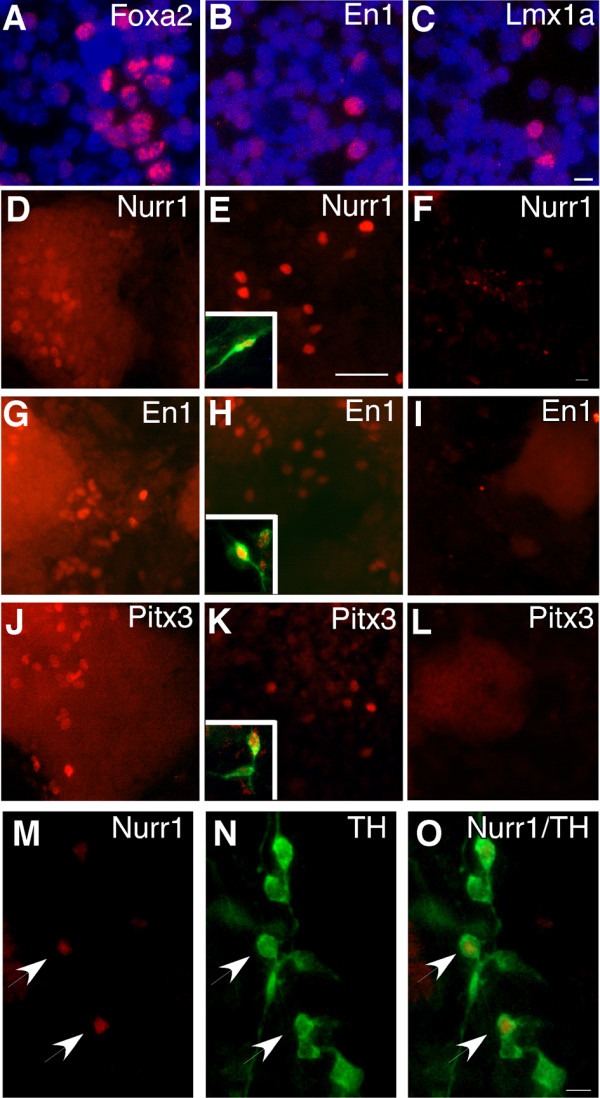
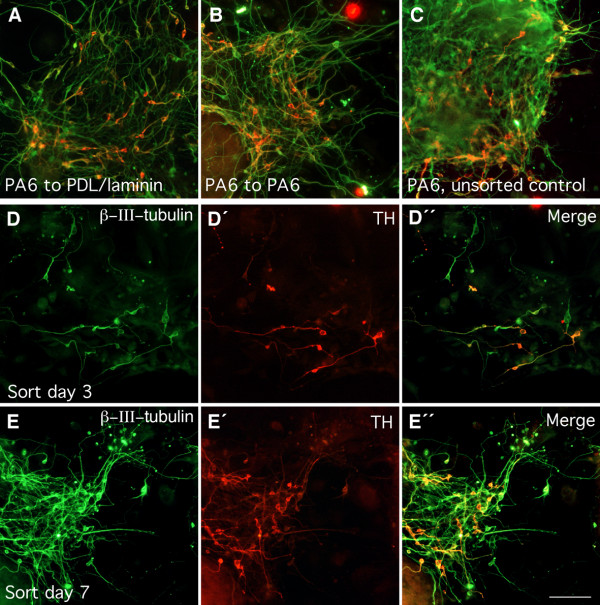
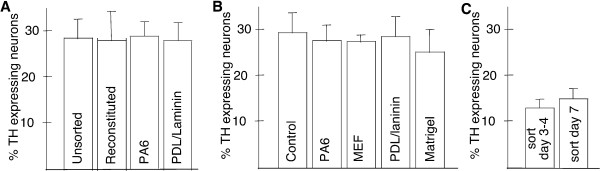
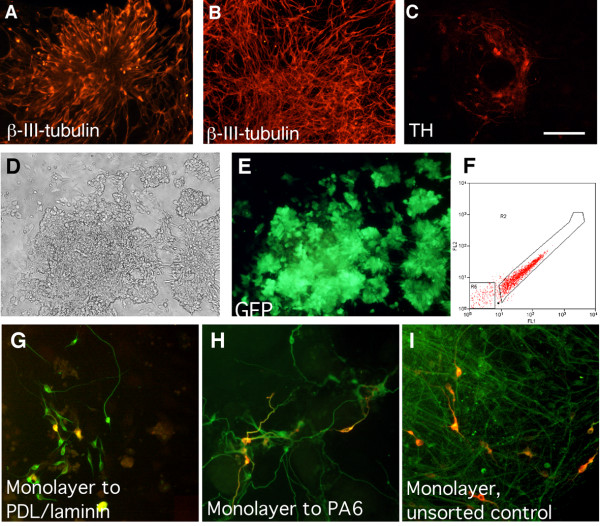
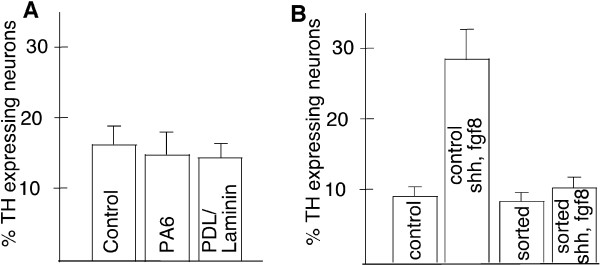
Using ES cells carrying a neuroepithelial cell specific vital reporter (Sox1-GFP) and FACS purification of Sox1-GFP neural progenitors, we have investigated the temporal aspect of SDIA mediated dopaminergic neuron specification during ES cell differentiation. Our results establish that SDIA induces a dopaminergic neuron fate in nascent neural stem or progenitor cells at, or prior to, Sox1 expression and does not appear to have further instructive role or neurotrophic activity during late neuronal differentiation of neural precursors. Furthermore, we show that dopaminergic neurons could be produced efficiently in a monolayer differentiation paradigm independent of SDIA activity or exogenous signalling molecules. In this case, the competence for dopaminergic neuron differentiation is also established at the level of Sox1 expression.
Dopaminergic neurons are specified early during mouse ES cell differentiation. The subtype specification seems to be tightly linked with the acquisition of a pan neuroectoderm fate.
了解胚胎干细胞(ES细胞)分化过程中的谱系选择方式,对于掌握可控生产用于细胞移植和药物筛选的治疗性体细胞类型的策略至关重要。帕金森病患者大脑中缺失的多巴胺能神经元的体外生成需要诱导分子音猬因子和FGF8,或一种未知的基质细胞衍生诱导活性(SDIA)。然而,在神经干细胞/祖细胞中决定多巴胺能命运的应答细胞的确切身份以及诱导活性的时机仍然难以捉摸。
利用携带神经上皮细胞特异性活性报告基因(Sox1-GFP)的ES细胞和Sox1-GFP神经祖细胞的荧光激活细胞分选(FACS)纯化,我们研究了ES细胞分化过程中SDIA介导的多巴胺能神经元特化的时间方面。我们的结果表明,SDIA在Sox1表达时或之前在新生神经干细胞或祖细胞中诱导多巴胺能神经元命运,并且在神经前体细胞的晚期神经元分化过程中似乎没有进一步的指导作用或神经营养活性。此外,我们表明,在独立于SDIA活性或外源性信号分子的单层分化模式中可以高效产生多巴胺能神经元。在这种情况下,多巴胺能神经元分化的能力也在Sox1表达水平建立。
多巴胺能神经元在小鼠ES细胞分化早期就被特化。亚型特化似乎与泛神经外胚层命运的获得紧密相关。