Gladstone Institute of Virology and Immunology, University of California at San Francisco, San Francisco, California, United States of America.
PLoS One. 2007 Aug 1;2(7):e655. doi: 10.1371/journal.pone.0000655.
The SCID-hu Thy/Liv mouse model of HIV-1 infection is a useful platform for the preclinical evaluation of antiviral efficacy in vivo. We performed this study to validate the model with representatives of all four classes of licensed antiretrovirals.
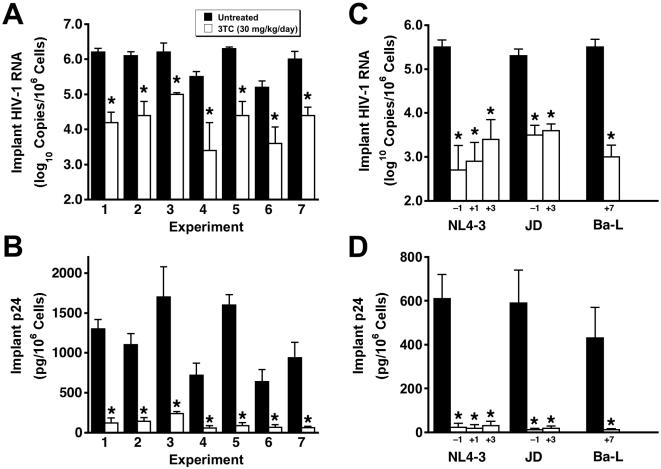
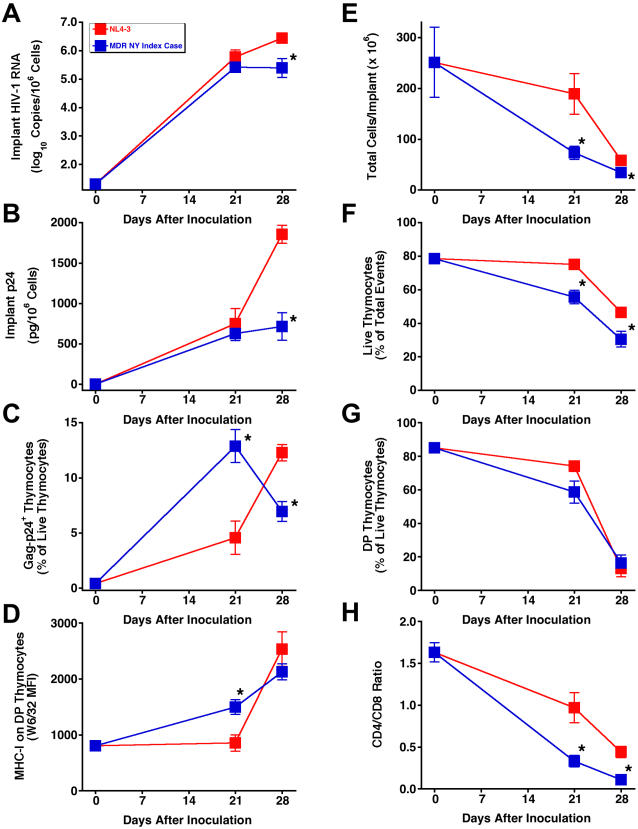
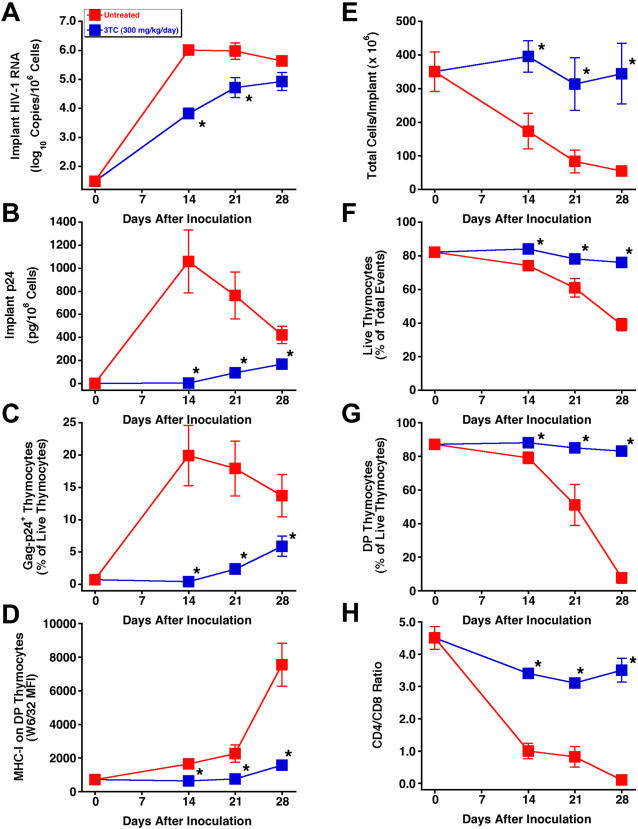
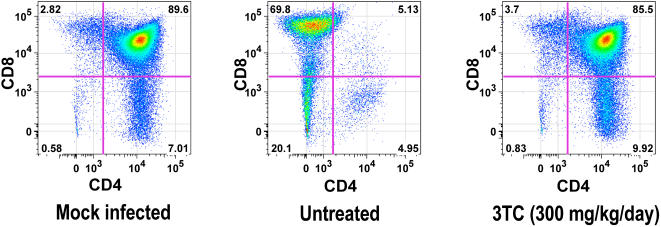
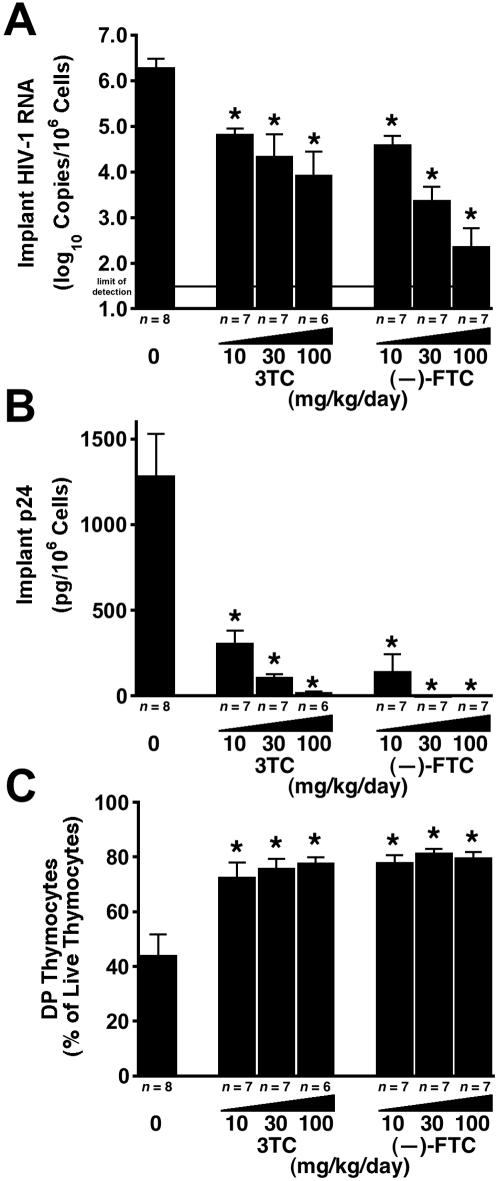
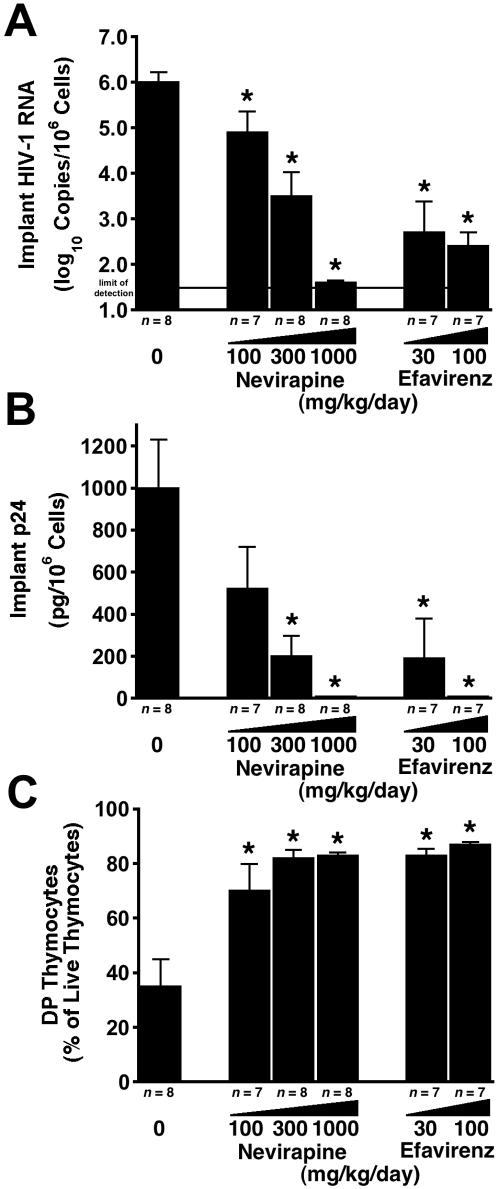
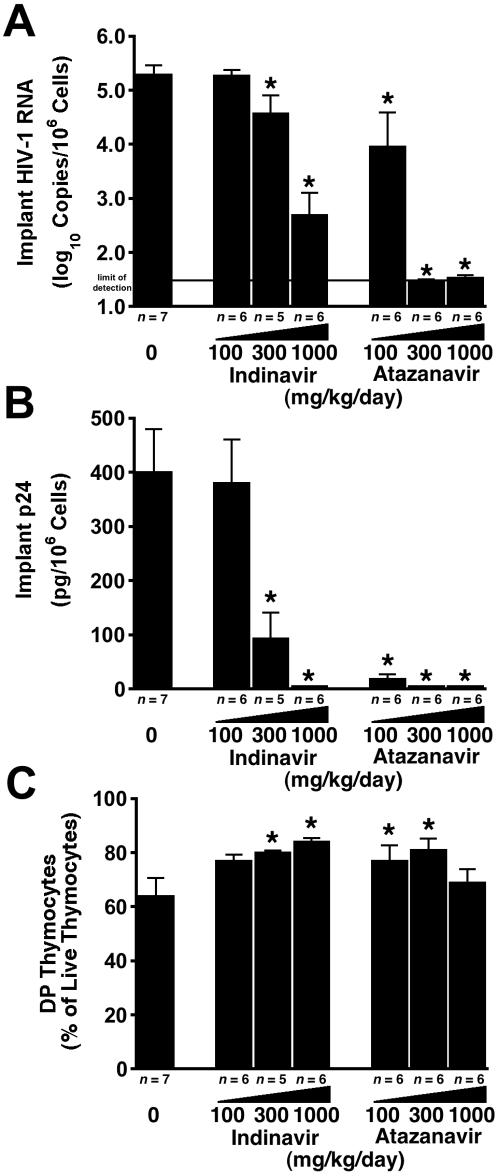
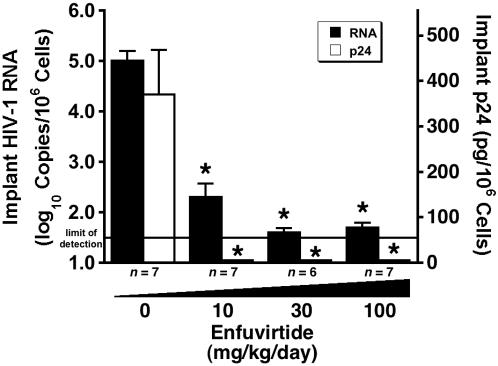
METHODOLOGY/PRINCIPAL FINDINGS: Endpoint analyses for quantification of Thy/Liv implant viral load included ELISA for cell-associated p24, branched DNA assay for HIV-1 RNA, and detection of infected thymocytes by intracellular staining for Gag-p24. Antiviral protection from HIV-1-mediated thymocyte depletion was assessed by multicolor flow cytometric analysis of thymocyte subpopulations based on surface expression of CD3, CD4, and CD8. These mice can be productively infected with molecular clones of HIV-1 (e.g., the X4 clone NL4-3) as well as with primary R5 and R5X4 isolates. To determine whether results in this model are concordant with those found in humans, we performed direct comparisons of two drugs in the same class, each of which has known potency and dosing levels in humans. Here we show that second-generation antiretrovirals were, as expected, more potent than their first-generation predecessors: emtricitabine was more potent than lamivudine, efavirenz was more potent than nevirapine, and atazanavir was more potent than indinavir. After interspecies pharmacodynamic scaling, the dose ranges found to inhibit viral replication in the SCID-hu Thy/Liv mouse were similar to those used in humans. Moreover, HIV-1 replication in these mice was genetically stable; treatment of the mice with lamivudine did not result in the M184V substitution in reverse transcriptase, and the multidrug-resistant NY index case HIV-1 retained its drug-resistance substitutions.
Given the fidelity of such comparisons, we conclude that this highly reproducible mouse model is likely to predict clinical antiviral efficacy in humans.
SCID-hu Thy/Liv 感染 HIV-1 的小鼠模型是评估体内抗病毒疗效的有用平台。我们进行了这项研究,以用所有四类已授权抗逆转录病毒药物的代表来验证该模型。
方法/主要发现:用于定量检测 Thy/Liv 移植物中病毒载量的终点分析包括细胞相关 p24 的 ELISA、HIV-1 RNA 的分支 DNA 检测以及通过 Gag-p24 的细胞内染色检测感染的胸腺细胞。通过基于 CD3、CD4 和 CD8 表面表达的多色流式细胞术分析胸腺细胞亚群,评估抗 HIV-1 介导的胸腺细胞耗竭的抗病毒保护作用。这些小鼠可以被 HIV-1 的分子克隆(例如 X4 克隆 NL4-3)以及原发性 R5 和 R5X4 分离物有效感染。为了确定该模型中的结果是否与人类的结果一致,我们对同一种类的两种药物进行了直接比较,这两种药物在人类中都具有已知的效力和剂量水平。在这里,我们表明第二代抗逆转录病毒药物比第一代药物更有效:恩曲他滨比拉米夫定更有效,依非韦伦比奈韦拉平更有效,阿扎那韦比茚地那韦更有效。在种间药效学缩放后,发现抑制 SCID-hu Thy/Liv 小鼠中病毒复制的剂量范围与人类中使用的剂量范围相似。此外,这些小鼠中的 HIV-1 复制具有遗传稳定性;用拉米夫定治疗小鼠不会导致逆转录酶中的 M184V 取代,并且具有多种耐药性的 NY 指数病例 HIV-1 保留了其耐药性取代。
鉴于此类比较的准确性,我们得出结论,这种高度可重复的小鼠模型很可能预测人类的临床抗病毒疗效。