Hesketh Andy, Bucca Giselda, Laing Emma, Flett Fiona, Hotchkiss Graham, Smith Colin P, Chater Keith F
Department of Molecular Microbiology, John Innes Centre, Norwich Research Park, Colney, Norwich, NR4 7UH, UK.
BMC Genomics. 2007 Aug 2;8:261. doi: 10.1186/1471-2164-8-261.
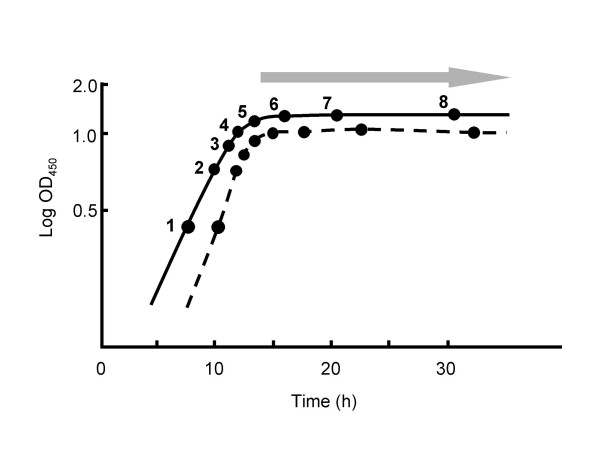
In Streptomyces coelicolor, bldA encodes the only tRNA for a rare leucine codon, UUA. This tRNA is unnecessary for growth, but is required for some aspects of secondary metabolism and morphological development. We describe a transcriptomic and proteomic analysis of the effects of deleting bldA on cellular processes during submerged culture: conditions relevant to the industrial production of antibiotics.
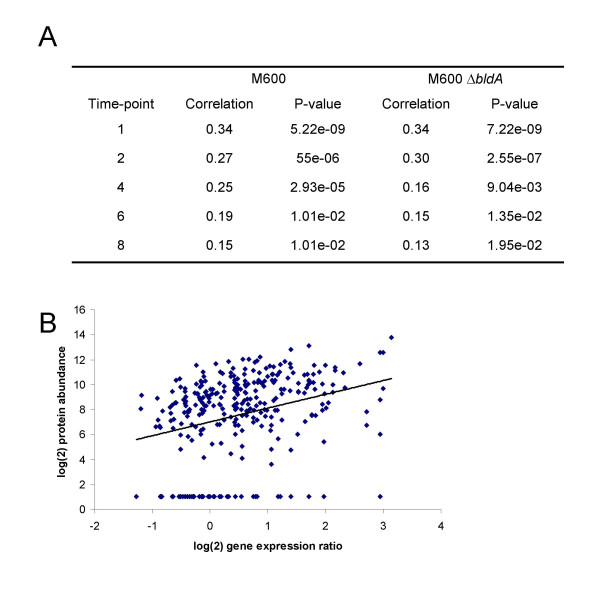
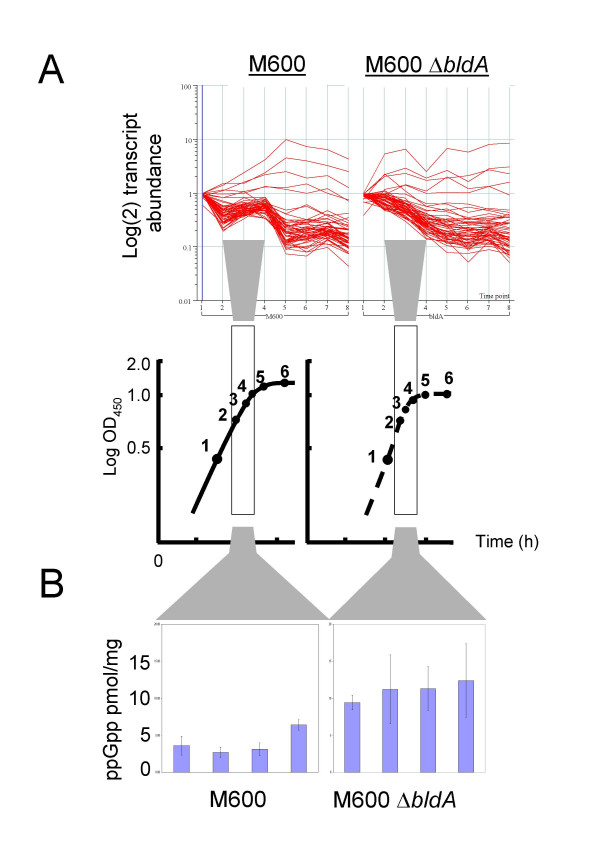
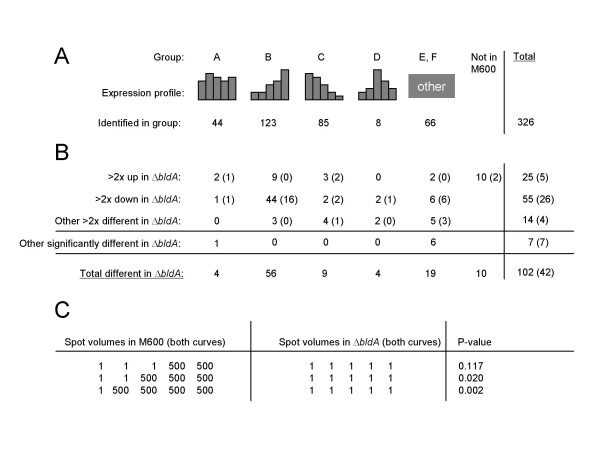
At the end of rapid growth, a co-ordinated transient up-regulation of about 100 genes, including many for ribosomal proteins, was seen in the parent strain but not the DeltabldA mutant. Increased basal levels of the signal molecule ppGpp in the mutant strain may be responsible for this difference. Transcripts or proteins from a further 147 genes classified as bldA-influenced were mostly expressed late in culture in the wild-type, though others were significantly transcribed during exponential growth. Some were involved in the biosynthesis of seven secondary metabolites; and some have probable roles in reorganising metabolism after rapid growth. Many of the 147 genes were "function unknown", and may represent unknown aspects of Streptomyces biology. Only two of the 147 genes contain a TTA codon, but some effects of bldA could be traced to TTA codons in regulatory genes or polycistronic operons. Several proteins were affected post-translationally by the bldA deletion. There was a statistically significant but weak positive global correlation between transcript and corresponding protein levels. Different technical limitations of the two approaches were a major cause of discrepancies in the results obtained with them.
Although deletion of bldA has very conspicuous effects on the gross phenotype, the bldA molecular phenotype revealed by the "dualomic" approach has shown that only about 2% of the genome is affected; but this includes many previously unknown effects at a variety of different levels, including post-translational changes in proteins and global cellular physiology.
在天蓝色链霉菌中,bldA编码唯一识别稀有亮氨酸密码子UUA的tRNA。该tRNA对生长并非必需,但对次级代谢和形态发育的某些方面是必需的。我们描述了在深层培养过程中,缺失bldA对细胞过程影响的转录组学和蛋白质组学分析:这些条件与抗生素的工业生产相关。
在快速生长末期,亲本菌株中约100个基因出现协调的瞬时上调,其中包括许多核糖体蛋白基因,而ΔbldA突变体中未出现这种情况。突变菌株中信号分子ppGpp的基础水平升高可能是造成这种差异的原因。另外147个被归类为受bldA影响的基因的转录本或蛋白质,在野生型菌株中大多在培养后期表达,不过其他一些基因在指数生长期显著转录。其中一些基因参与七种次级代谢产物的生物合成;还有一些可能在快速生长后重新组织代谢中发挥作用。这147个基因中的许多基因“功能未知”,可能代表了链霉菌生物学中未知的方面。这147个基因中只有两个含有TTA密码子,但bldA的一些影响可追溯到调控基因或多顺反子操纵子中的TTA密码子。几种蛋白质在翻译后受到bldA缺失的影响。转录本水平与相应蛋白质水平之间存在统计学上显著但较弱的正相关全局关系。两种方法不同的技术局限性是它们所得结果存在差异的主要原因。
尽管缺失bldA对总体表型有非常明显的影响,但“双组学”方法揭示的bldA分子表型表明,只有约2%的基因组受到影响;但这包括了许多在各种不同水平上以前未知的影响,包括蛋白质的翻译后变化和整体细胞生理学。