Satoh M
Department of Obstetrics and Gynecology, Faculty of Medicine, University of Tokyo, Japan.
J Anat. 1991 Aug;177:85-107.
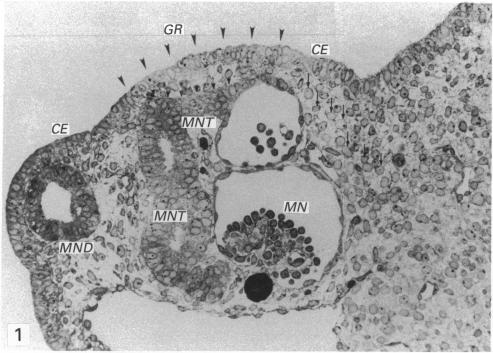
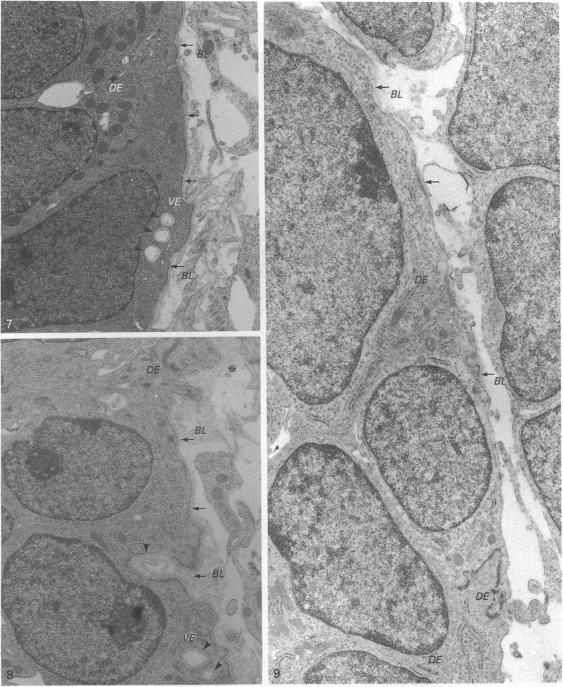
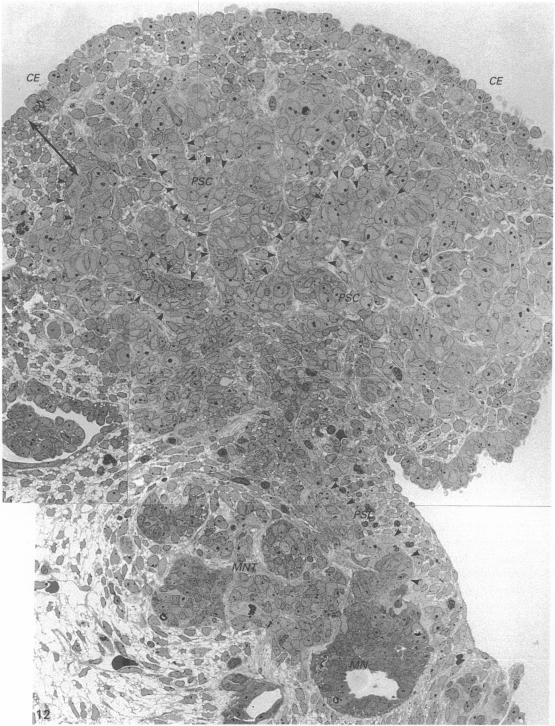
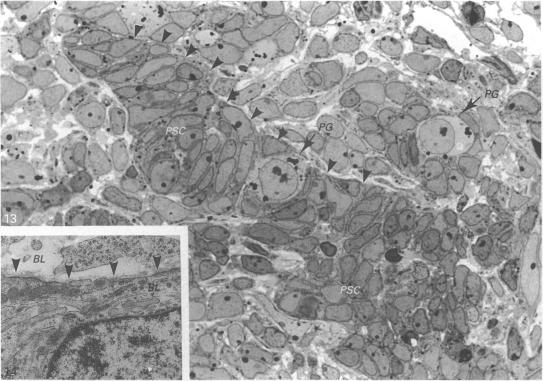
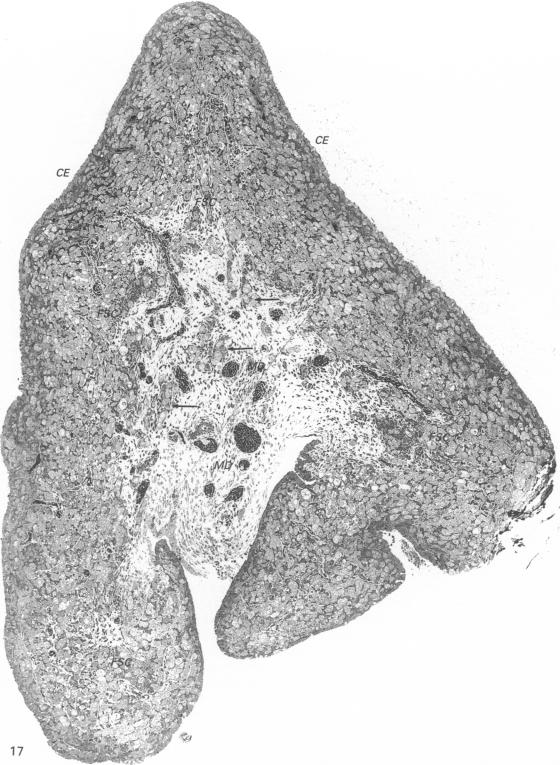
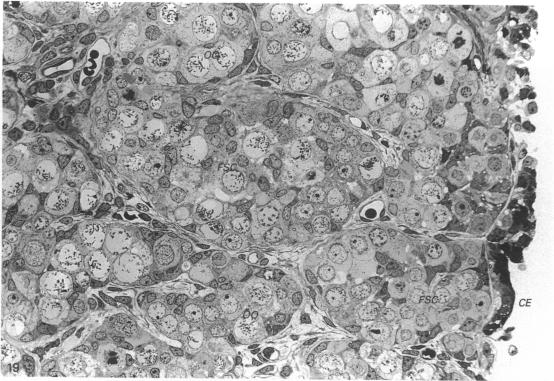
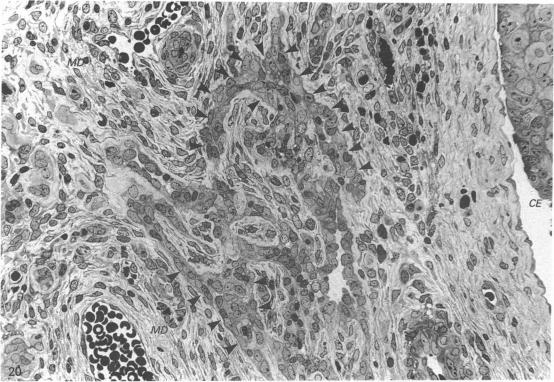
The histogenesis and organogenesis of the human gonad in 12 embryos and 6 fetuses of ovulational ages 5 to 18 weeks was investigated by histological and ultrastructural examination, including observation of almost complete serial Epon-embedded sections of entire gonads of 10 embryos. This investigation revealed that the main constituent cells of the gonads are derived from the mesonephros, and that the coelomic epithelium is not involved in the formation of the main component at any stage. With the migration of the primordial germ cells into the gonadal ridge, the coelomic epithelium becomes stratified to form a moderate protrusion of the gonad into the coelomic cavity and the coelomic epithelial cells develop into short pillars which form cord-like structures, the so-called primary sex cords. Shortly afterwards, concomitantly with the development into the subsequent prominent protrusion of the gonad into the coelomic cavity, cells emerging from the mesonephros are incorporated into the gonad to form 'primordial sex cords'. At this stage, a stratified, pile-like arrangement of coelomic epithelium flattens into monolaminar or oligolaminar structures. In the testis, the 'primordial sex cords' differentiate into seminiferous sex cords by elaborating a surrounding basal lamina. In the ovary, these 'primordial sex cords' become displaced towards the peripheral regions of the gonad by the enlargement of these cords, as well as by the formation of the interstitium, or so-called medulla, at the base of the ovary; they differentiate into 'folliculogenous sex cords' which give rise to follicular cells.
通过组织学和超微结构检查,对12例胚龄为5至18周的胚胎及6例胎儿的人性腺进行了组织发生和器官发生的研究,包括观察10例胚胎整个性腺几乎完整的系列环氧树脂包埋切片。该研究表明,性腺的主要组成细胞来源于中肾,体腔上皮在任何阶段均不参与主要成分的形成。随着原始生殖细胞迁移至性腺嵴,体腔上皮分层,形成性腺向体腔的适度突出,体腔上皮细胞发育成短柱状,形成索状结构,即所谓的初级性索。此后不久,伴随着性腺向体腔后续突出的发育,从中肾出现的细胞并入性腺形成“原始性索”。在此阶段,分层的、堆积状排列的体腔上皮扁平为单层或多层结构。在睾丸中,“原始性索”通过形成周围的基膜分化为生精性索。在卵巢中,这些“原始性索”因这些索的增大以及卵巢底部间质或所谓髓质的形成而向性腺周边区域移位;它们分化为产生卵泡细胞的“卵泡源性性索”。