Pa Judy, Hickok Gregory
Department of Cognitive Sciences, University of California, Irvine, CA 92697-5100, United States.
Neuropsychologia. 2008 Jan 15;46(1):362-8. doi: 10.1016/j.neuropsychologia.2007.06.024. Epub 2007 Aug 20.
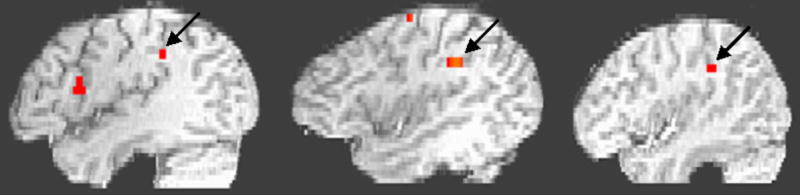
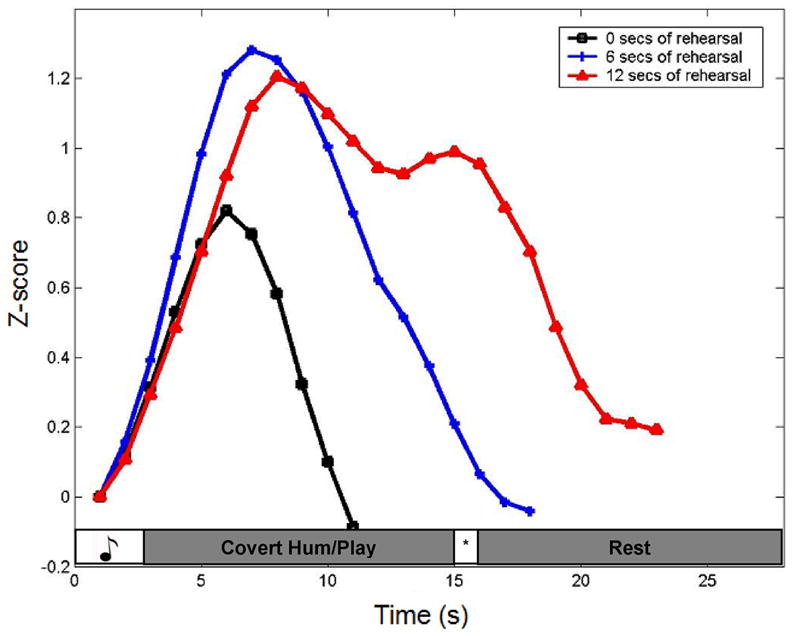
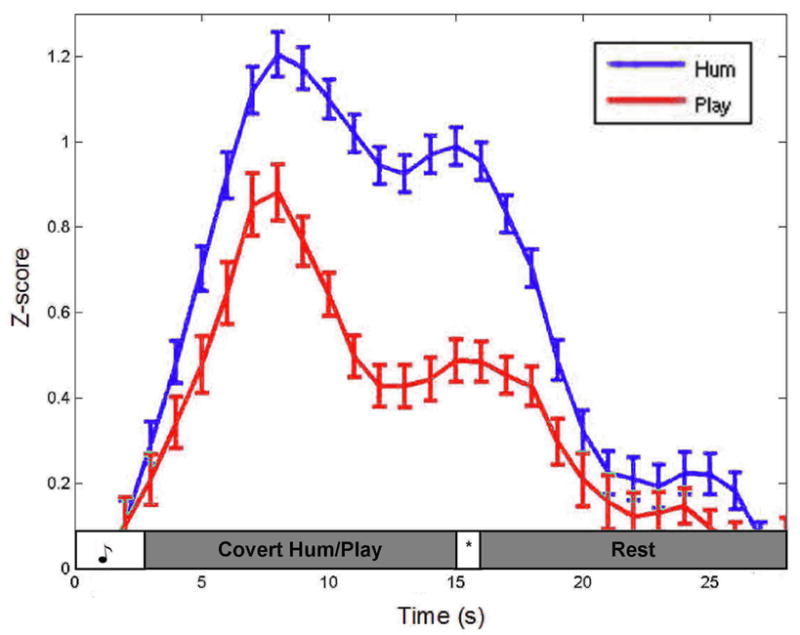
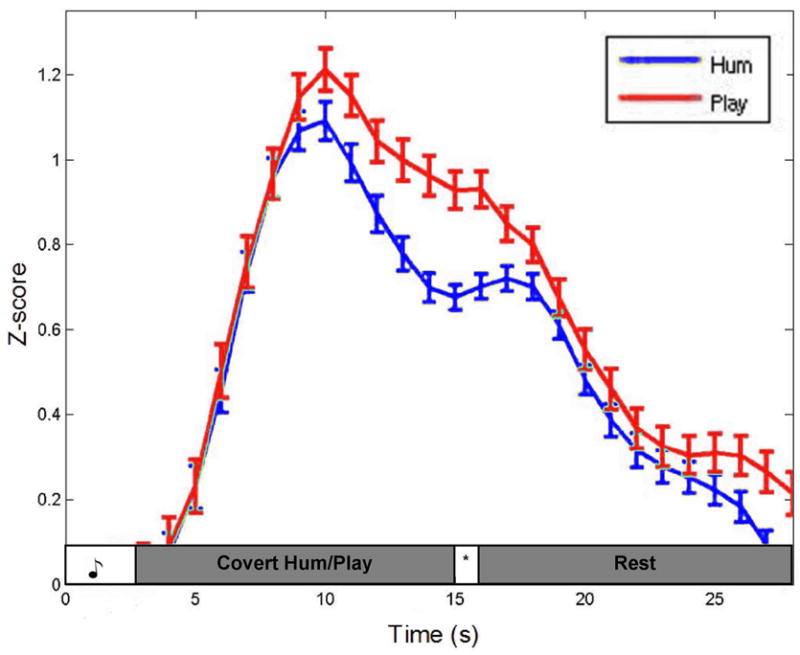
Several sensory-motor integration regions have been identified in parietal cortex, which appear to be organized around motor-effectors (e.g., eyes, hands). We investigated whether a sensory-motor integration area might exist for the human vocal tract. Speech requires extensive sensory-motor integration, as does other abilities such as vocal musical skills. Recent work found that a posterior superior temporal-parietal region, area Spt, has both sensory (auditory) and motor response properties (for both speech and tonal stimuli). Brain activity of skilled pianists was measured with fMRI while they listened to a novel melody and either covertly hummed the melody (vocal tract effectors) or covertly played the melody on a piano (manual effectors). Activity in area Spt was significantly higher for the covert hum versus covert play condition. A region in the anterior IPS (aIPS) showed the reverse pattern, suggesting its involvement in sensory-manual transformations. This finding suggests that area Spt is a sensory-motor integration area for vocal tract gestures.
在顶叶皮层中已经确定了几个感觉运动整合区域,这些区域似乎围绕运动效应器(如眼睛、手)进行组织。我们研究了人类声道是否可能存在一个感觉运动整合区域。言语需要广泛的感觉运动整合,其他能力如声乐技巧也是如此。最近的研究发现,颞顶叶后上部区域,即Spt区,具有感觉(听觉)和运动反应特性(针对言语和音调刺激)。在熟练的钢琴家听一段新颖旋律时,用功能磁共振成像(fMRI)测量他们的大脑活动,他们要么暗中哼唱旋律(声道效应器),要么暗中在钢琴上弹奏旋律(手部效应器)。与暗中弹奏相比,暗中哼唱时Spt区的活动明显更高。前顶内沟(aIPS)中的一个区域显示出相反的模式,表明它参与了感觉-手部转换。这一发现表明,Spt区是声道手势的感觉运动整合区域。