Wynne P, Newton C, Ledermann J A, Olaitan A, Mould T A, Hartley J A
Cancer Research UK Drug-DNA Interactions Research Group, UCL, London, UK.
Br J Cancer. 2007 Oct 8;97(7):927-33. doi: 10.1038/sj.bjc.6603973. Epub 2007 Sep 11.
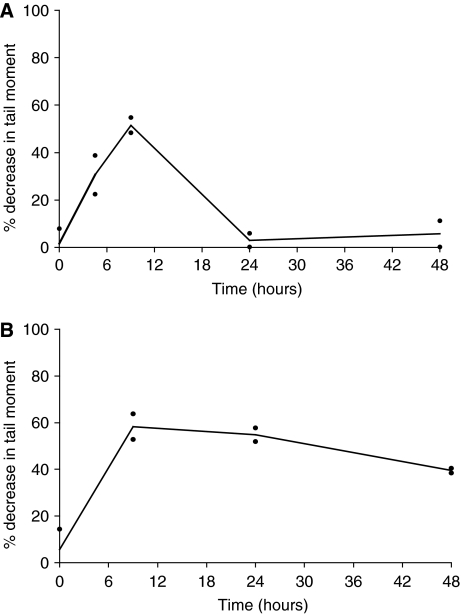
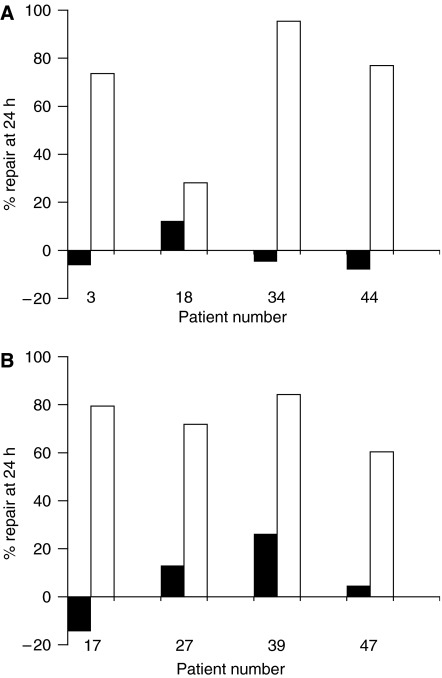
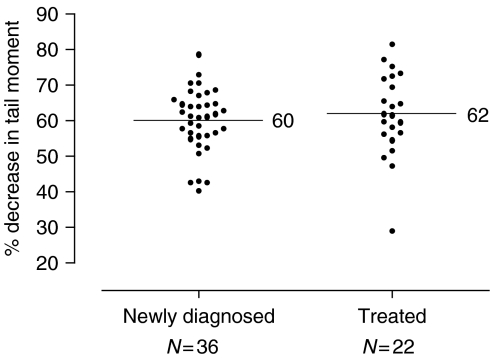
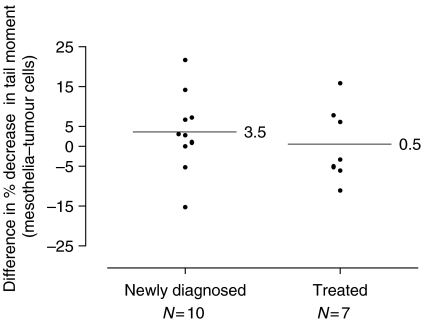
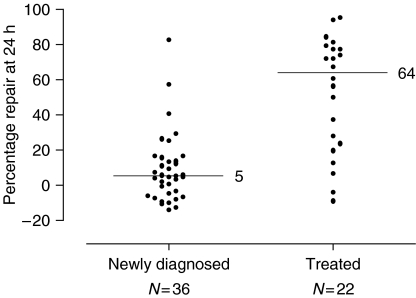
Despite high tumour response rates to platinum-based chemotherapy in ovarian cancer survival is poor due to the emergence of drug resistance. Mechanistic studies in clinical material have been hampered by the unavailability of sensitive methods to detect the critical drug-induced effects in individual cells. A modification of the single cell gel electrophoresis (comet) assay allows the sensitive detection of DNA interstrand crosslinking in both tumour and normal cells derived directly from clinical material. Tumour cells isolated from 50 ovarian cancer patients were treated ex vivo with 100 microM cisplatin for 1 h and crosslink formation and repair (unhooking) measured. No significant difference in the peak level of crosslinking in tumour cells was observed between patients who were either newly diagnosed or previously treated with platinum-based therapy, or between tumour and mesothelial cells from an individual patient. This indicates no difference in cellular mechanisms such as drug transport or detoxification. In contrast, the percentage repair (unhooking) of DNA interstrand crosslinks was much greater in the group of treated patients. At 24 h in the 36 newly diagnosed patient tumour samples, only one gave >50% repair and 23 gave <10% repair; however, 19 out of 22 treated patient samples gave >10% repair and 14 showed >50% repair. The estimated median difference (newly diagnosed minus treated) was -52 (95% CI -67 to -28), and the P-value from a Mann-Whitney test was <0.001. In eight patients, it was possible to obtain tumour samples prior to any chemotherapy, and also on relapse or at interval debulking surgery following platinum-based chemotherapy. In these patients, the mean % repair prior to therapy was 2.85 rising to 71.23 following treatment. These data demonstrate increased repair of DNA interstrand crosslinks in ovarian tumour cells following platinum therapy which may contribute to clinical acquired resistance.
尽管卵巢癌对铂类化疗的肿瘤反应率较高,但由于耐药性的出现,生存率仍然很低。临床材料的机制研究受到阻碍,因为缺乏灵敏的方法来检测单个细胞中关键的药物诱导效应。单细胞凝胶电泳(彗星)试验的一种改进方法能够灵敏地检测直接来源于临床材料的肿瘤细胞和正常细胞中的DNA链间交联。从50例卵巢癌患者中分离出的肿瘤细胞在体外接受100微摩尔顺铂处理1小时,然后测量交联形成和修复(解钩)情况。在新诊断患者或先前接受铂类治疗的患者之间,肿瘤细胞交联峰值水平没有显著差异,在个体患者的肿瘤细胞和间皮细胞之间也没有显著差异。这表明在药物转运或解毒等细胞机制方面没有差异。相比之下,接受治疗患者组中DNA链间交联的修复百分比要高得多。在36例新诊断患者的肿瘤样本中,24小时时只有1例修复率>50%,23例修复率<10%;然而,22例接受治疗患者的样本中有19例修复率>10%,14例显示修复率>50%。估计的中位数差异(新诊断患者减去接受治疗患者)为-52(95%可信区间-67至-28),曼-惠特尼检验的P值<0.001。在8例患者中,有可能在任何化疗之前以及铂类化疗后的复发或间隔减瘤手术时获得肿瘤样本。在这些患者中,治疗前的平均修复百分比为2.85,治疗后升至71.23。这些数据表明铂类治疗后卵巢肿瘤细胞中DNA链间交联的修复增加,这可能导致临床获得性耐药。