Carrol Enitan D, Salway Fiona, Pepper Stuart D, Saunders Emma, Mankhambo Limangeni A, Ollier William E, Hart C Anthony, Day Phillip
Malawi-Liverpool-Wellcome Trust Clinical Research Programme, PO Box 30096, Blantyre, Malawi, Africa.
BMC Immunol. 2007 Sep 12;8:20. doi: 10.1186/1471-2172-8-20.
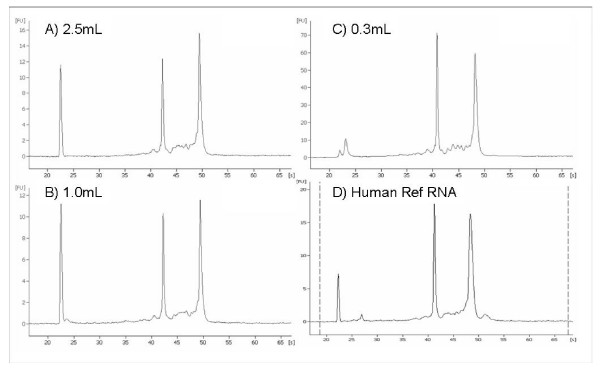
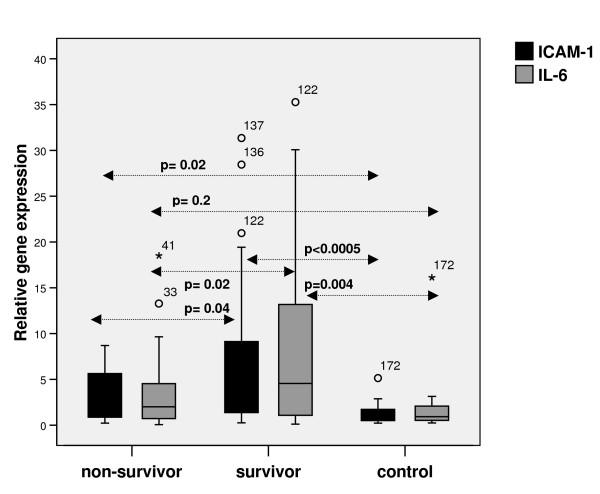
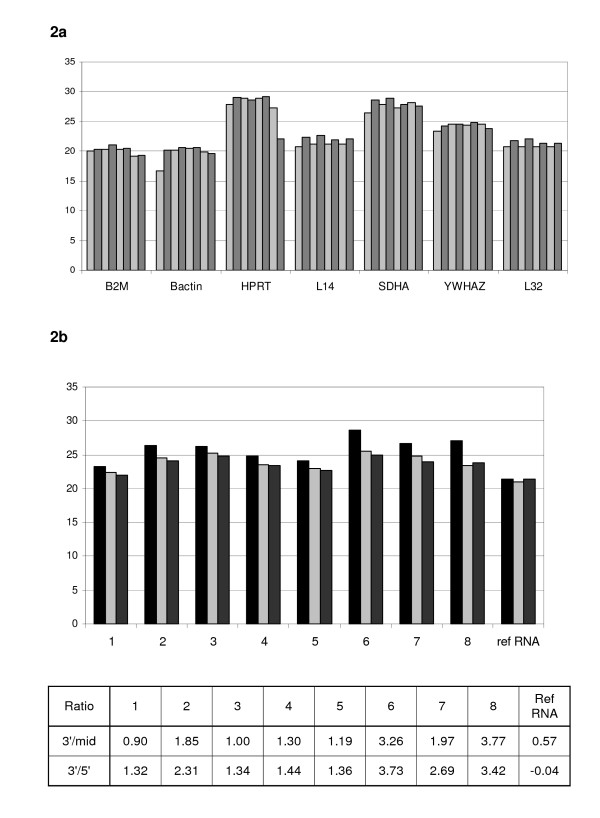
The challenge of gene expression studies is to reliably quantify levels of transcripts, but this is hindered by a number of factors including sample availability, handling and storage. The PAXgene Blood RNA System includes a stabilizing additive in a plastic evacuated tube, but requires 2.5 mL blood, which makes routine implementation impractical for paediatric use. The aim of this study was to modify the PAXgene Blood RNA System kit protocol for application to small, sick children, without compromising RNA integrity, and subsequently to perform quantitative analysis of ICAM and interleukin-6 gene expression.Aliquots of 0.86 mL PAXgene reagent were put into microtubes and 0.3 mL whole blood added to maintain the same recommended proportions as in the PAXgene evacuated tube system. RNA quality was assessed using the Agilent BioAnalyser 2100 and an in-house TaqMan assay which measures GAPDH transcript integrity by determining 3' to 5' ratios. qPCR analysis was performed on an additional panel of 7 housekeeping genes. Three reference genes (HPRT1, YWHAZ and GAPDH) were identified using the GeNORM algorithm, which were subsequently used to normalising target gene expression levels. ICAM-1 and IL-6 gene expression were measured in 87 Malawian children with invasive pneumococcal disease.
Total RNA yield was between 1,114 and 2,950 ng and the BioAnalyser 2100 demonstrated discernible 18s and 28s bands. The cycle threshold values obtained for the seven housekeeping genes were between 15 and 30 and showed good consistency. Median relative ICAM and IL-6 gene expression were significantly reduced in non-survivors compared to survivors (ICAM: 3.56 vs 4.41, p = 0.04, and IL-6: 2.16 vs 6.73, p = 0.02).
We have successfully modified the PAXgene blood collection system for use in small children and demonstrated preservation of RNA integrity and successful quantitative real-time PCR analysis.
基因表达研究面临的挑战是可靠地定量转录本水平,但这受到多种因素的阻碍,包括样本的可获得性、处理和储存。PAXgene血液RNA系统在一个塑料真空采血管中包含一种稳定添加剂,但需要2.5毫升血液,这使得该系统在儿科常规应用中不切实际。本研究的目的是修改PAXgene血液RNA系统试剂盒方案,以应用于患病的小儿童,同时不损害RNA完整性,随后对ICAM和白细胞介素-6基因表达进行定量分析。将0.86毫升PAXgene试剂分装到微量管中,加入0.3毫升全血,以保持与PAXgene真空采血管系统相同的推荐比例。使用安捷伦2100生物分析仪和一种内部TaqMan检测方法评估RNA质量,该检测方法通过测定3'到5'的比例来测量GAPDH转录本的完整性。对另外一组7个管家基因进行了qPCR分析。使用GeNORM算法鉴定了三个参考基因(HPRT1、YWHAZ和GAPDH),随后用于标准化靶基因表达水平。对87名患有侵袭性肺炎球菌疾病的马拉维儿童的ICAM-1和IL-6基因表达进行了测量。
总RNA产量在1114至2950纳克之间,生物分析仪2100显示出可分辨的18s和28s条带。七个管家基因获得的循环阈值在15至30之间,显示出良好的一致性。与幸存者相比,非幸存者中ICAM和IL-6基因表达的中位数显著降低(ICAM:3.56对4.41,p = 0.04;IL-6:2.16对6.73,p = 0.02)。
我们已成功修改PAXgene血液采集系统以用于小儿童,并证明了RNA完整性的保存以及成功的定量实时PCR分析。