Gerasimenko Yury, Roy Roland R, Edgerton V Reggie
Department of Physiological Science, University of California Los Angeles, Los Angeles, CA 90095, USA.
Exp Neurol. 2008 Feb;209(2):417-25. doi: 10.1016/j.expneurol.2007.07.015. Epub 2007 Aug 1.
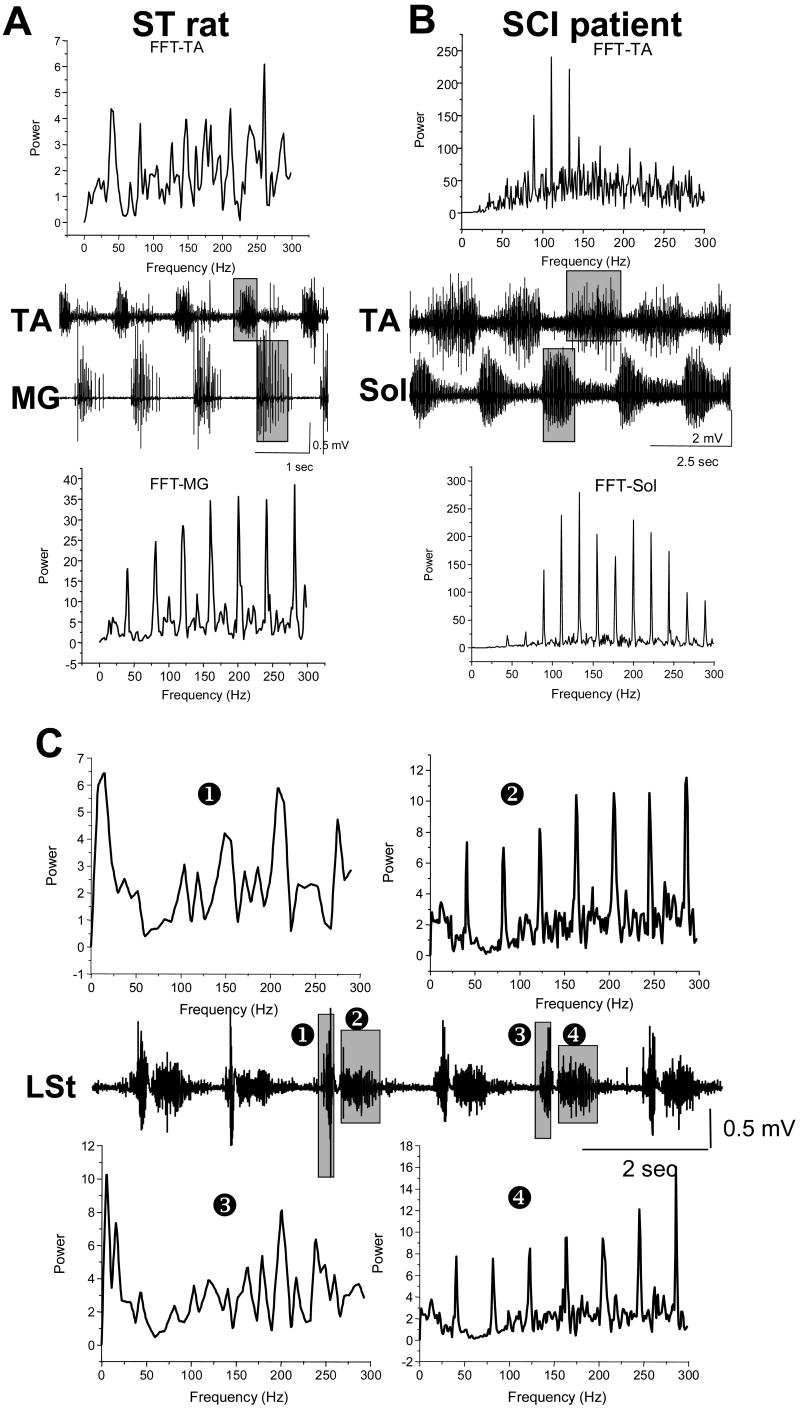
Although epidural stimulation is a technique that has been used for a number of years to treat individuals with a spinal cord injury, the intended outcome has been to suppress plasticity and pain. Over the last decade considerable progress has been made in realizing the potential of epidural stimulation to facilitate posture and locomotion in subjects with severe spinal cord injury who lack the ability to stand or to step. This progress has resulted primarily from experiments with mice, rats and cats having a complete spinal cord transection at a mid-thoracic level and in humans with a complete spinal cord injury. This review describes some of these experiments performed after the complete elimination of supraspinal input that demonstrates that the circuitry necessary to control remarkably normal locomotion appears to reside within the lumbosacral region of the spinal cord. These experiments, however, also demonstrate the essential role of processing proprioceptive information associated with weight-bearing stepping or standing by the spinal circuitry. For example, relatively simple tonic signals provided to the dorsum of the spinal cord epidurally can result in complex and highly adaptive locomotor patterns. Experiments emphasizing a significant complementary effect of epidural stimulation when combined with pharmacological facilitation, e.g., serotonergic agonists, and/or chronic step training also are described. Finally, a major point emphasized in this review is the striking similarity of the lumbosacral circuitry controlling locomotion in the rat and in the human.
尽管硬膜外刺激作为一种治疗脊髓损伤患者的技术已应用多年,但其预期效果一直是抑制可塑性和疼痛。在过去十年中,在实现硬膜外刺激促进严重脊髓损伤且无法站立或行走的受试者的姿势和运动能力方面取得了相当大的进展。这一进展主要源于对胸段中部脊髓完全横断的小鼠、大鼠和猫以及完全脊髓损伤患者所做的实验。这篇综述描述了在完全消除脊髓以上输入后进行的一些实验,这些实验表明控制明显正常运动所需的神经回路似乎存在于脊髓的腰骶部区域。然而,这些实验也证明了脊髓神经回路处理与负重行走或站立相关的本体感觉信息的重要作用。例如,硬膜外给予脊髓背侧相对简单的强直信号可导致复杂且高度适应性的运动模式。文中还描述了一些实验,这些实验强调了硬膜外刺激与药物促进(如血清素能激动剂)和/或慢性步幅训练相结合时的显著互补作用。最后,这篇综述强调的一个重点是,大鼠和人类中控制运动的腰骶部神经回路具有惊人的相似性。