Hill Andrew A, LaPan Peter, Li Yizheng, Haney Steve
Department of Biological Technologies, Wyeth Research, 35 CambridgePark Drive, Cambridge, MA 02140, USA.
BMC Bioinformatics. 2007 Sep 14;8:340. doi: 10.1186/1471-2105-8-340.
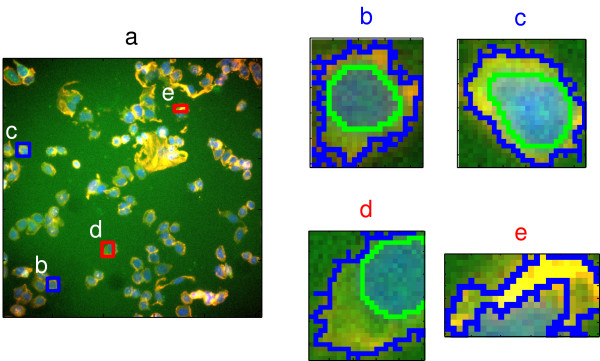
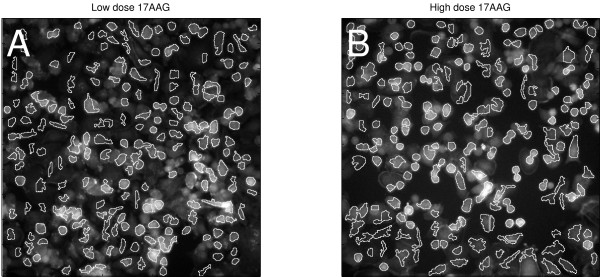
High content screening (HCS) is a powerful method for the exploration of cellular signalling and morphology that is rapidly being adopted in cancer research. HCS uses automated microscopy to collect images of cultured cells. The images are subjected to segmentation algorithms to identify cellular structures and quantitate their morphology, for hundreds to millions of individual cells. However, image analysis may be imperfect, especially for "HCS-unfriendly" cell lines whose morphology is not well handled by current image segmentation algorithms. We asked if segmentation errors were common for a clinically relevant cell line, if such errors had measurable effects on the data, and if HCS data could be improved by automated identification of well-segmented cells.
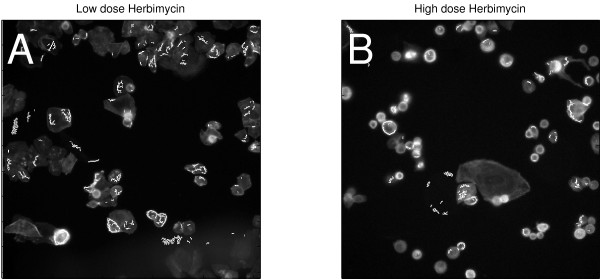
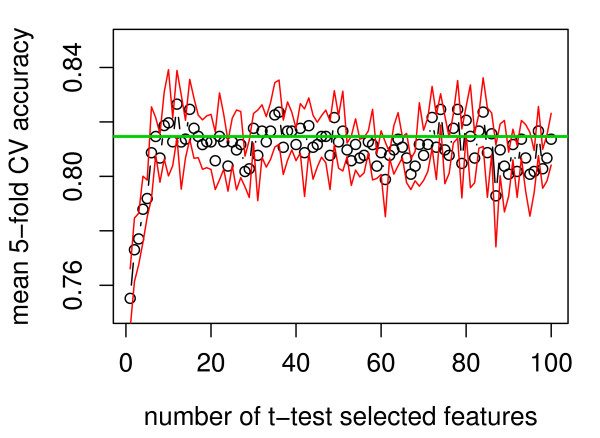
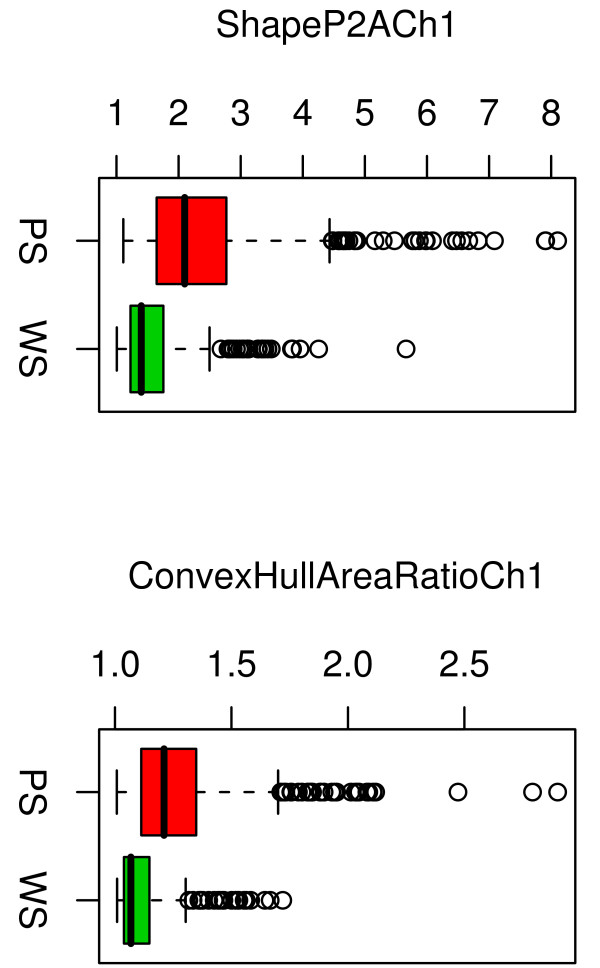
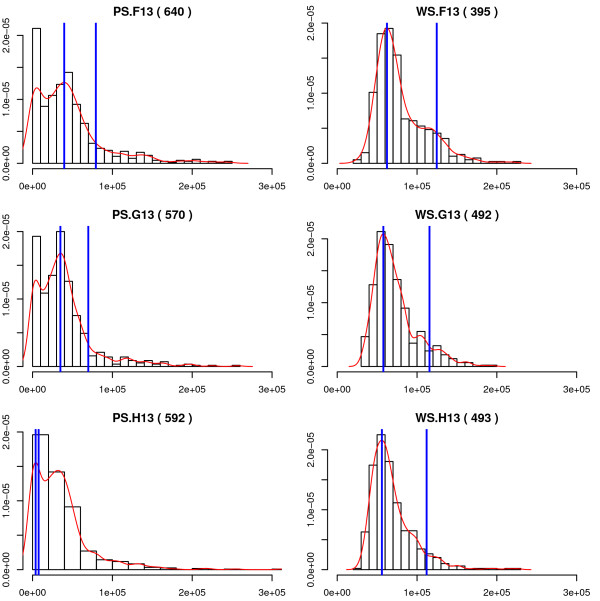
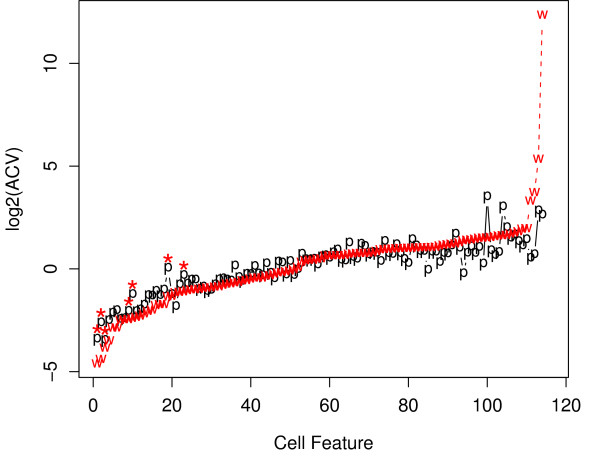
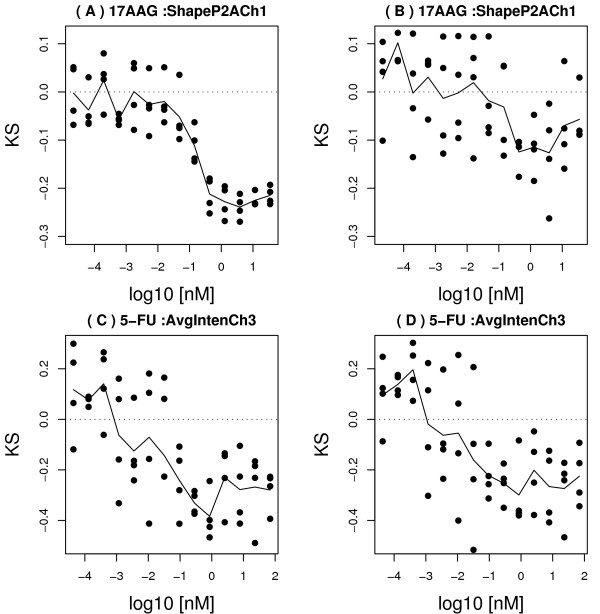
Cases of poor cell body segmentation occurred frequently for the SK-BR-3 cell line. We trained classifiers to identify SK-BR-3 cells that were well segmented. On an independent test set created by human review of cell images, our optimal support-vector machine classifier identified well-segmented cells with 81% accuracy. The dose responses of morphological features were measurably different in well- and poorly-segmented populations. Elimination of the poorly-segmented cell population increased the purity of DNA content distributions, while appropriately retaining biological heterogeneity, and simultaneously increasing our ability to resolve specific morphological changes in perturbed cells.
Image segmentation has a measurable impact on HCS data. The application of a multivariate shape-based filter to identify well-segmented cells improved HCS data quality for an HCS-unfriendly cell line, and could be a valuable post-processing step for some HCS datasets.
高内涵筛选(HCS)是一种用于探索细胞信号传导和形态学的强大方法,正在癌症研究中迅速得到应用。HCS利用自动显微镜收集培养细胞的图像。这些图像经过分割算法处理,以识别细胞结构并对其形态进行定量分析,适用于数百到数百万个单个细胞。然而,图像分析可能并不完美,特别是对于那些形态不能被当前图像分割算法很好处理的“对HCS不友好”的细胞系。我们探讨了对于一个临床相关细胞系而言,分割错误是否常见,此类错误对数据是否有可测量的影响,以及通过自动识别分割良好的细胞能否改善HCS数据。
SK-BR-3细胞系经常出现细胞体分割不佳的情况。我们训练分类器来识别分割良好的SK-BR-3细胞。在通过人工检查细胞图像创建的独立测试集上,我们的最优支持向量机分类器识别分割良好细胞的准确率为81%。在分割良好和不佳的细胞群体中,形态特征的剂量反应存在显著差异。去除分割不佳的细胞群体提高了DNA含量分布的纯度,同时适当保留了生物学异质性,并增强了我们解析受干扰细胞中特定形态变化的能力。
图像分割对HCS数据有可测量的影响。应用基于多元形状的滤波器来识别分割良好的细胞,提高了对HCS不友好细胞系的HCS数据质量,对于一些HCS数据集而言,这可能是一个有价值的后处理步骤。