Meltzer Jed A, Negishi Michiro, Mayes Linda C, Constable R Todd
Yale University, Interdepartmental Neuroscience Program, PO Box 208043, TAC N134, New Haven, CT 06520-8043, USA.
Clin Neurophysiol. 2007 Nov;118(11):2419-36. doi: 10.1016/j.clinph.2007.07.023. Epub 2007 Sep 27.
Theta and alpha range EEG oscillations are commonly induced in cognitive tasks, but their possible relationship to the BOLD signal of fMRI is not well understood, and individual variability is high. We explored individual differences in EEG reactivity to determine whether it is positively or negatively correlated with BOLD across subjects.
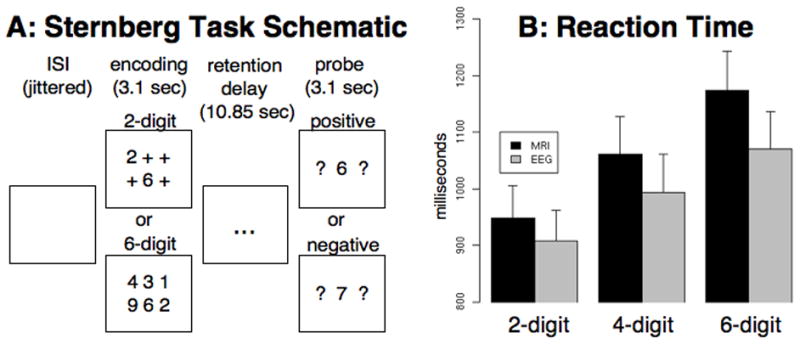
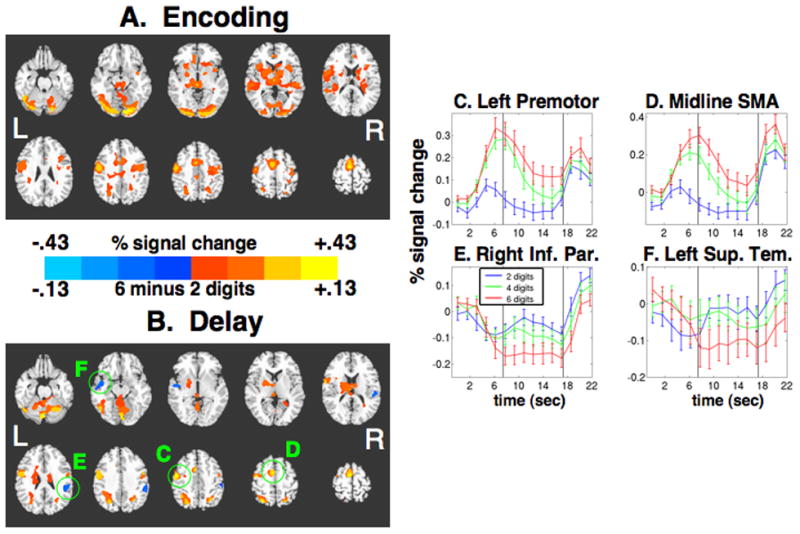
A Sternberg working memory task with 2, 4, or 6 digits was administered to 18 subjects in separate fMRI and EEG sessions. Memory load-dependent theta and alpha reactivity was quantified and used as a regressor to reveal brain areas exhibiting EEG-fMRI correlation across subjects.
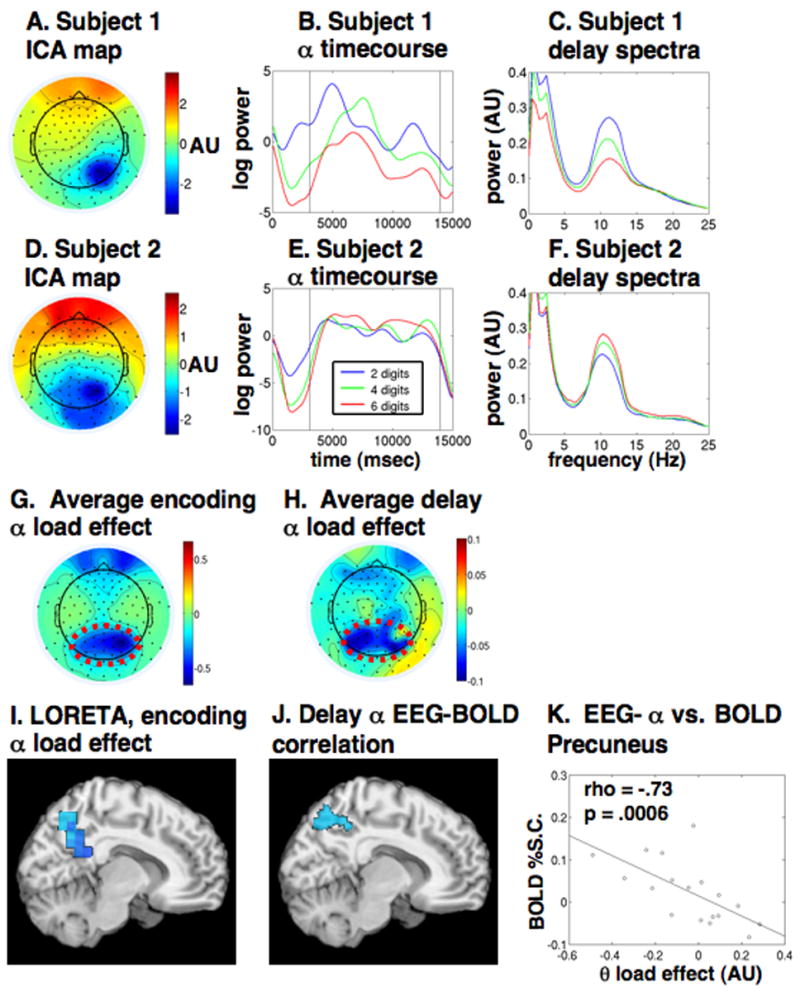
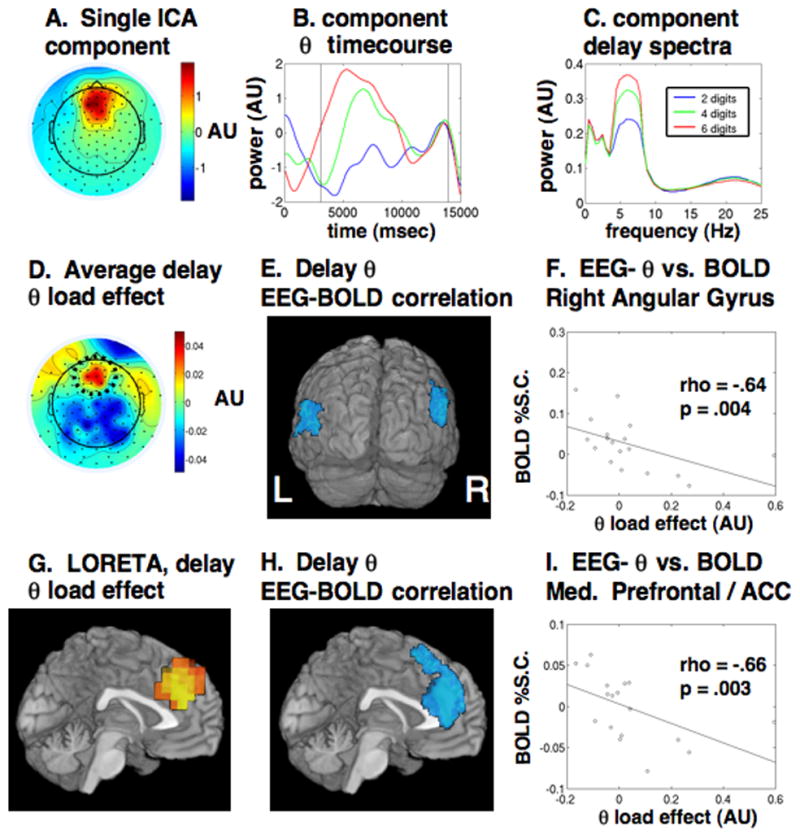
Theta increases localized to medial prefrontal cortex, and correlated negatively with BOLD in that region and in other "default mode" areas. Alpha modulation localized to parietal-occipital midline cortex and also correlated negatively with BOLD.
Individual tendencies to exhibit memory load-dependent oscillations are associated with negative BOLD responses in certain brain regions.
Positive BOLD responses and increased EEG oscillations do not necessarily arise in the same regions. Negative BOLD responses may also relate to cognitive activity, as traditionally indexed by increased EEG power in the theta band.
在认知任务中通常会诱发θ波和α波频段的脑电振荡,但其与功能磁共振成像(fMRI)的血氧水平依赖(BOLD)信号之间可能存在的关系尚未完全明确,且个体差异较大。我们探索了脑电反应性的个体差异,以确定其在不同受试者中与BOLD信号是正相关还是负相关。
对18名受试者分别进行功能磁共振成像和脑电图检查,期间让他们完成包含2、4或6位数的斯特恩伯格工作记忆任务。对与记忆负荷相关的θ波和α波反应性进行量化,并将其用作回归变量,以揭示不同受试者中显示脑电-功能磁共振成像相关性的脑区。
θ波增强定位于内侧前额叶皮层,且该区域及其他“默认模式”区域的BOLD信号与之呈负相关。α波调制定位于顶枕中线皮层,同样与BOLD信号呈负相关。
表现出与记忆负荷相关振荡的个体倾向与某些脑区的BOLD负反应有关。
BOLD正反应和脑电振荡增强不一定出现在同一区域。BOLD负反应也可能与认知活动有关,传统上是以θ波频段脑电功率增加为指标的。