Department of Information Engineering, Engineering Faculty, Università Politecnica delle Marche, 60131 Ancona, Italy.
Sensors (Basel). 2024 Jul 18;24(14):4679. doi: 10.3390/s24144679.
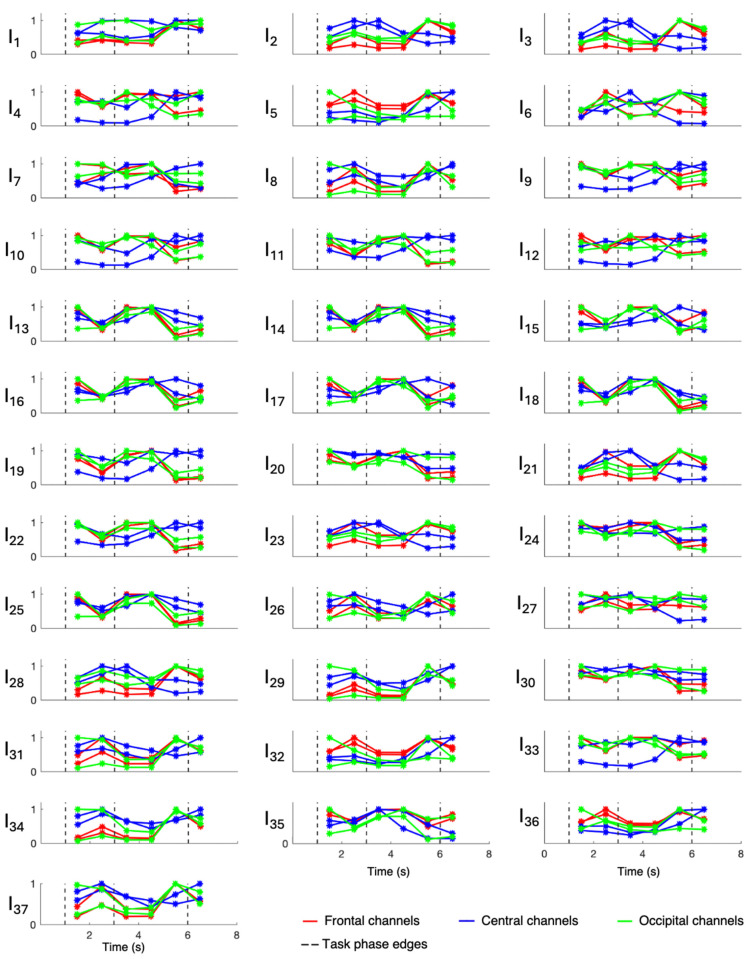
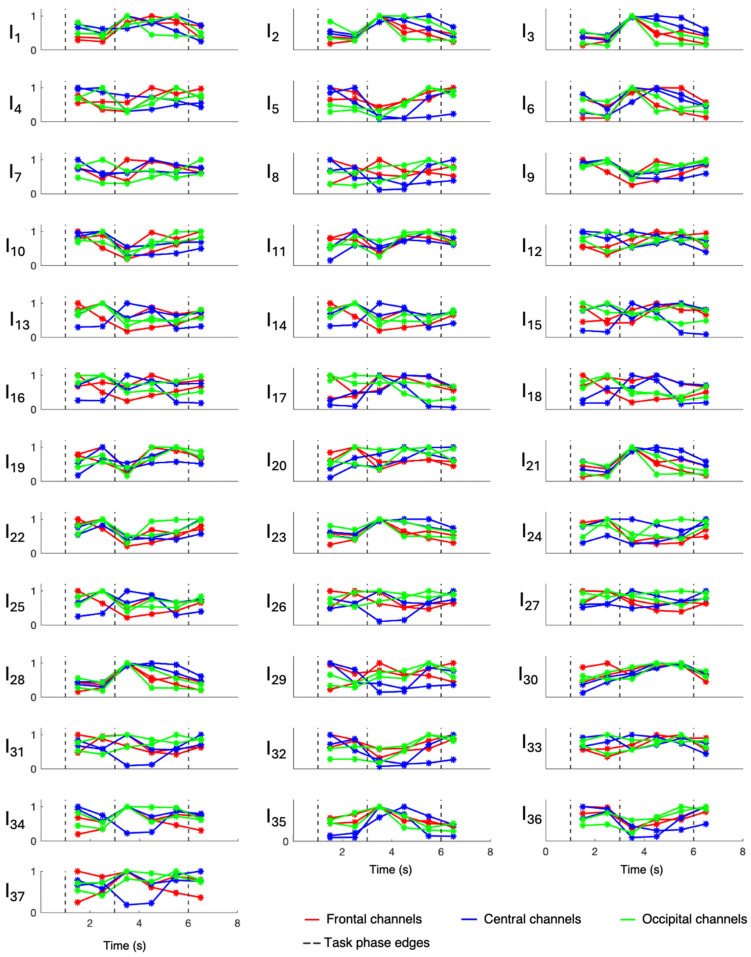
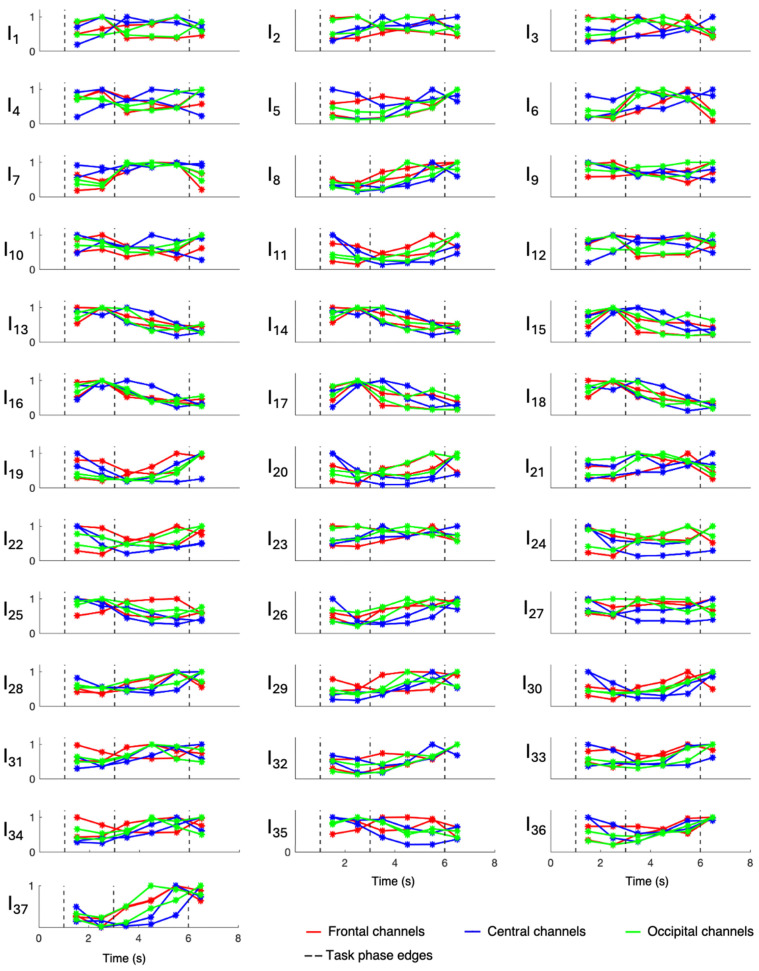
Electroencephalography (EEG) wearable devices are particularly suitable for monitoring a subject's engagement while performing daily cognitive tasks. EEG information provided by wearable devices varies with the location of the electrodes, the suitable location of which can be obtained using standard multi-channel EEG recorders. Cognitive engagement can be assessed during working memory (WM) tasks, testing the mental ability to process information over a short period of time. WM could be impaired in patients with epilepsy. This study aims to evaluate the cognitive engagement of nine patients with epilepsy, coming from a public dataset by Boran et al., during a verbal WM task and to identify the most suitable location of the electrodes for this purpose. Cognitive engagement was evaluated by computing 37 engagement indexes based on the ratio of two or more EEG rhythms assessed by their spectral power. Results show that involvement index trends follow changes in cognitive engagement elicited by the WM task, and, overall, most changes appear most pronounced in the frontal regions, as observed in healthy subjects. Therefore, involvement indexes can reflect cognitive status changes, and frontal regions seem to be the ones to focus on when designing a wearable mental involvement monitoring EEG system, both in physiological and epileptic conditions.
脑电图(EEG)可穿戴设备特别适合在进行日常认知任务时监测受试者的参与度。可穿戴设备提供的 EEG 信息随电极位置的不同而变化,合适的位置可以使用标准的多通道 EEG 记录器获得。认知参与度可以在工作记忆(WM)任务中进行评估,测试在短时间内处理信息的心理能力。癫痫患者的 WM 可能会受损。本研究旨在评估 Boran 等人的公共数据集的 9 名癫痫患者在言语 WM 任务期间的认知参与度,并确定为此目的最合适的电极位置。通过计算两个或多个 EEG 节律的比的频谱功率来评估认知参与度,得出 37 个参与度指数。结果表明,参与度指数趋势随 WM 任务引起的认知参与度的变化而变化,总体而言,大多数变化在前额区域最为明显,与健康受试者观察到的情况一致。因此,参与度指数可以反映认知状态的变化,并且在设计用于监测精神参与度的 EEG 系统时,似乎应关注前额区域,无论是在生理还是癫痫状态下。