Thattai Mukund, Burak Yoram, Shraiman Boris I
National Centre for Biological Sciences, Bangalore, India.
PLoS Comput Biol. 2007 Sep;3(9):1827-35. doi: 10.1371/journal.pcbi.0030186.
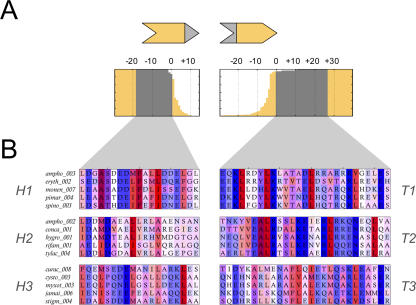
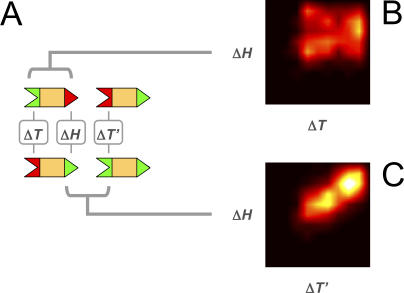
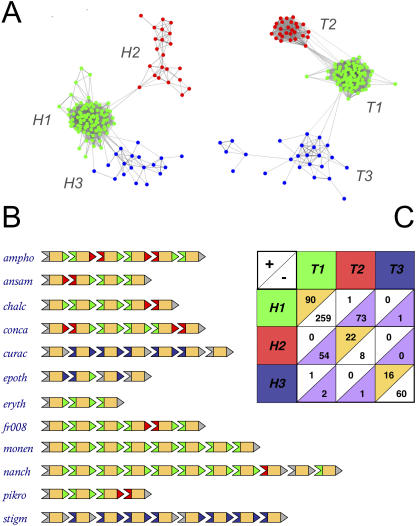
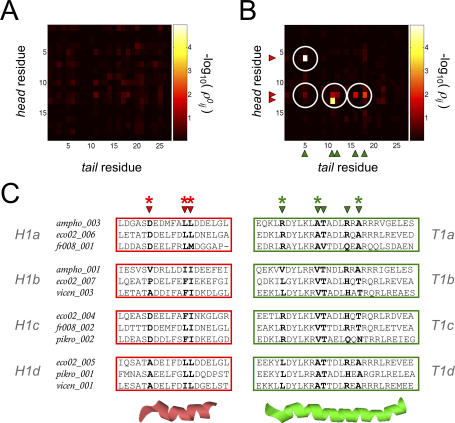
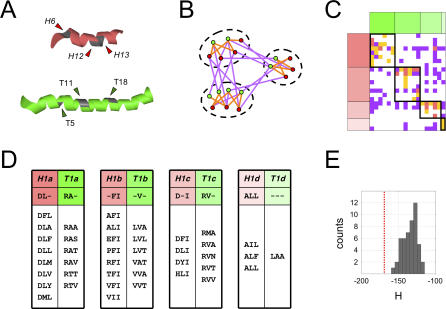
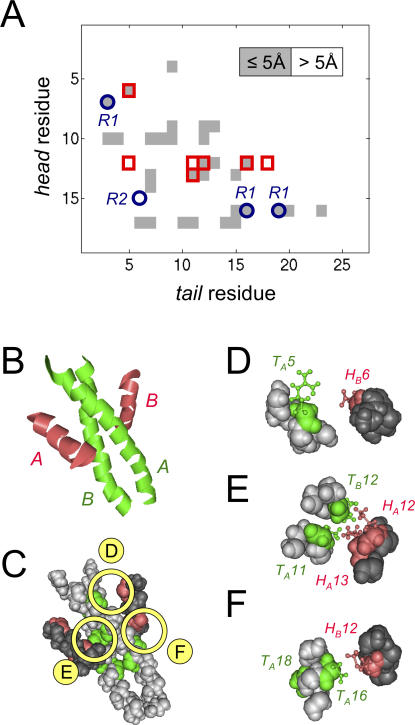
Polyketides, a diverse group of heteropolymers with antibiotic and antitumor properties, are assembled in bacteria by multiprotein chains of modular polyketide synthase (PKS) proteins. Specific protein-protein interactions determine the order of proteins within a multiprotein chain, and thereby the order in which chemically distinct monomers are added to the growing polyketide product. Here we investigate the evolutionary and molecular origins of protein interaction specificity. We focus on the short, conserved N- and C-terminal docking domains that mediate interactions between modular PKS proteins. Our computational analysis, which combines protein sequence data with experimental protein interaction data, reveals a hierarchical interaction specificity code. PKS docking domains are descended from a single ancestral interacting pair, but have split into three phylogenetic classes that are mutually noninteracting. Specificity within one such compatibility class is determined by a few key residues, which can be used to define compatibility subclasses. We identify these residues using a novel, highly sensitive co-evolution detection algorithm called CRoSS (correlated residues of statistical significance). The residue pairs selected by CRoSS are involved in direct physical interactions in a docked-domain NMR structure. A single PKS system can use docking domain pairs from multiple classes, as well as domain pairs from multiple subclasses of any given class. The termini of individual proteins are frequently shuffled, but docking domain pairs straddling two interacting proteins are linked as an evolutionary module. The hierarchical and modular organization of the specificity code is intimately related to the processes by which bacteria generate new PKS pathways.
聚酮化合物是一类具有抗生素和抗肿瘤特性的多样化杂聚物,由模块化聚酮合酶(PKS)蛋白的多蛋白链在细菌中组装而成。特定的蛋白质 - 蛋白质相互作用决定了多蛋白链中蛋白质的顺序,进而决定了化学性质不同的单体添加到不断增长的聚酮产物中的顺序。在这里,我们研究蛋白质相互作用特异性的进化和分子起源。我们聚焦于介导模块化PKS蛋白之间相互作用的短的、保守的N端和C端对接结构域。我们将蛋白质序列数据与实验性蛋白质相互作用数据相结合的计算分析揭示了一种层次化的相互作用特异性编码。PKS对接结构域起源于一个单一的祖先相互作用对,但已分裂为三个相互不作用的系统发育类。在一个这样的相容性类中的特异性由少数关键残基决定,这些残基可用于定义相容性亚类。我们使用一种名为CRoSS(具有统计学意义的相关残基)的新型、高灵敏度共进化检测算法来识别这些残基。由CRoSS选择的残基对参与对接结构域核磁共振结构中的直接物理相互作用。单个PKS系统可以使用来自多个类的对接结构域对,以及来自任何给定类的多个亚类的结构域对。单个蛋白质的末端经常被改组,但跨越两个相互作用蛋白质的对接结构域对作为一个进化模块相连。特异性编码的层次化和模块化组织与细菌产生新的PKS途径的过程密切相关。