Belyanskaya Larisa L, Marti Thomas M, Hopkins-Donaldson Sally, Kurtz Stefanie, Felley-Bosco Emanuela, Stahel Rolf A
Laboratory of Molecular Oncology, Clinic and Policlinic of Oncology, University Hospital of Zürich, Häldeliweg 4, 8044 Zürich, Switzerland.
Mol Cancer. 2007 Oct 22;6:66. doi: 10.1186/1476-4598-6-66.
The incidence of malignant pleural mesothelioma (MPM) is associated with exposure to asbestos, and projections suggest that the yearly number of deaths in Western Europe due to MPM will increase until 2020. Despite progress in chemo- and in multimodality therapy, MPM remains a disease with a poor prognosis. Inducing apoptosis by tumor necrosis factor-related apoptosis-inducing ligand (TRAIL) or agonistic monoclonal antibodies which target TRAIL-receptor 1 (TRAIL-R1) or TRAIL-R2 has been thought to be a promising cancer therapy.
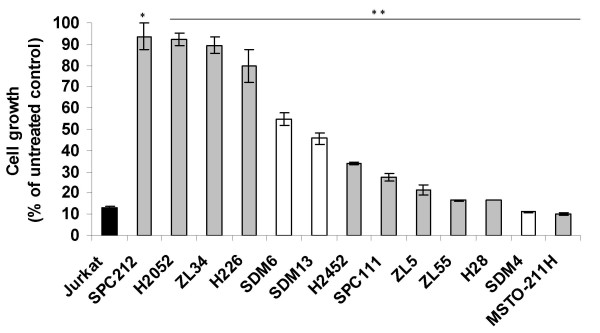
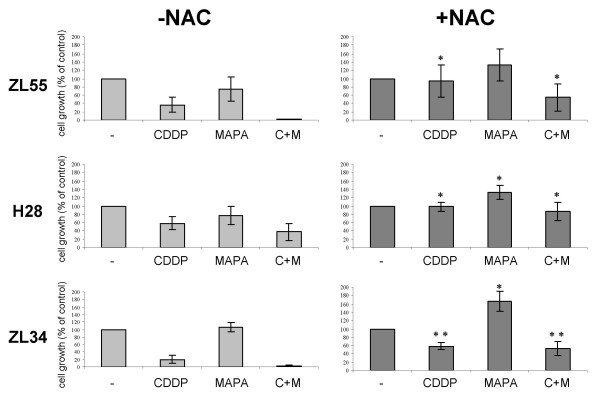
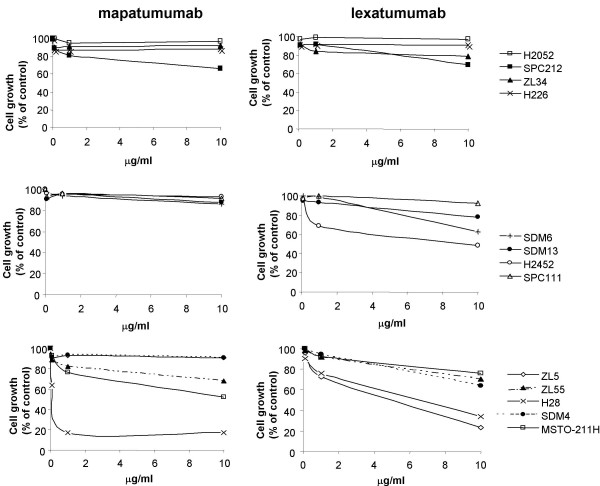
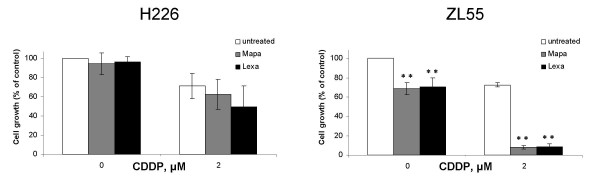
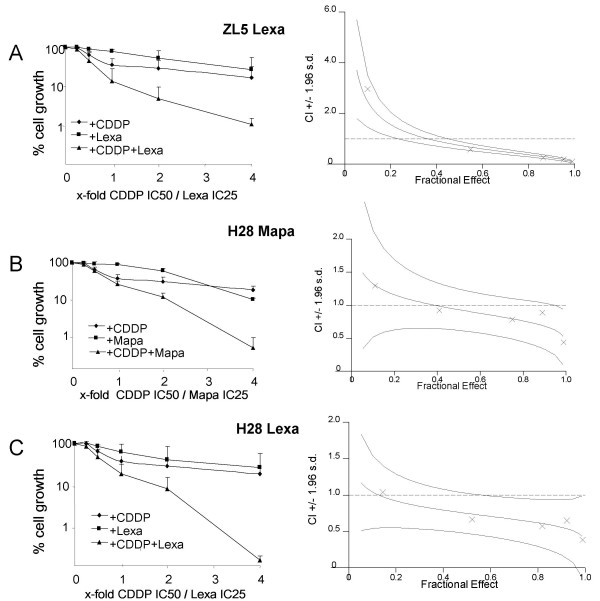
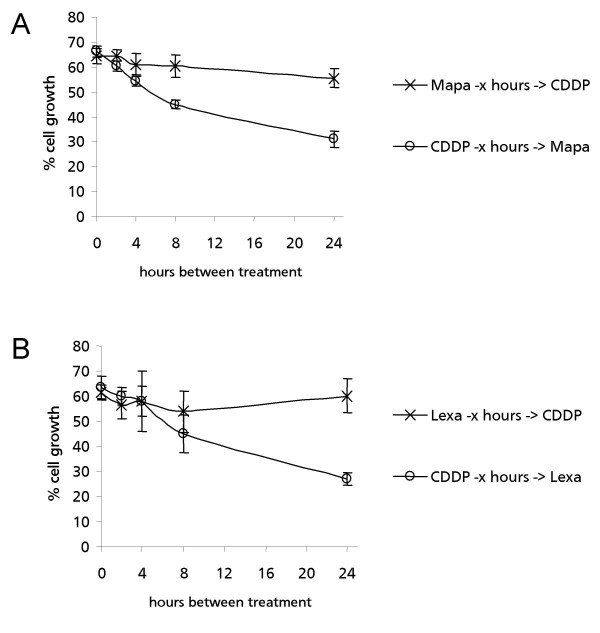
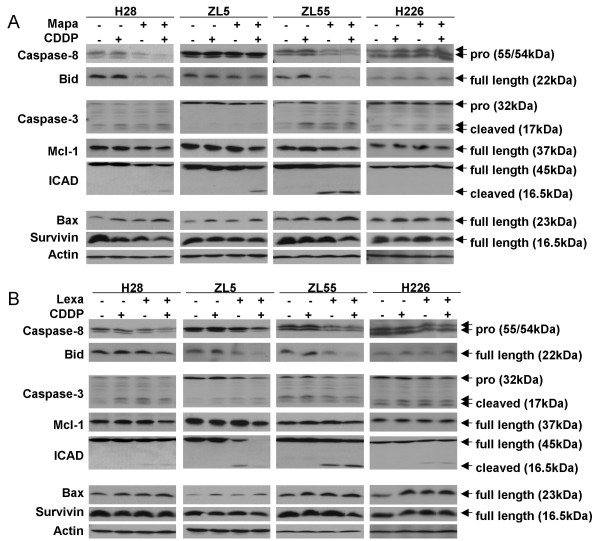
We have compared the sensitivity of 13 MPM cell lines or primary cultures to TRAIL and two fully human agonistic monoclonal antibodies directed to TRAIL-R1 (Mapatumumab) and TRAIL-R2 (Lexatumumab) and examined sensitization of the MPM cell lines to cisplatin-induced by the TRAIL-receptor antibodies. We found that sensitivity of MPM cells to TRAIL, Mapatumumab and Lexatumumab varies largely and is independent of TRAIL-receptor expression. TRAIL-R2 contributes more than TRAIL-R1 to death-receptor mediated apoptosis in MPM cells that express both receptors. The combination of cisplatin with Mapatumumab or Lexatumumab synergistically inhibited the cell growth and enhanced apoptotic death. Furthermore, pre-treatment with cisplatin followed by Mapatumumab or Lexatumumab resulted in significant higher cytotoxic effects as compared to the reverse sequence. Combination-induced cell growth inhibition was significantly abrogated by pre-treatment of the cells with the antioxidant N-acetylcysteine.
Our results suggest that the sequential administration of cisplatin followed by Mapatumumab or Lexatumumab deserves investigation in the treatment of patients with MPM.
恶性胸膜间皮瘤(MPM)的发病率与石棉暴露有关,预测表明,直到2020年,西欧因MPM导致的年死亡人数将会增加。尽管在化疗和多模式治疗方面取得了进展,但MPM仍然是一种预后较差的疾病。通过肿瘤坏死因子相关凋亡诱导配体(TRAIL)或靶向TRAIL受体1(TRAIL-R1)或TRAIL-R2的激动性单克隆抗体诱导凋亡,一直被认为是一种有前景的癌症治疗方法。
我们比较了13种MPM细胞系或原代培养物对TRAIL以及两种靶向TRAIL-R1(Mapatumumab)和TRAIL-R2(Lexatumumab)的全人源激动性单克隆抗体的敏感性,并检测了TRAIL受体抗体对MPM细胞系顺铂诱导的敏感性。我们发现,MPM细胞对TRAIL、Mapatumumab和Lexatumumab的敏感性差异很大,且与TRAIL受体表达无关。在同时表达两种受体的MPM细胞中,TRAIL-R2比TRAIL-R1对死亡受体介导的凋亡贡献更大。顺铂与Mapatumumab或Lexatumumab联合使用可协同抑制细胞生长并增强凋亡性死亡。此外,与相反顺序相比,先用顺铂预处理再用Mapatumumab或Lexatumumab处理产生的细胞毒性作用显著更高。用抗氧化剂N-乙酰半胱氨酸预处理细胞可显著消除联合诱导的细胞生长抑制作用。
我们的结果表明,顺铂后序贯使用Mapatumumab或Lexatumumab治疗MPM患者值得研究。