Hiona Asimina, Leeuwenburgh Christiaan
Department of Aging and Geriatrics, Division of Biology of Aging, Biochemistry of Aging Laboratory, Genomics and Biomarkers Core of the Institute on Aging, College of Medicine, University of Florida, Gainesville, FL 32611, USA.
Exp Gerontol. 2008 Jan;43(1):24-33. doi: 10.1016/j.exger.2007.10.001. Epub 2007 Oct 4.
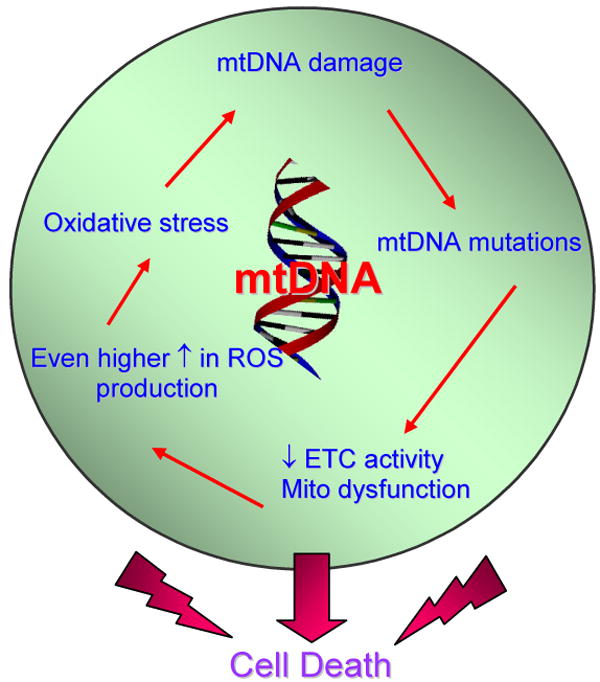
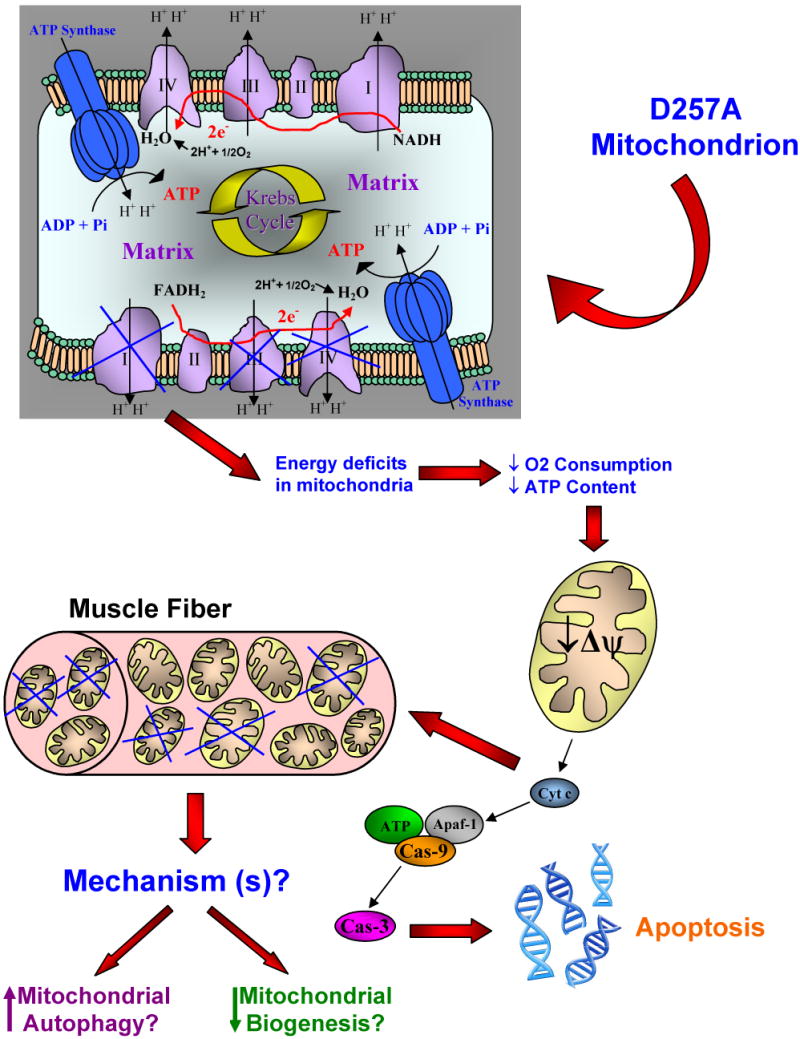
Aging is associated with a progressive loss of skeletal muscle mass and strength and the mechanisms mediating these effects likely involve mitochondrial DNA (mtDNA) mutations, mitochondrial dysfunction and the activation of mitochondrial-mediated apoptosis. Because the mitochondrial genome is densely packed and close to the main generator of reactive oxygen species (ROS) in the cell, the electron transport chain (ETC), an important role for mtDNA mutations in aging has been proposed. Point mutations and deletions in mtDNA accumulate with age in a wide variety of tissues in mammals, including humans, and often coincide with significant tissue dysfunction. Here, we examine the evidence supporting a causative role for mtDNA mutations in aging and sarcopenia. We review experimental outcomes showing that mtDNA mutations, leading to mitochondrial dysfunction and possibly apoptosis, are causal to the process of sarcopenia. Moreover, we critically discuss and dispute an important part of the mitochondrial 'vicious cycle' theory of aging which proposes that accumulation of mtDNA mutations may lead to an enhanced mitochondrial ROS production and ever increasing oxidative stress which ultimately leads to tissue deterioration and aging. Potential mechanism(s) by which mtDNA mutations may mediate their pathological consequences in skeletal muscle are also discussed.
衰老与骨骼肌质量和力量的逐渐丧失有关,介导这些影响的机制可能涉及线粒体DNA(mtDNA)突变、线粒体功能障碍以及线粒体介导的细胞凋亡的激活。由于线粒体基因组紧密排列且靠近细胞中活性氧(ROS)的主要产生部位——电子传递链(ETC),因此有人提出mtDNA突变在衰老过程中起重要作用。在包括人类在内的哺乳动物的多种组织中,mtDNA中的点突变和缺失会随着年龄的增长而积累,并且常常与明显的组织功能障碍同时出现。在这里,我们研究了支持mtDNA突变在衰老和肌肉减少症中起因果作用的证据。我们回顾了实验结果,这些结果表明mtDNA突变会导致线粒体功能障碍并可能引发细胞凋亡,是肌肉减少症过程的病因。此外,我们对衰老的线粒体“恶性循环”理论的一个重要部分进行了批判性讨论和质疑,该理论认为mtDNA突变的积累可能导致线粒体ROS产生增加以及氧化应激不断加剧,最终导致组织退化和衰老。我们还讨论了mtDNA突变可能在骨骼肌中介导其病理后果的潜在机制。