Kuhlmann Anne-Sophie, Villaudy Julien, Gazzolo Louis, Castellazzi Marc, Mesnard Jean-Michel, Duc Dodon Madeleine
Virologie Humaine, INSERM-U758, 69364 Lyon Cedex 07, France.
Retrovirology. 2007 Dec 13;4:92. doi: 10.1186/1742-4690-4-92.
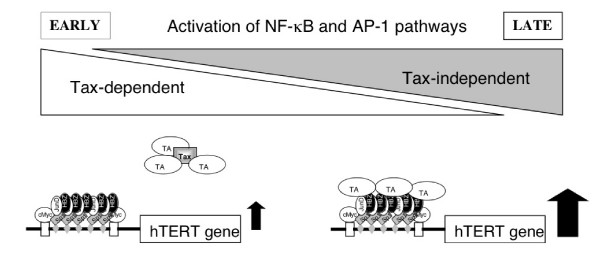
Activation of telomerase is a critical and late event in tumor progression. Thus, in patients with adult-T cell leukaemia (ATL), an HTLV-1 (Human T cell Leukaemia virus type 1)-associated disease, leukemic cells display a high telomerase activity, mainly through transcriptional up-regulation of the human telomerase catalytic subunit (hTERT). The HBZ (HTLV-1 bZIP) protein coded by the minus strand of HTLV-1 genome and expressed in ATL cells has been shown to increase the transcriptional activity of JunD, an AP-1 protein. The presence of several AP-1 binding sites in the hTERT promoter led us to investigate whether HBZ regulates hTERT gene transcription.
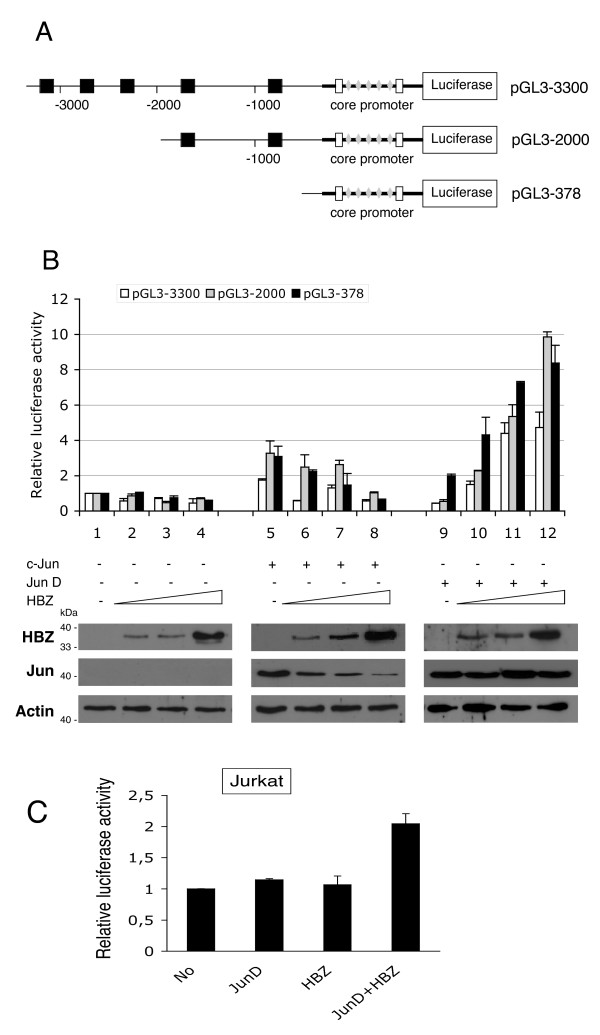
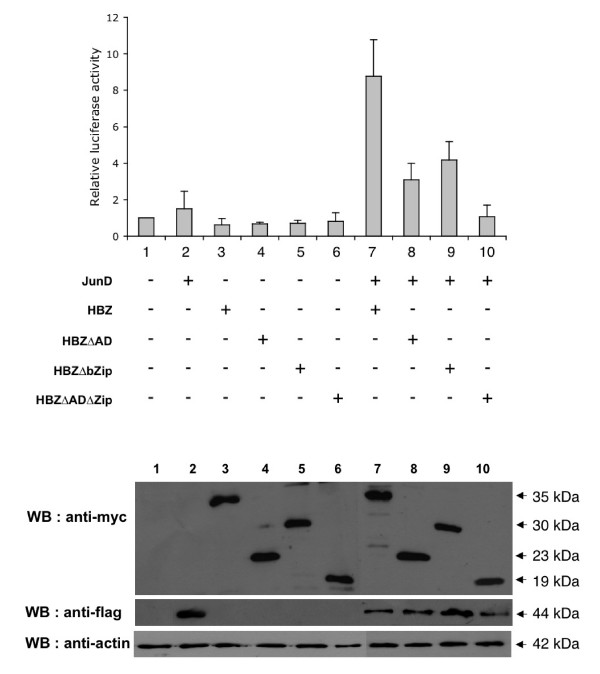
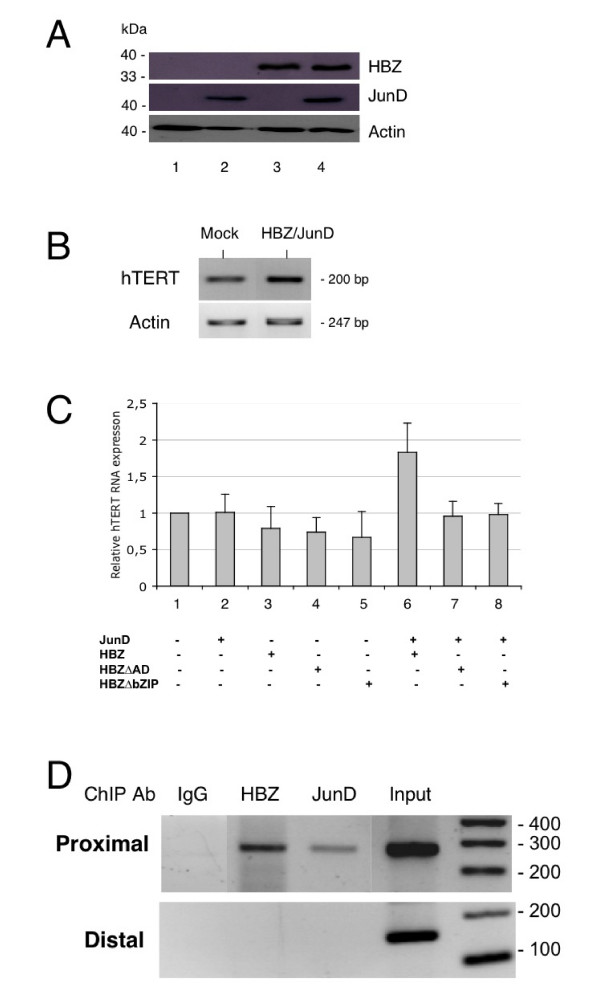
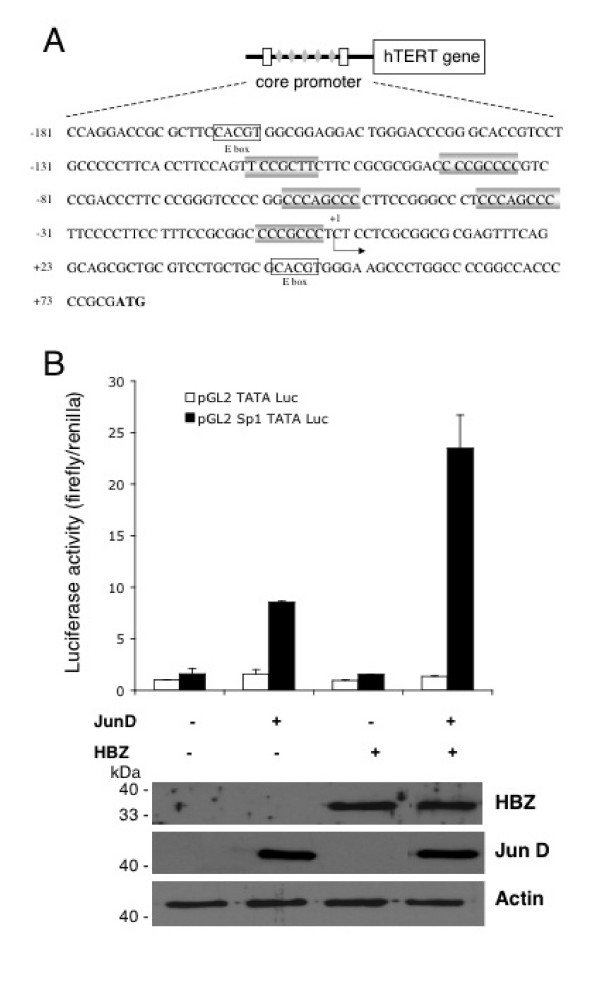
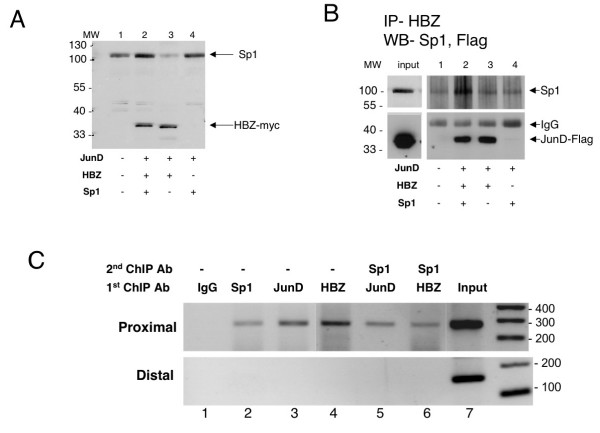
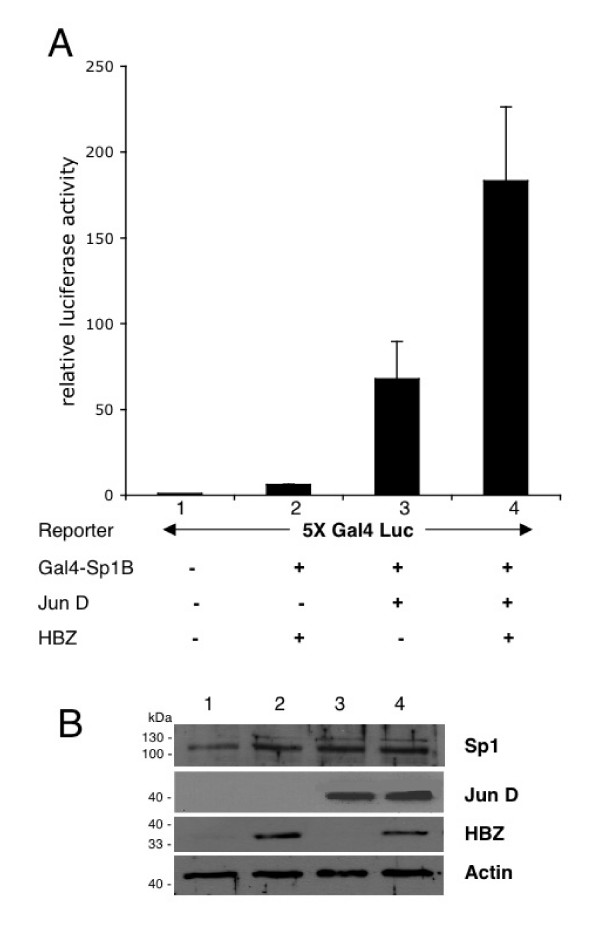
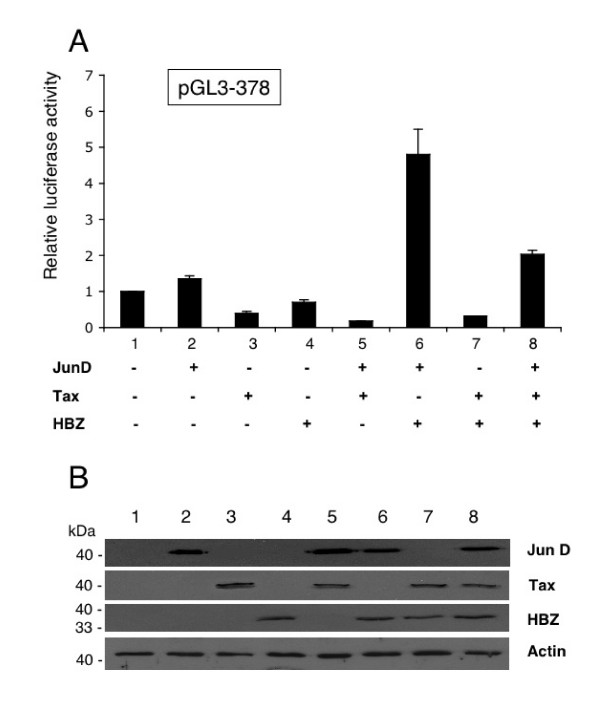
Here, we demonstrate using co-transfection assays that HBZ in association with JunD activates the hTERT promoter. Interestingly, the -378/+1 proximal region, which does not contain any AP-1 site was found to be responsible for this activation. Furthermore, an increase of hTERT transcripts was observed in cells co-expressing HBZ and JunD. Chromatin immunoprecipitation (ChIP) assays revealed that HBZ, and JunD coexist in the same DNA-protein complex at the proximal region of hTERT promoter. Finally, we provide evidence that HBZ/JunD heterodimers interact with Sp1 transcription factors and that activation of hTERT transcription by these heterodimers is mediated through GC-rich binding sites for Sp1 present in the proximal sequences of the hTERT promoter.
These observations establish for the first time that HBZ by intervening in the re-activation of telomerase, may contribute to the development and maintenance of the leukemic process.
端粒酶激活是肿瘤进展中的一个关键且较晚期的事件。因此,在成人T细胞白血病(ATL)患者中,这是一种与人类T细胞白血病病毒1型(HTLV-1)相关的疾病,白血病细胞表现出较高的端粒酶活性,主要是通过人类端粒酶催化亚基(hTERT)的转录上调。由HTLV-1基因组负链编码并在ATL细胞中表达的HBZ(HTLV-1 bZIP)蛋白已被证明可增加AP-1蛋白JunD的转录活性。hTERT启动子中存在多个AP-1结合位点,这促使我们研究HBZ是否调节hTERT基因转录。
在此,我们通过共转染实验证明,HBZ与JunD共同作用可激活hTERT启动子。有趣的是,发现不包含任何AP-1位点的-378 / +1近端区域负责这种激活。此外,在共表达HBZ和JunD的细胞中观察到hTERT转录本增加。染色质免疫沉淀(ChIP)实验表明,HBZ和JunD在hTERT启动子近端区域的同一DNA-蛋白质复合物中共存。最后,我们提供证据表明HBZ / JunD异二聚体与Sp1转录因子相互作用,并且这些异二聚体对hTERT转录的激活是通过hTERT启动子近端序列中存在的富含GC的Sp1结合位点介导的。
这些观察结果首次证实,HBZ通过干预端粒酶的重新激活,可能有助于白血病进程的发展和维持。