Sarri Margarita, Greenwood Richard, Kalra Lalit, Papps Ben, Husain Masud, Driver Jon
UCL Institute of Cognitive Neuroscience, University College London, 17 Queen Square, London, WC1N 3AR, UK.
Neuropsychologia. 2008 Mar 7;46(4):1069-80. doi: 10.1016/j.neuropsychologia.2007.11.005. Epub 2007 Nov 13.
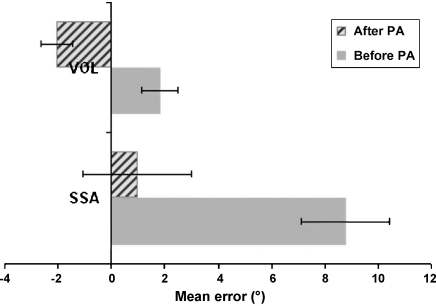
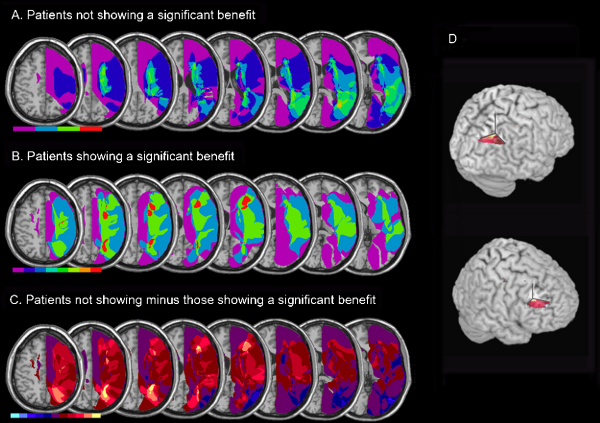
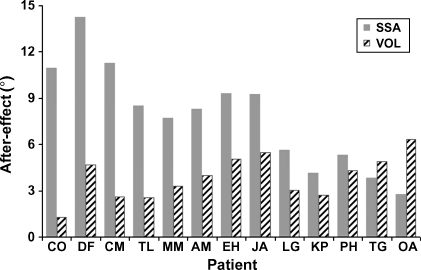
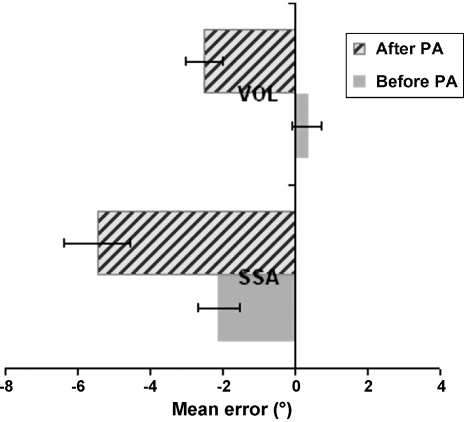
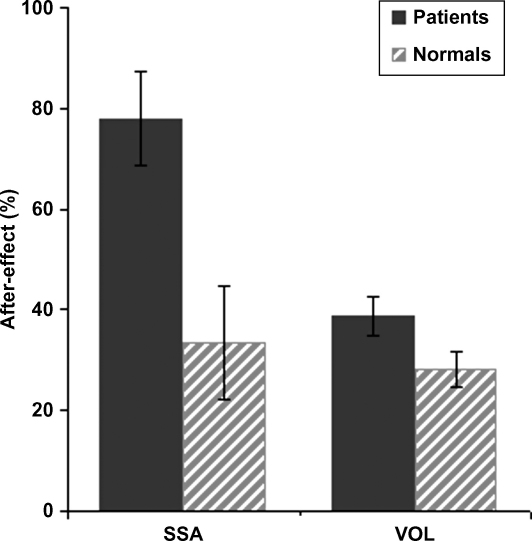
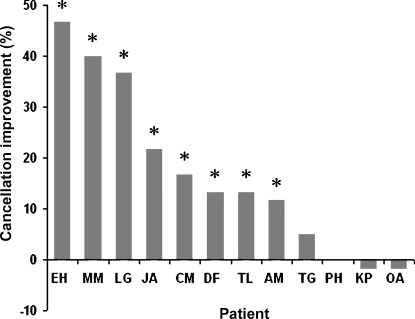
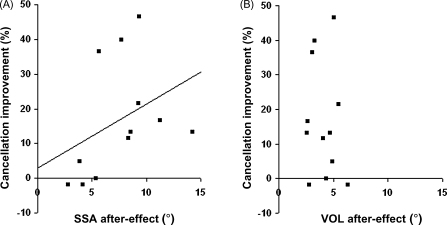
Prism adaptation to rightward optical shifts during visually guided pointing is considered a promising intervention in right-hemisphere stroke patients with left spatial neglect. Conventionally, prism adaptation is assessed via aftereffects, on subjective straight ahead (SSA) pointing with eyes closed; or by visual open-loop pointing (VOL), i.e. pointing to a visual target without seeing the hand. Previous data suggest indirectly that prism aftereffects in neglect patients may be larger (pathologically so) when assessed by SSA than by VOL. But these measures have never been directly compared within the same patients after identical prism exposure. Accordingly we implemented both measures here within the same group of 13 neglect patients and 13 controls. Prism aftereffects were much larger for SSA than VOL in neglect patients, falling outside the normative range only for SSA. This may arise because the SSA task can itself involve aspects of neglect that may be ameliorated by the prism intervention, hence showing abnormal changes after prisms. The extent of SSA change after prisms varied between patients, and correlated with improvements on a standard cancellation measure for neglect. The lesions of patients who did versus did not show neglect improvement immediately after prisms provide an initial indication that lack of improvement may potentially relate to cortical damage in right intraparietal sulcus and white matter damage in inferior parietal lobe and middle frontal gyrus. Future studies of possible rehabilitative impact from prisms upon neglect may need to consider carefully how to measure prism adaptation per se, separately from any impact of such adaptation upon manifestations of neglect.
在视觉引导下的指向任务中,棱镜适应向右的视错觉被认为是对患有左侧空间忽视的右半球中风患者一种很有前景的干预措施。传统上,棱镜适应是通过闭眼后效、在主观直向前方(SSA)指向来评估;或者通过视觉开环指向(VOL),即指向视觉目标但不看手。先前的数据间接表明,在忽视患者中,通过SSA评估的棱镜后效可能比通过VOL评估的更大(病理上如此)。但这些测量方法从未在同一组患者在相同棱镜暴露后进行直接比较。因此,我们在13名忽视患者和13名对照组成的同一组中实施了这两种测量方法。在忽视患者中,SSA的棱镜后效比VOL大得多,只有SSA超出了正常范围。这可能是因为SSA任务本身可能涉及忽视的方面,而棱镜干预可能会改善这些方面,因此在使用棱镜后会出现异常变化。棱镜后SSA变化的程度在患者之间有所不同,并且与忽视的标准划消测量的改善相关。在使用棱镜后立即出现与未出现忽视改善的患者病变情况初步表明,缺乏改善可能与右侧顶内沟的皮质损伤以及顶下叶和额中回的白质损伤有关。未来关于棱镜对忽视可能产生的康复影响的研究可能需要仔细考虑如何单独测量棱镜适应本身,而不考虑这种适应对忽视表现的任何影响。