Cooke Martin, Mitrou Francis, Lawrence David, Guimond Eric, Beavon Dan
Department of Sociology, University of Waterloo, 200 University Drive W, Waterloo, Ontario, Canada.
BMC Int Health Hum Rights. 2007 Dec 20;7:9. doi: 10.1186/1472-698X-7-9.
Canada, the United States, Australia, and New Zealand consistently place near the top of the United Nations Development Programme's Human Development Index (HDI) rankings, yet all have minority Indigenous populations with much poorer health and social conditions than non-Indigenous peoples. It is unclear just how the socioeconomic and health status of Indigenous peoples in these countries has changed in recent decades, and it remains generally unknown whether the overall conditions of Indigenous peoples are improving and whether the gaps between Indigenous peoples and other citizens have indeed narrowed. There is unsettling evidence that they may not have. It was the purpose of this study to determine how these gaps have narrowed or widened during the decade 1990 to 2000.
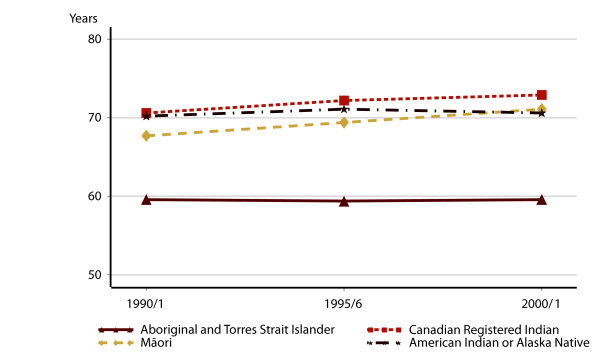
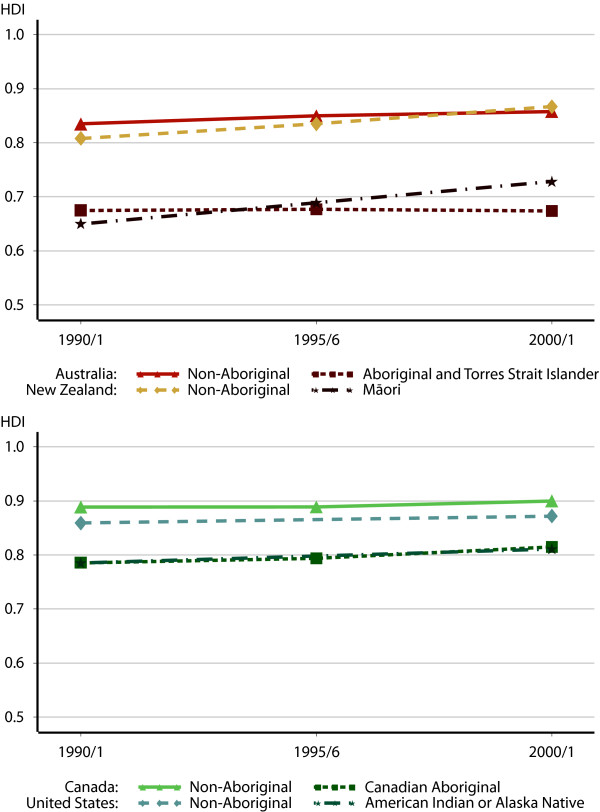
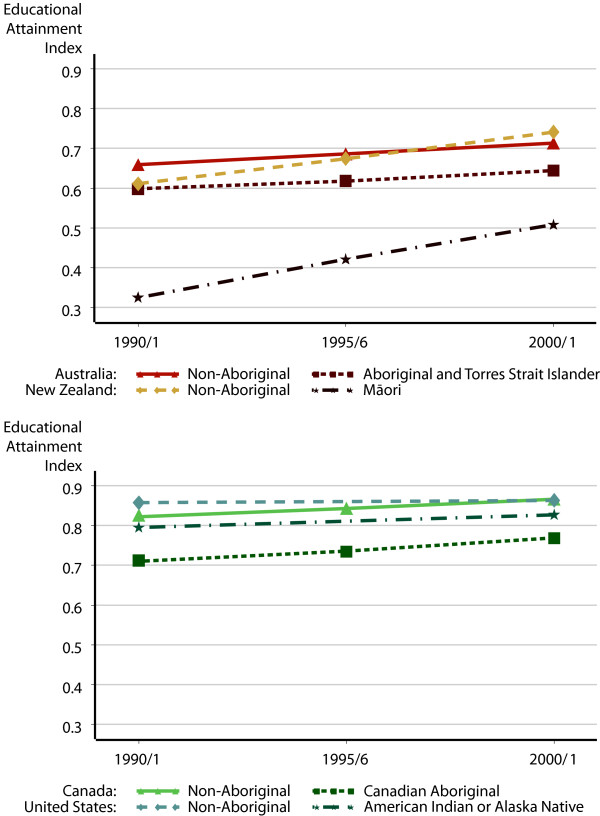
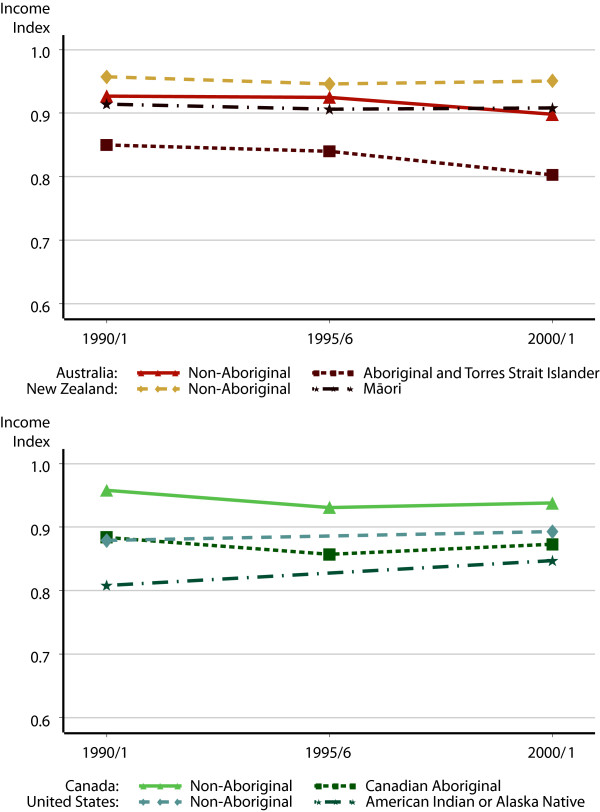
Census data and life expectancy estimates from government sources were used to adapt the Human Development Index (HDI) to examine how the broad social, economic, and health status of Indigenous populations in these countries have changed since 1990. Three indices - life expectancy, educational attainment, and income - were combined into a single HDI measure.
Between 1990 and 2000, the HDI scores of Indigenous peoples in North America and New Zealand improved at a faster rate than the general populations, closing the gap in human development. In Australia, the HDI scores of Indigenous peoples decreased while the general populations improved, widening the gap in human development. While these countries are considered to have high human development according to the UNDP, the Indigenous populations that reside within them have only medium levels of human development.
The inconsistent progress in the health and well-being of Indigenous populations over time, and relative to non-Indigenous populations, points to the need for further efforts to improve the social, economic, and physical health of Indigenous peoples.
加拿大、美国、澳大利亚和新西兰在联合国开发计划署的人类发展指数(HDI)排名中一直名列前茅,但这些国家的少数原住民群体的健康和社会状况都比非原住民差得多。目前尚不清楚这些国家原住民的社会经济和健康状况在近几十年中发生了怎样的变化,也普遍不清楚原住民的整体状况是否在改善,以及原住民与其他公民之间的差距是否真的在缩小。有令人不安的证据表明情况可能并非如此。本研究的目的是确定在1990年至2000年这十年间这些差距是如何缩小或扩大的。
利用政府来源的人口普查数据和预期寿命估计值,对人类发展指数(HDI)进行调整,以研究自1990年以来这些国家原住民的广泛社会、经济和健康状况的变化。将预期寿命、教育程度和收入这三个指数合并为一个单一的人类发展指数衡量标准。
1990年至2000年期间,北美和新西兰原住民的人类发展指数得分比总人口提高得更快,缩小了人类发展方面的差距。在澳大利亚,原住民的人类发展指数得分下降,而总人口得分提高,扩大了人类发展方面的差距。虽然根据联合国开发计划署的标准,这些国家被认为具有高度的人类发展水平,但居住在这些国家的原住民的人类发展水平仅处于中等水平。
随着时间的推移,原住民在健康和福祉方面取得的进展与非原住民相比并不一致,这表明需要进一步努力改善原住民的社会、经济和身体健康状况。