Kim Hye Young, Lee Seo Eun, Kim Min Jung, Han Jin Il, Kim Bo Kyung, Lee Yong Sung, Lee Young Seek, Kim Jin Hyuk
Department of Physiology, College of Medicine, Hanyang University, Seoul, 133-791, Korea.
BMC Bioinformatics. 2007 Dec 20;8:485. doi: 10.1186/1471-2105-8-485.
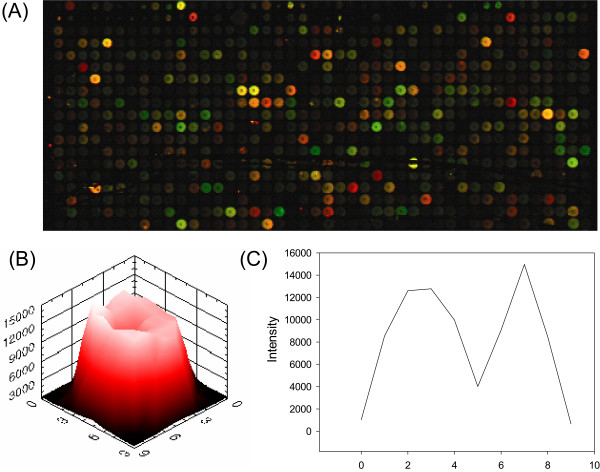
The quality of cDNA microarray data is crucial for expanding its application to other research areas, such as the study of gene regulatory networks. Despite the fact that a number of algorithms have been suggested to increase the accuracy of microarray gene expression data, it is necessary to obtain reliable microarray images by improving wet-lab experiments. As the first step of a cDNA microarray experiment, spotting cDNA probes is critical to determining the quality of spot images.
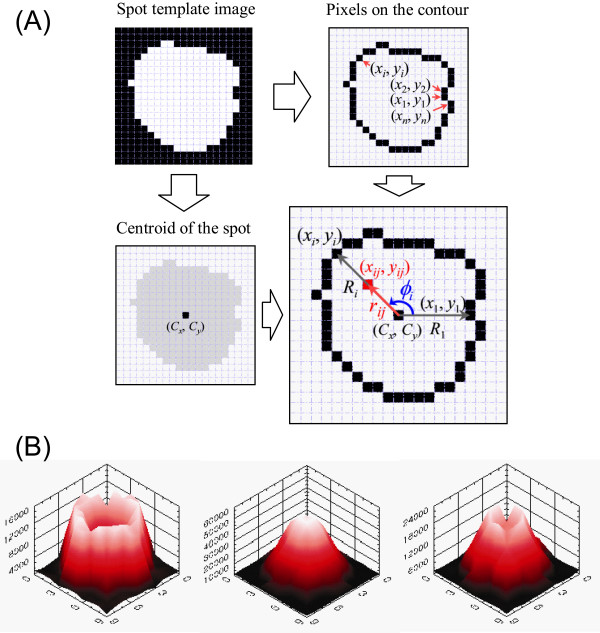
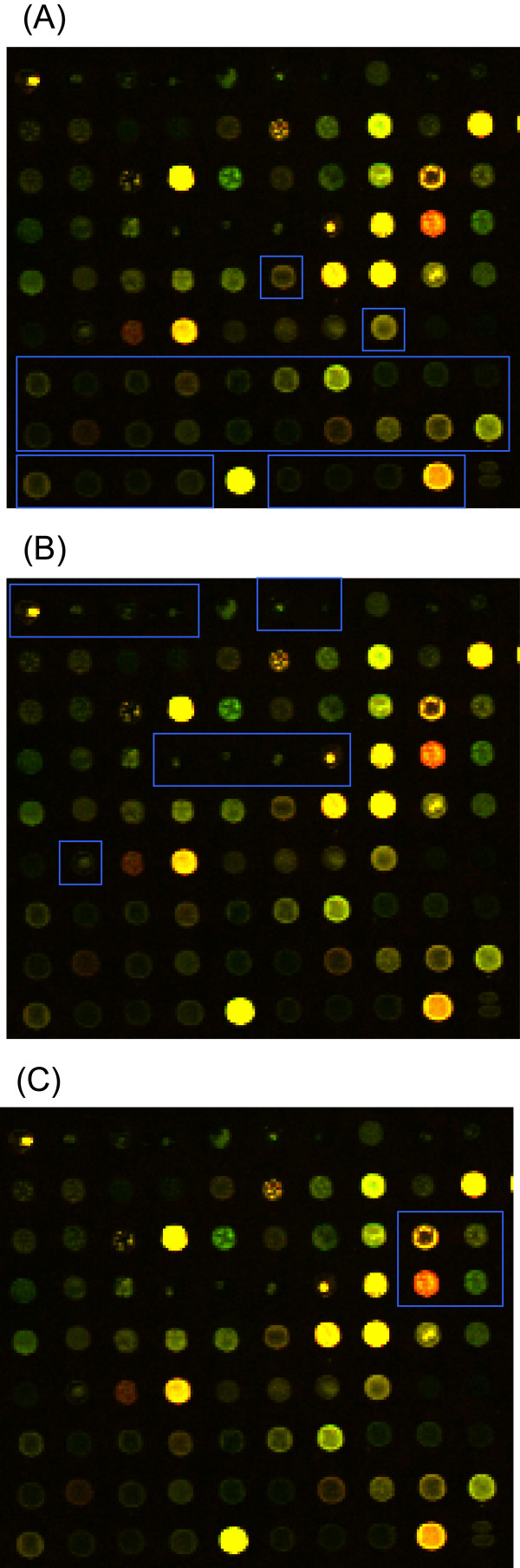
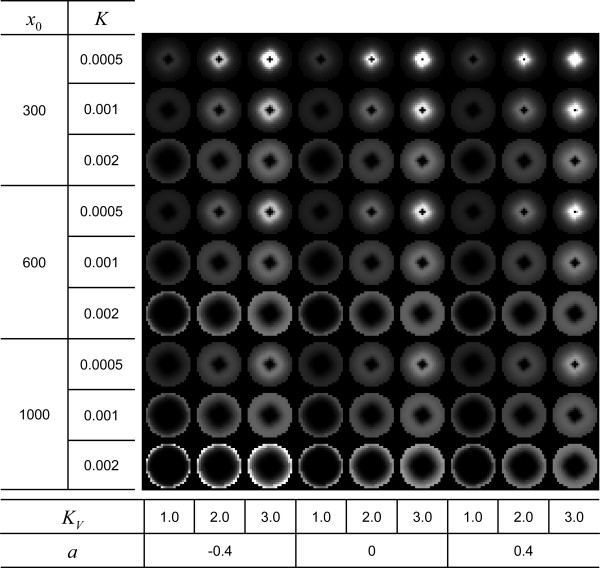
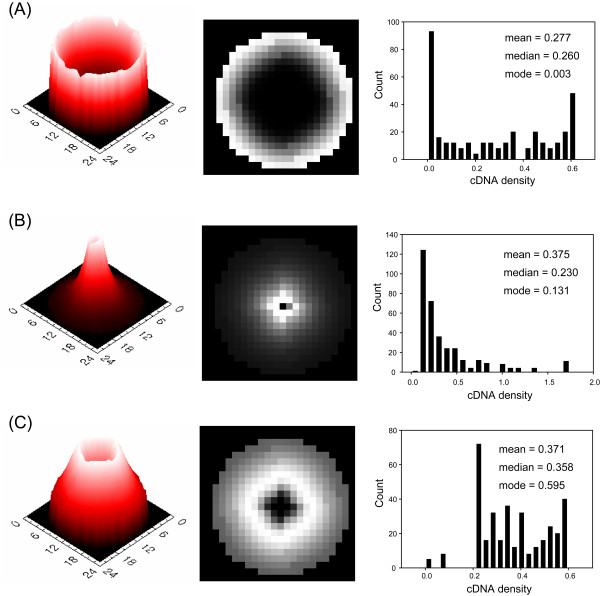
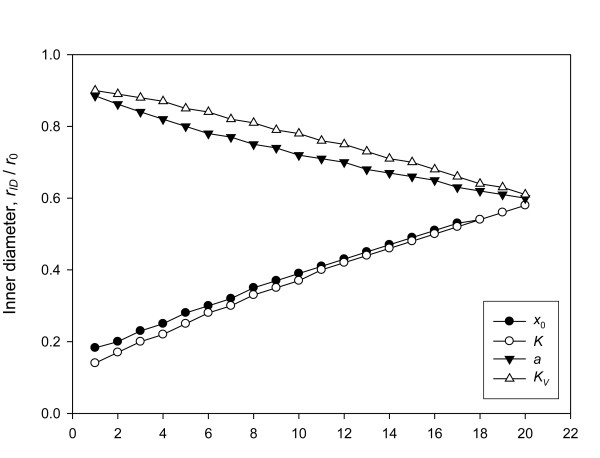
We developed a governing equation of cDNA deposition during evaporation of a drop in the microarray spotting process. The governing equation included four parameters: the surface site density on the support, the extrapolated equilibrium constant for the binding of cDNA molecules with surface sites on glass slides, the macromolecular interaction factor, and the volume constant of a drop of cDNA solution. We simulated cDNA deposition from the single model equation by varying the value of the parameters. The morphology of the resulting cDNA deposit can be classified into three types: a doughnut shape, a peak shape, and a volcano shape. The spot morphology can be changed into a flat shape by varying the experimental conditions while considering the parameters of the governing equation of cDNA deposition. The four parameters were estimated by fitting the governing equation to the real microarray images. With the results of the simulation and the parameter estimation, the phenomenon of the formation of cDNA deposits in each type was investigated.
This study explains how various spot shapes can exist and suggests which parameters are to be adjusted for obtaining a good spot. This system is able to explore the cDNA microarray spotting process in a predictable, manageable and descriptive manner. We hope it can provide a way to predict the incidents that can occur during a real cDNA microarray experiment, and produce useful data for several research applications involving cDNA microarrays.
cDNA微阵列数据的质量对于将其应用扩展到其他研究领域至关重要,例如基因调控网络的研究。尽管已经提出了许多算法来提高微阵列基因表达数据的准确性,但仍有必要通过改进湿实验室实验来获得可靠的微阵列图像。作为cDNA微阵列实验的第一步,点样cDNA探针对于确定斑点图像的质量至关重要。
我们推导了微阵列点样过程中液滴蒸发期间cDNA沉积的控制方程。该控制方程包括四个参数:载体上的表面位点密度、cDNA分子与载玻片表面位点结合的外推平衡常数、大分子相互作用因子以及一滴cDNA溶液的体积常数。我们通过改变参数值从单一模型方程模拟了cDNA沉积。所得cDNA沉积物的形态可分为三种类型:甜甜圈形状、峰形状和火山形状。在考虑cDNA沉积控制方程参数的同时,通过改变实验条件,斑点形态可变为扁平形状。通过将控制方程与实际微阵列图像拟合来估计这四个参数。结合模拟结果和参数估计,研究了每种类型中cDNA沉积物形成的现象。
本研究解释了各种斑点形状是如何存在的,并指出为获得良好的斑点需要调整哪些参数。该系统能够以可预测、可管理和可描述的方式探索cDNA微阵列点样过程。我们希望它能提供一种方法来预测在实际cDNA微阵列实验中可能发生的事件,并为涉及cDNA微阵列的多个研究应用产生有用的数据。