Barkman Todd J, McNeal Joel R, Lim Seok-Hong, Coat Gwen, Croom Henrietta B, Young Nelson D, Depamphilis Claude W
Department of Biological Sciences, Western Michigan University, Kalamazoo, MI, 49008, USA.
BMC Evol Biol. 2007 Dec 21;7:248. doi: 10.1186/1471-2148-7-248.
Some of the most difficult phylogenetic questions in evolutionary biology involve identification of the free-living relatives of parasitic organisms, particularly those of parasitic flowering plants. Consequently, the number of origins of parasitism and the phylogenetic distribution of the heterotrophic lifestyle among angiosperm lineages is unclear.
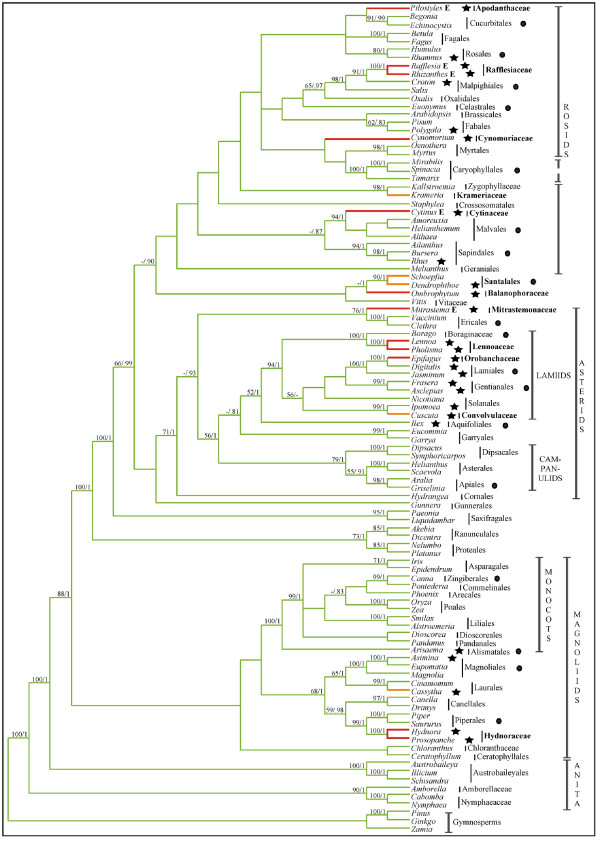
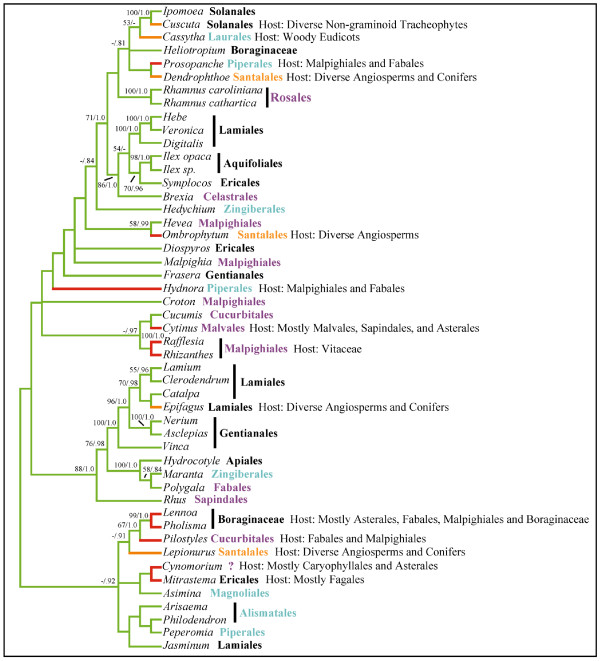
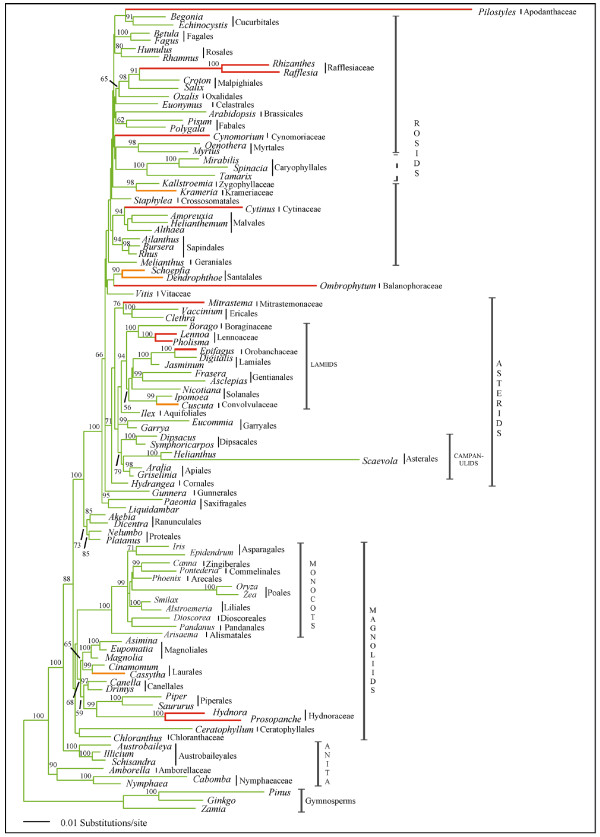
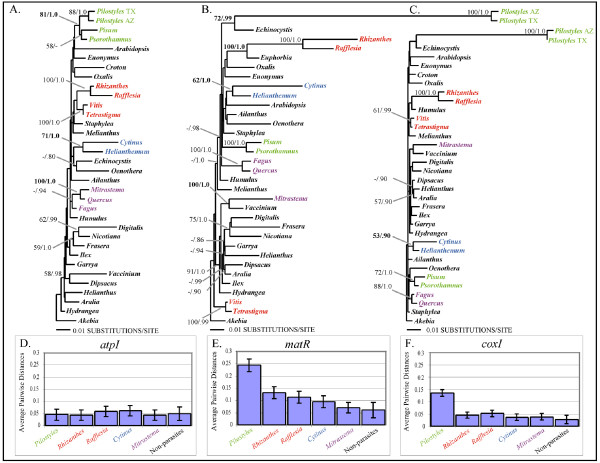
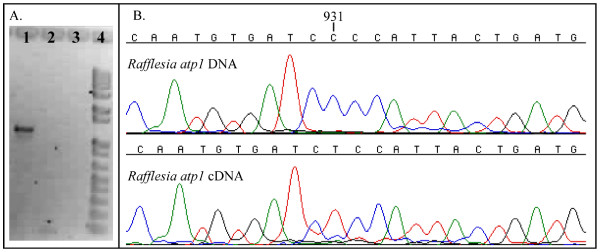
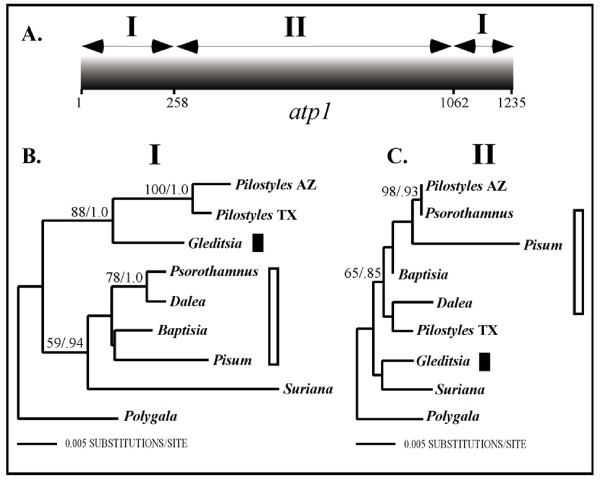
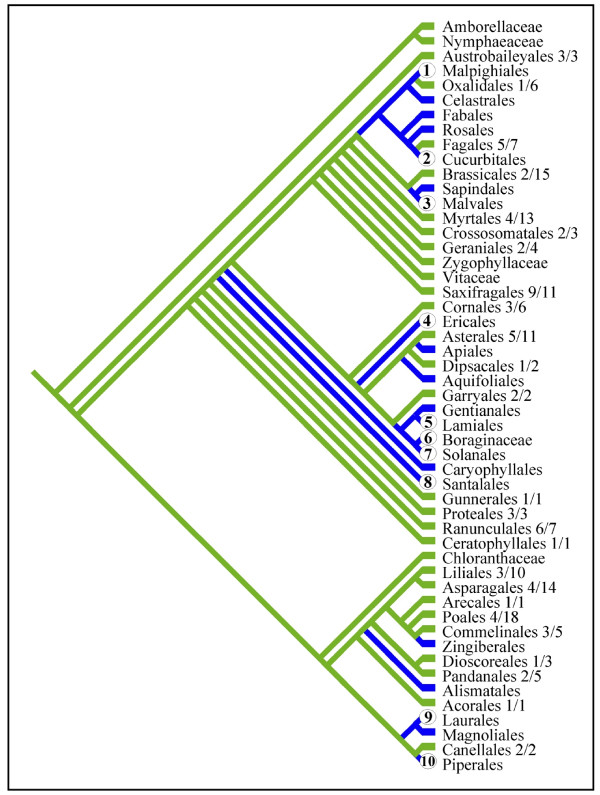
Here we report the results of a phylogenetic analysis of 102 species of seed plants designed to infer the position of all haustorial parasitic angiosperm lineages using three mitochondrial genes: atp1, coxI, and matR. Overall, the mtDNA phylogeny agrees with independent studies in terms of non-parasitic plant relationships and reveals at least 11 independent origins of parasitism in angiosperms, eight of which consist entirely of holoparasitic species that lack photosynthetic ability. From these results, it can be inferred that modern-day parasites have disproportionately evolved in certain lineages and that the endoparasitic habit has arisen by convergence in four clades. In addition, reduced taxon, single gene analyses revealed multiple horizontal transfers of atp1 from host to parasite lineage, suggesting that parasites may be important vectors of horizontal gene transfer in angiosperms. Furthermore, in Pilostyles we show evidence for a recent host-to-parasite atp1 transfer based on a chimeric gene sequence that indicates multiple historical xenologous gene acquisitions have occurred in this endoparasite. Finally, the phylogenetic relationships inferred for parasites indicate that the origins of parasitism in angiosperms are strongly correlated with horizontal acquisitions of the invasive coxI group I intron.
Collectively, these results indicate that the parasitic lifestyle has arisen repeatedly in angiosperm evolutionary history and results in increasing parasite genomic chimerism over time.
进化生物学中一些最具挑战性的系统发育问题涉及确定寄生生物的自由生活亲属,特别是寄生开花植物的亲属。因此,被子植物谱系中寄生起源的数量和异养生活方式的系统发育分布尚不清楚。
在这里,我们报告了对102种种子植物进行系统发育分析的结果,旨在利用三个线粒体基因:atp1、coxI和matR推断所有具吸器寄生被子植物谱系的位置。总体而言,线粒体DNA系统发育在非寄生植物关系方面与独立研究一致,并揭示了被子植物中至少11个独立的寄生起源,其中8个完全由缺乏光合能力的全寄生物种组成。从这些结果可以推断,现代寄生虫在某些谱系中不成比例地进化,并且内寄生习性在四个分支中通过趋同进化产生。此外,减少分类群的单基因分析揭示了atp1从宿主谱系到寄生虫谱系的多次水平转移,这表明寄生虫可能是被子植物水平基因转移的重要载体。此外,在无根藤属植物中,我们基于嵌合基因序列显示了近期从宿主到寄生虫的atp1转移的证据,这表明该内寄生虫发生了多次历史上的异源基因获得。最后,为寄生虫推断的系统发育关系表明,被子植物中寄生起源与入侵性coxI第一组内含子的水平获得密切相关。
总体而言,这些结果表明寄生生活方式在被子植物进化历史中反复出现,并随着时间的推移导致寄生虫基因组嵌合现象增加。