Hurley James H
Laboratory of Molecular Biology, National Institute of Diabetes and Digestive and Kidney Diseases, NIH, US Department of Health and Human Services, Bethesda, MD 20892, USA.
Curr Opin Cell Biol. 2008 Feb;20(1):4-11. doi: 10.1016/j.ceb.2007.12.002. Epub 2008 Jan 28.
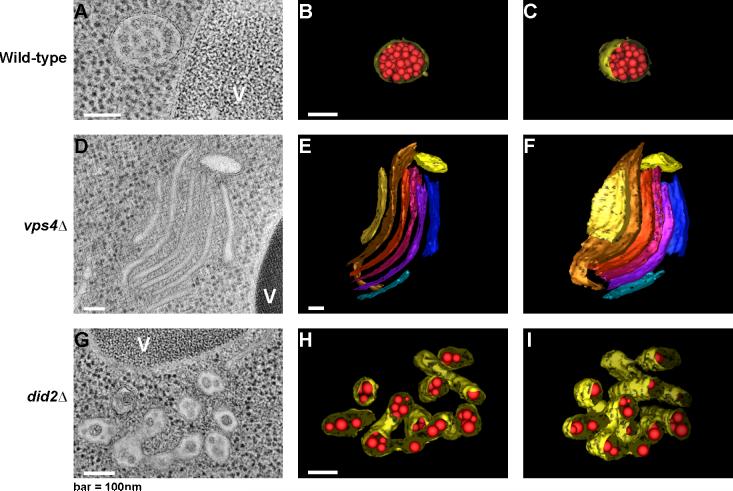
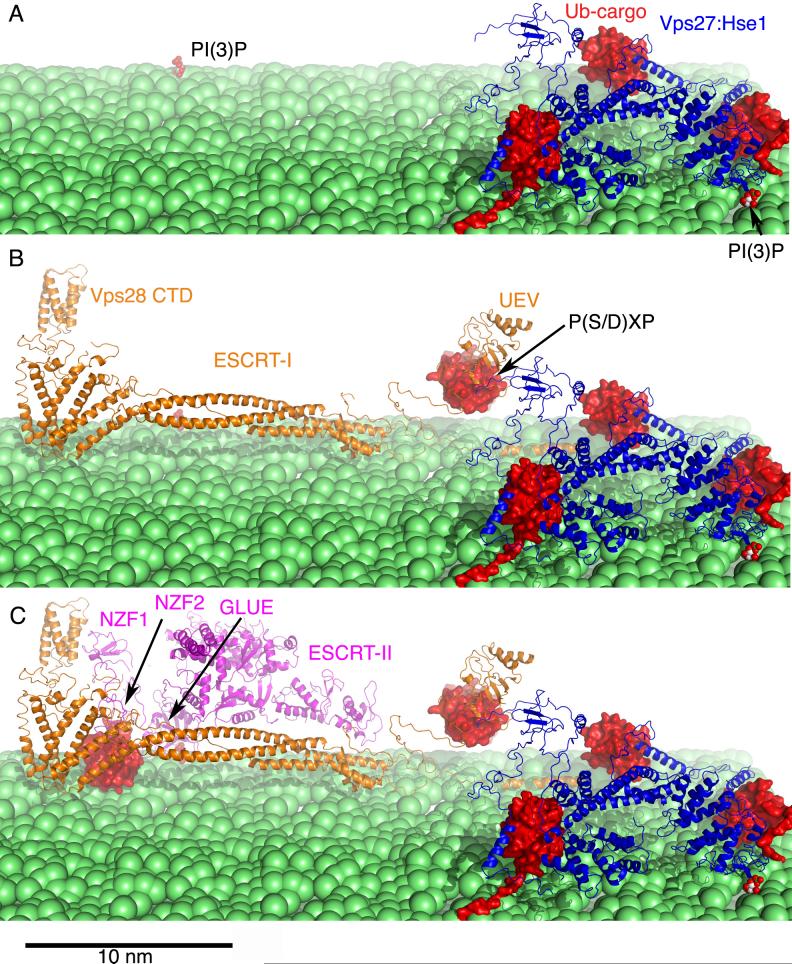
Multivesicular bodies (MVBs) are crucial intermediates in the trafficking of ubiquitinated receptors and other cargo destined for lysosomes. The formation of MVBs by invagination of the endosomal limiting membrane is catalyzed by the endosomal sorting complex required for transport (ESCRT) complexes, a process that has recently been visualized in three-dimensional detail by electron tomography. Structural and biochemical analysis of the upstream components, Vps27-Hse1, ESCRT-I, and ESCRT-II, shows how these complexes assemble and cluster cargo. Rapid progress has been made in understanding the assembly and disassembly of the ESCRT-III complex and the interactions of its subunits with MIT domain and other proteins. A key role for deubiquitination in the regulation of the system has been demonstrated. One central question remains largely unanswered, which is how the ESCRTs actually promote the invagination of the endosomal membrane.
多泡体(MVBs)是泛素化受体及其他运往溶酶体的货物运输过程中的关键中间体。内体分选转运所需复合物(ESCRT)催化内体限制膜内陷形成MVBs,这一过程最近已通过电子断层扫描在三维细节上得以可视化。对上游组分Vps27-Hse1、ESCRT-I和ESCRT-II的结构和生化分析表明了这些复合物如何组装并聚集货物。在理解ESCRT-III复合物的组装与拆卸及其亚基与MIT结构域和其他蛋白质的相互作用方面已取得了快速进展。去泛素化在该系统调控中的关键作用已得到证实。一个核心问题在很大程度上仍未得到解答,即ESCRT实际上是如何促进内体膜内陷的。