LeBlanc Jean Guy, Ledue-Clier Florence, Bensaada Martine, de Giori Graciela Savoy, Guerekobaya Theodora, Sesma Fernando, Juillard Vincent, Rabot Sylvie, Piard Jean-Christophe
INRA, UR 910 - Ecology and Physiology of the Digestive Tract (UEPSD), F-78350 Jouy-en-Josas, France.
BMC Microbiol. 2008 Jan 29;8:22. doi: 10.1186/1471-2180-8-22.
Soya and its derivatives represent nutritionally high quality food products whose major drawback is their high content of alpha-galacto-oligosaccharides. These are not digested in the small intestine due to the natural absence of tissular alpha-galactosidase in mammals. The passage of these carbohydrates to the large intestine makes them available for fermentation by gas-producing bacteria leading to intestinal flatulence. The aim of the work reported here was to assess the ability of alpha-galactosidase-producing lactobacilli to improve the digestibility of alpha-galacto-oligosaccharides in situ.
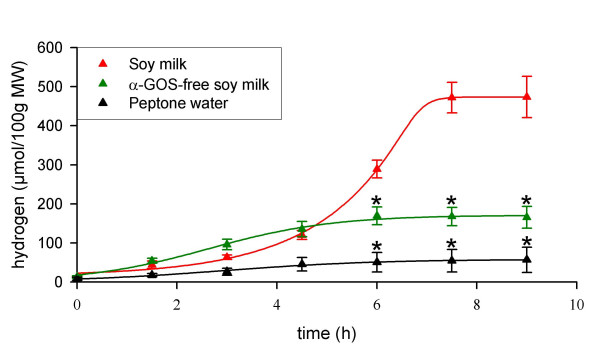
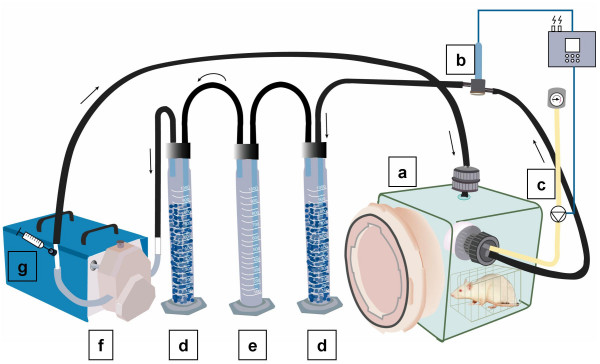
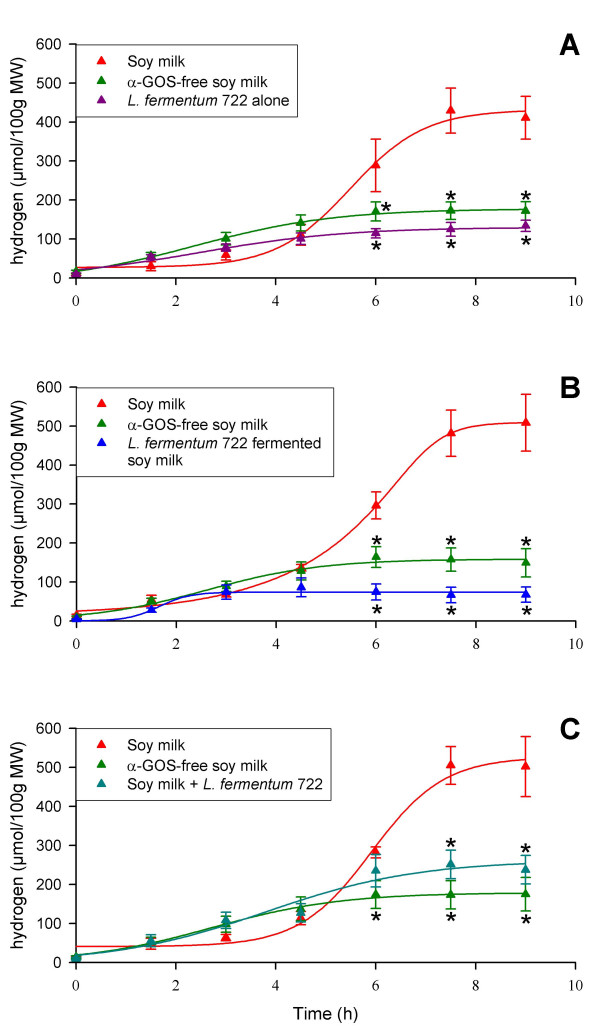
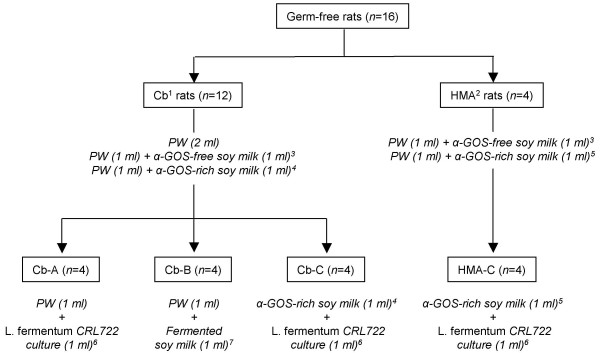
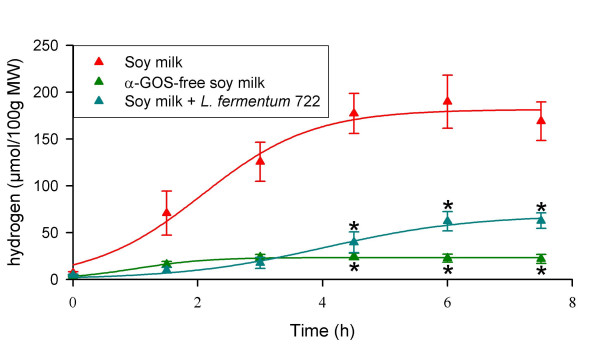
Gnotobiotic rats were orally fed with soy milk and placed in respiratory chambers designed to monitor fermentative gas excretion. The validity of the animal model was first checked using gnotobiotic rats monoassociated with a Clostridium butyricum hydrogen (H2)-producing strain. Ingestion of native soy milk by these rats caused significant H2 emission while ingestion of alpha-galacto-oligosaccharide-free soy milk did not, thus validating the experimental system. When native soy milk was fermented using the alpha-galactosidase-producing Lactobacillus fermentum CRL722 strain, the resulting product failed to induce H2 emission in rats thus validating the bacterial model. When L. fermentum CRL722 was coadministered with native soy milk, a significant reduction (50 %, P = 0.019) in H2 emission was observed, showing that alpha-galactosidase from L. fermentum CRL722 remained active in situ, in the gastrointestinal tract of rats monoassociated with C. butyricum. In human-microbiota associated rats, L. fermentum CRL722 also induced a significant reduction of H2 emission (70 %, P = 0.004).
These results strongly suggest that L. fermentum alpha-galactosidase is able to partially alleviate alpha-galactosidase deficiency in rats. This offers interesting perspectives in various applications in which lactic acid bacteria could be used as a vector for delivery of digestive enzymes in man and animals.
大豆及其衍生物是营养丰富的优质食品,但其主要缺点是含有高含量的α-半乳糖寡糖。由于哺乳动物体内天然缺乏组织α-半乳糖苷酶,这些寡糖在小肠中无法被消化。这些碳水化合物进入大肠后,会被产气体细菌发酵,导致肠道胀气。本文报道的这项研究的目的是评估产α-半乳糖苷酶的乳酸菌原位改善α-半乳糖寡糖消化率的能力。
将无菌大鼠口服喂以豆浆,并置于设计用于监测发酵性气体排出的呼吸室中。首先使用与产氢丁酸梭菌单联的无菌大鼠检查动物模型的有效性。这些大鼠摄入天然豆浆会导致大量氢气排放,而摄入不含α-半乳糖寡糖的豆浆则不会,从而验证了该实验系统。当使用产α-半乳糖苷酶的发酵乳杆菌CRL722菌株发酵天然豆浆时,所得产物未能在大鼠中诱导氢气排放,从而验证了细菌模型。当将发酵乳杆菌CRL722与天然豆浆共同给药时,观察到氢气排放显著减少(50%,P = 0.019),表明发酵乳杆菌CRL722产生的α-半乳糖苷酶在与丁酸梭菌单联的大鼠胃肠道中原位保持活性。在人源微生物群相关大鼠中,发酵乳杆菌CRL722也显著降低了氢气排放(70%,P = 0.004)。
这些结果有力地表明,发酵乳杆菌α-半乳糖苷酶能够部分缓解大鼠体内的α-半乳糖苷酶缺乏。这在各种应用中提供了有趣的前景,即在人和动物中乳酸菌可作为消化酶递送载体。