Theegarten Dirk, Sachse Konrad, Mentrup Britta, Fey Kerstin, Hotzel Helmut, Anhenn Olaf
Institute of Pathology and Neuropathology, University Duisburg-Essen Medical School, Hufelandstr, 55, D-45122 Essen, Germany.
Respir Res. 2008 Jan 29;9(1):14. doi: 10.1186/1465-9921-9-14.
Recurrent airway obstruction (RAO) in horses is a naturally occurring dust-induced disease mainly characterized by bronchiolitis which shows histological and pathophysiological similarities to human chronic obstructive pulmonary disease (COPD). In human COPD previous investigations indicated an association with Chlamydophila psittaci infection. The present study was designed (1) to clarify a possible role of this infectious agent in RAO and (2) to investigate the suitability of this equine disorder as a model for human COPD.
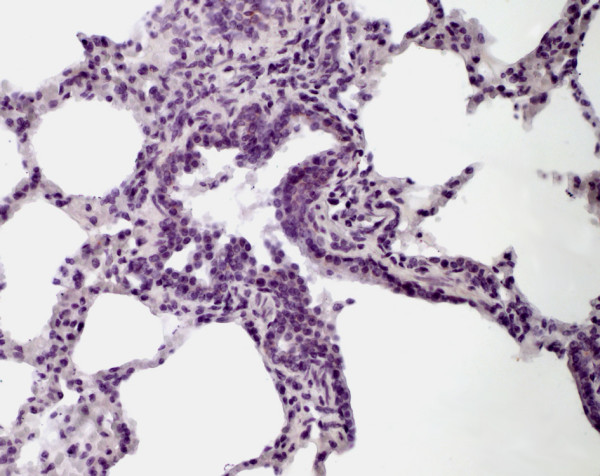
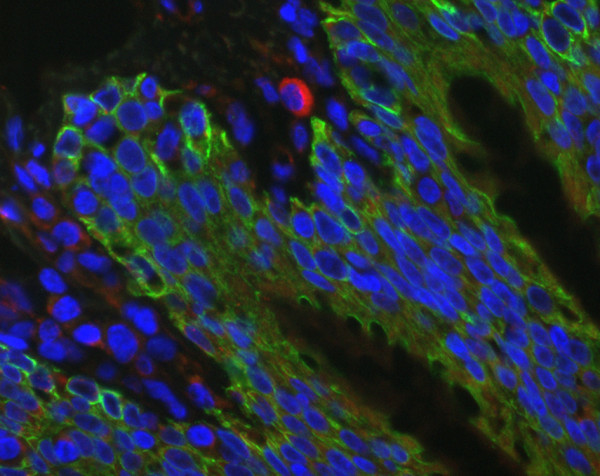
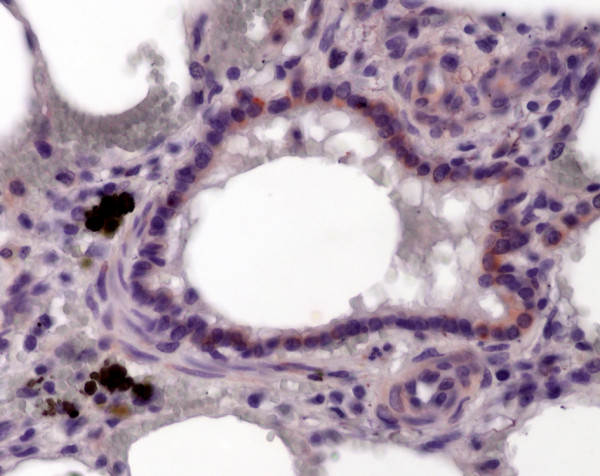
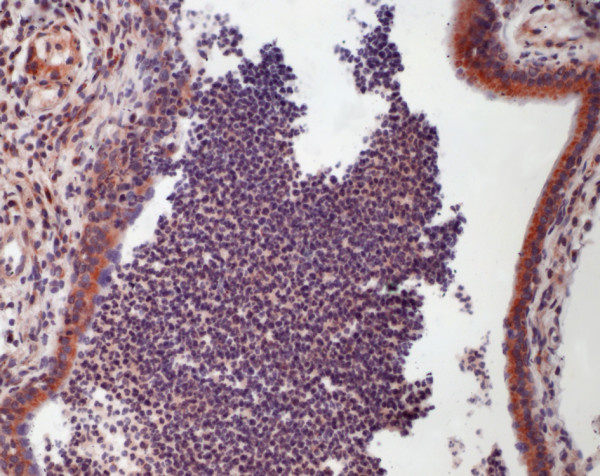
Clinico-pathological parameters of a total of 45 horses (25 horses with clinical signs of RAO and 20 clinically healthy controls) were compared to histological findings in lung tissue samples and infection by Chlamydiaceae using light microscopy, immunohistochemistry, and PCR.
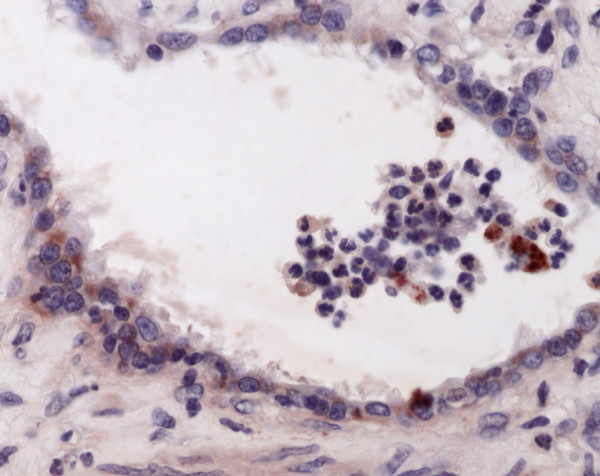
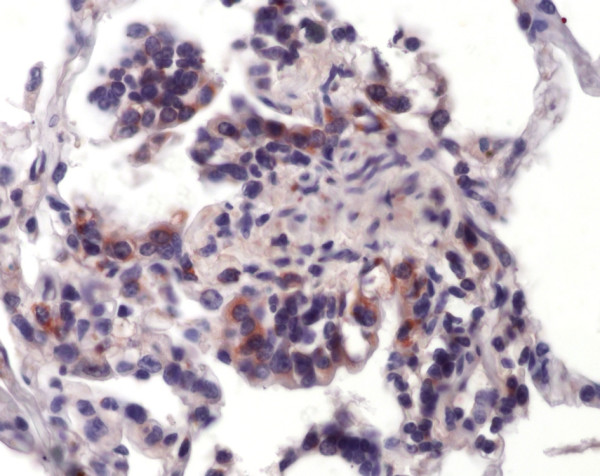
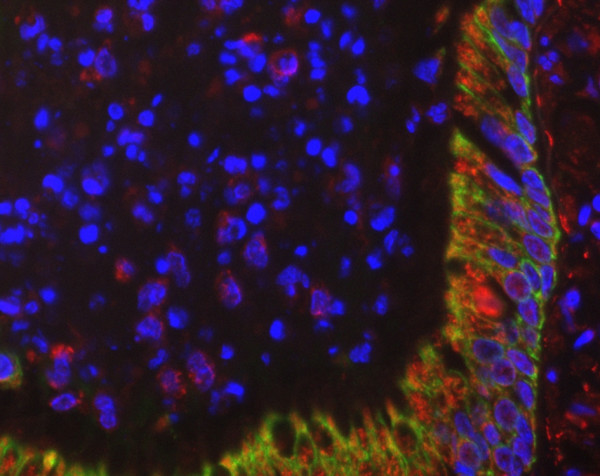
Horses with clinical signs of RAO vs. controls revealed more inflammatory changes in histology (p = 0.01), and a higher detection rate of Chlamydia psittaci antigens in all cells (p < 0.001) and bronchiolar epithelial cells alone (p < 0.001) by immunohistochemistry. The abundance of chlamydial inclusions increased with the severity of disease. PCR was positive in 60% of horses with RAO vs. 45% of the controls (p = 0.316). OmpA sequencing identified Chlamydophila psittaci (n = 9) and Chlamydophila abortus (n = 13) in both groups with no significant differences. Within the group of clinically healthy horses subgroups with no changes (n = 15) and slight inflammation of the small airways (n = 5) were identified. Also in the group of animals with RAO subgroups with slight (n = 16) and severe (n = 9) bronchiolitis could be formed. These four subgroups can be separated in parts by the number of cells positive for Chlamydia psittaci antigens.
Chlamydophila psittaci or abortus were present in the lung of both clinically healthy horses and those with RAO. Immunohistochemistry revealed acute chlamydial infections with inflammation in RAO horses, whereas in clinically healthy animals mostly persistent chlamydial infection and no inflammatory reactions were seen. Stable dust as the known fundamental abiotic factor in RAO is comparable to smoking in human disease. These results show that RAO can be used as a model for human COPD.
马复发性气道阻塞(RAO)是一种自然发生的粉尘诱导性疾病,主要特征为细支气管炎,在组织学和病理生理学方面与人类慢性阻塞性肺疾病(COPD)相似。在人类COPD中,先前的研究表明与鹦鹉热衣原体感染有关。本研究旨在(1)阐明这种感染因子在RAO中的可能作用,以及(2)研究这种马类疾病作为人类COPD模型的适用性。
对总共45匹马(25匹有RAO临床症状的马和20匹临床健康对照马)的临床病理参数与肺组织样本的组织学结果以及衣原体科感染情况进行比较,采用光学显微镜、免疫组织化学和聚合酶链反应(PCR)。
有RAO临床症状的马与对照马相比,组织学上炎症变化更多(p = 0.01),通过免疫组织化学检测,所有细胞(p < 0.001)和仅细支气管上皮细胞(p < 0.001)中鹦鹉热衣原体抗原的检出率更高。衣原体包涵体的丰度随疾病严重程度增加。RAO马中PCR阳性率为60%,对照马为45%(p = 0.316)。外膜蛋白A(OmpA)测序在两组中均鉴定出鹦鹉热衣原体(n = 9)和流产衣原体(n = 13),无显著差异。在临床健康马组中,鉴定出无变化的亚组(n = 15)和小气道轻度炎症的亚组(n = 5)。在患有RAO的动物组中,也可形成轻度(n = 16)和重度(n = 9)细支气管炎的亚组。这四个亚组部分可通过鹦鹉热衣原体抗原阳性细胞数量来区分。
鹦鹉热衣原体或流产衣原体存在于临床健康马和患有RAO的马的肺中。免疫组织化学显示RAO马存在急性衣原体感染并伴有炎症,而在临床健康动物中大多为持续性衣原体感染且未见炎症反应。作为RAO已知基本非生物因素的稳定粉尘与人类疾病中的吸烟类似。这些结果表明RAO可作为人类COPD的模型。