NSW Department of Primary Industries, Elizabeth Macarthur Agricultural Institute, Menangle, NSW, Australia.
Animal Research Centre, University of the Sunshine Coast, 91 Sippy Downs Drive, Sippy Downs, 4556, QLD, Australia.
Emerg Microbes Infect. 2018 May 16;7(1):88. doi: 10.1038/s41426-018-0089-y.
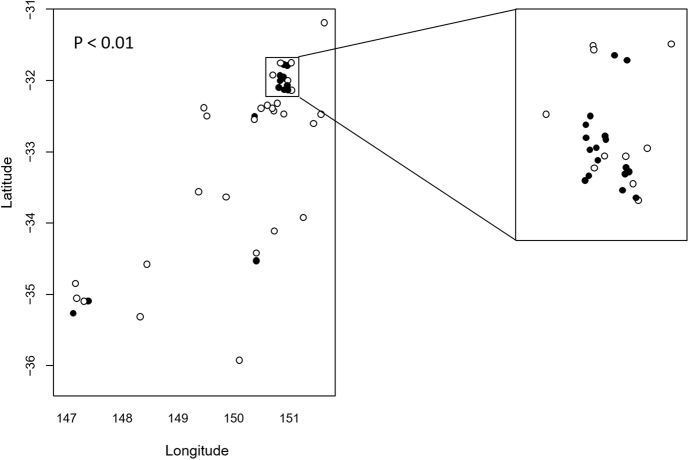
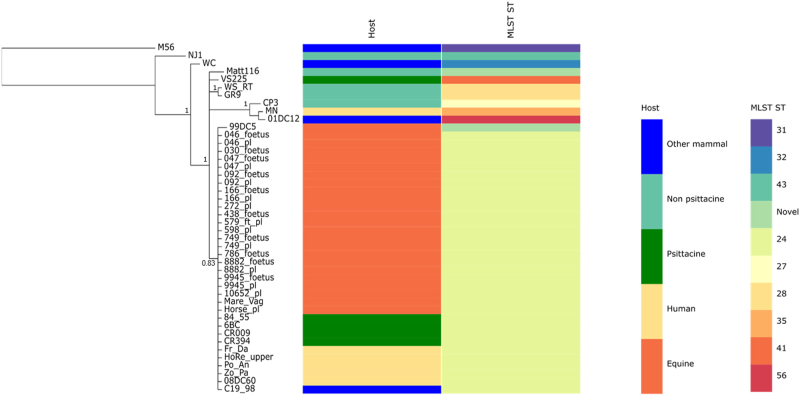
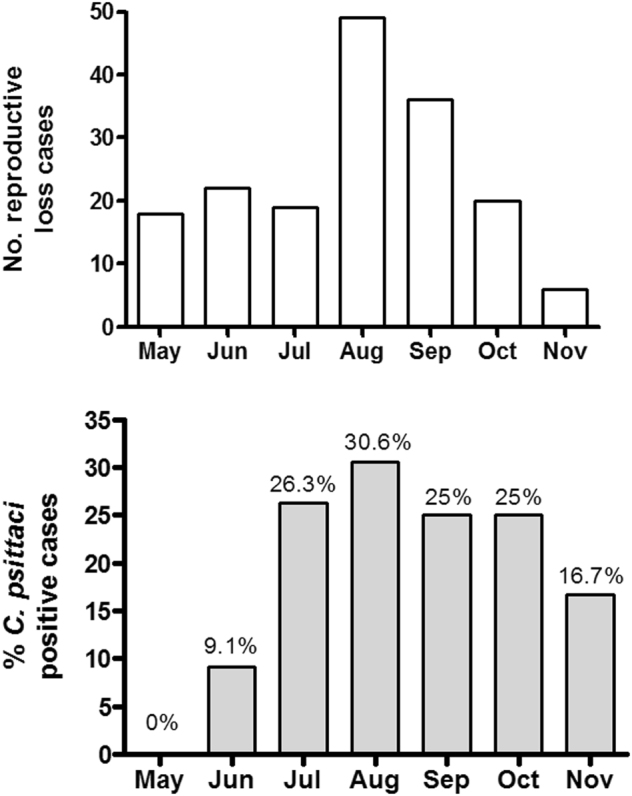
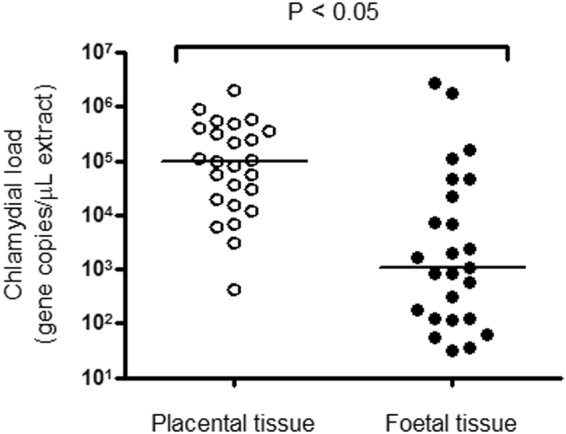
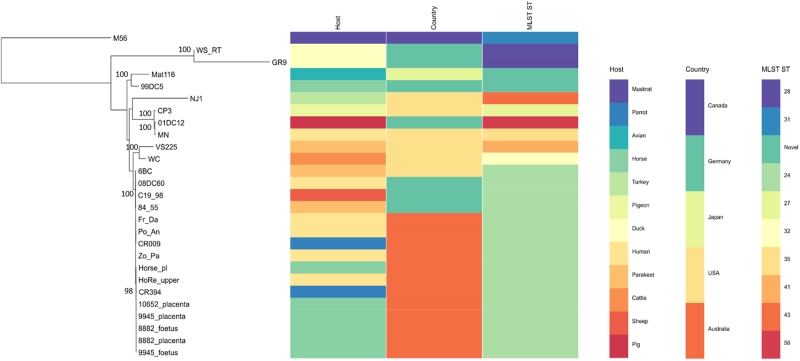
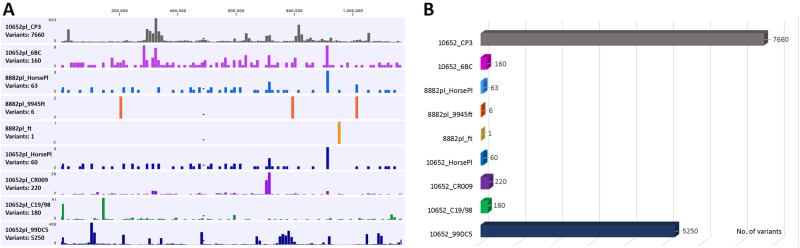
Chlamydia psittaci is an avian pathogen capable of spill-over infections to humans. A parrot C. psittaci strain was recently detected in an equine reproductive loss case associated with a subsequent cluster of human C. psittaci infections. In this study, we screened for C. psittaci in cases of equine reproductive loss reported in regional New South Wales, Australia during the 2016 foaling season. C. psittaci specific-PCR screening of foetal and placental tissue samples from cases of equine abortion (n = 161) and foals with compromised health status (n = 38) revealed C. psittaci positivity of 21.1% and 23.7%, respectively. There was a statistically significant geographical clustering of cases ~170 km inland from the mid-coast of NSW (P < 0.001). Genomic analysis and molecular typing of C. psittaci positive samples from this study and the previous Australian equine index case revealed that the equine strains from different studs in regional NSW were clonal, while the phylogenetic analysis revealed that the C. psittaci strains from both Australian equine disease clusters belong to the parrot-associated 6BC clade, again indicative of spill-over of C. psittaci infections from native Australian parrots. The results of this work suggest that C. psittaci may be a more significant agent of equine reproductive loss than thought. A range of studies are now required to evaluate (a) the exact role that C. psittaci plays in equine reproductive loss; (b) the range of potential avian reservoirs and factors influencing infection spill-over; and
鹦鹉热衣原体是一种禽类病原体,能够溢出感染人类。最近在与随后的人类鹦鹉热衣原体感染集群相关的马科动物生殖损失病例中检测到鹦鹉热衣原体的鹦鹉株。在本研究中,我们对澳大利亚新南威尔士州地区 2016 年产驹季节报告的马科动物生殖损失病例进行了鹦鹉热衣原体筛查。对流产(n = 161)和健康状况受损的小马驹(n = 38)的胎儿和胎盘组织样本进行的鹦鹉热衣原体特异性 PCR 筛查显示,鹦鹉热衣原体的阳性率分别为 21.1%和 23.7%。病例在新南威尔士州中海岸内陆约 170 公里处呈统计学上显著的地理聚集(P < 0.001)。对来自本研究和先前澳大利亚马科动物索引病例的阳性样本进行的鹦鹉热衣原体基因组分析和分子分型显示,来自新南威尔士州不同马厩的马科动物菌株是克隆的,而系统发育分析显示,来自澳大利亚两个马科动物疾病集群的鹦鹉热衣原体菌株都属于与鹦鹉相关的 6BC 分支,再次表明鹦鹉热衣原体感染从澳大利亚本地鹦鹉溢出。这项工作的结果表明,鹦鹉热衣原体可能是马科动物生殖损失的一个比想象中更为重要的因素。现在需要进行一系列研究来评估:(a)鹦鹉热衣原体在马科动物生殖损失中的确切作用;(b)潜在的禽类宿主范围和影响感染溢出的因素;