Brady Dean, Jordaan Justin, Simpson Clinton, Chetty Avashnee, Arumugam Cherise, Moolman Francis S
CSIR Biosciences, Ardeer Road, Modderfontein, 1645 South Africa.
BMC Biotechnol. 2008 Jan 31;8:8. doi: 10.1186/1472-6750-8-8.
Enzymes have found extensive and growing application in the field of chemical organic synthesis and resolution of chiral intermediates. In order to stabilise the enzymes and to facilitate their recovery and recycle, they are frequently immobilised. However, immobilisation onto solid supports greatly reduces the volumetric and specific activity of the biocatalysts. An alternative is to form self-immobilised enzyme particles.
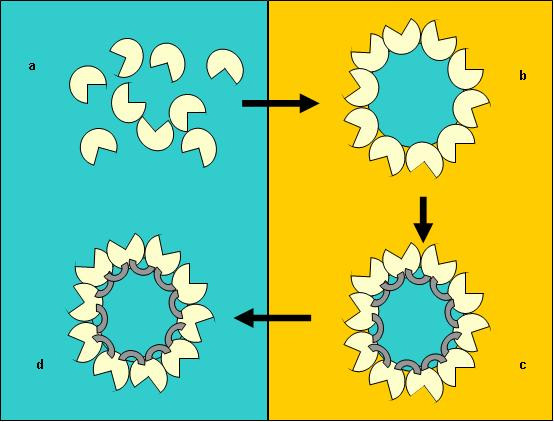
Through addition of protein cross-linking agents to a water-in-oil emulsion of an aqueous enzyme solution, structured self-immobilised spherical enzyme particles of Pseudomonas fluorescens lipase were formed. The particles could be recovered from the emulsion, and activity in aqueous and organic solvents was successfully demonstrated. Preliminary data indicates that the lipase tended to collect at the interface.
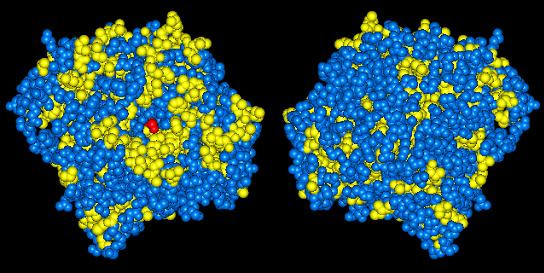
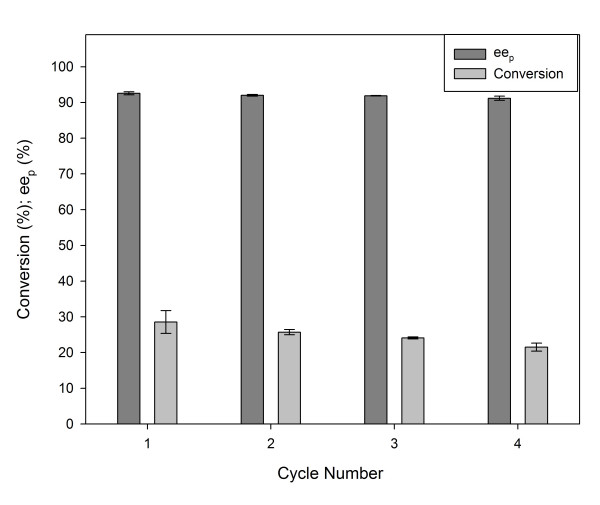
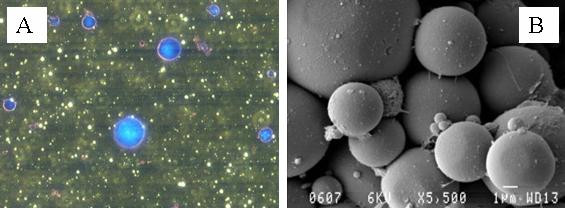
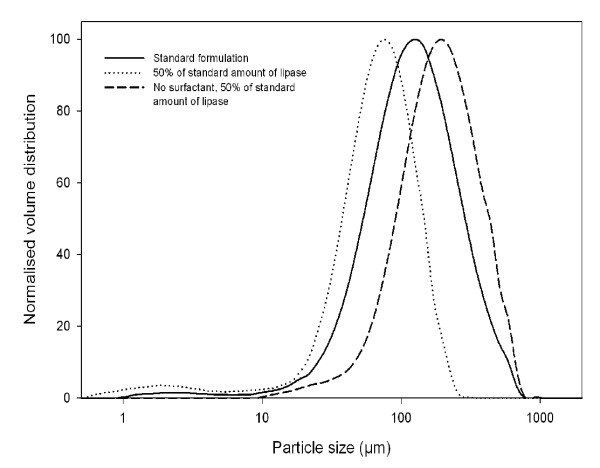
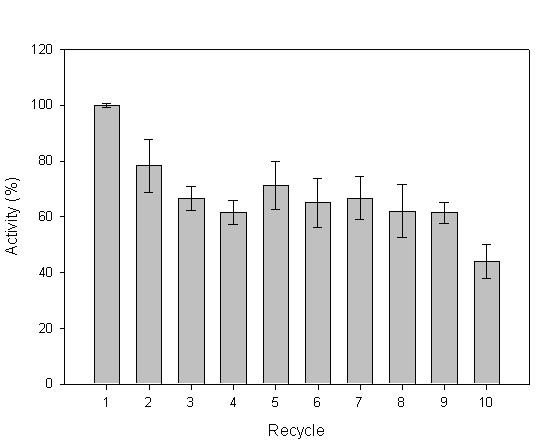
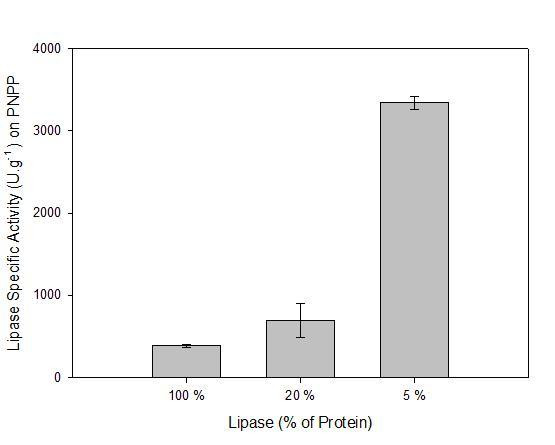
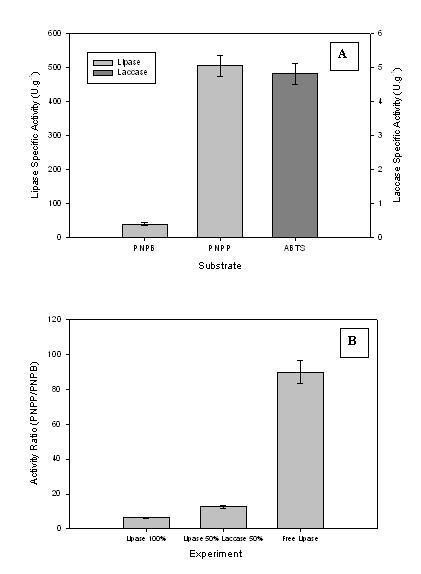
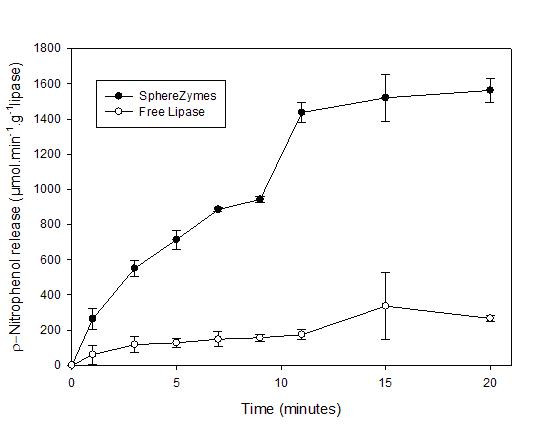
The immobilised particles provide a number of advantages. The individual spherical particles had a diameter of between 0.5-10 mum, but tended to form aggregates with an average particle volume distribution of 100 mum. The size could be controlled through addition of surfactant and variations in protein concentration. The particles were robust enough to be recovered by centrifugation and filtration, and to be recycled for further reactions. They present lipase enzymes with the active sites selectively orientated towards the exterior of the particle. Co-immobilisation with other enzymes, or other proteins such as albumin, was also demonstrated. Moreover, higher activity for small ester molecules could be achieved by the immobilised enzyme particles than for free enzyme, presumably because the lipase conformation required for catalysis had been locked in place during immobilisation. The immobilised enzymes also demonstrated superior activity in organic solvent compared to the original free enzyme. This type of self-immobilised enzyme particle has been named spherezymes.
酶在化学有机合成和手性中间体拆分领域已得到广泛且不断增加的应用。为了稳定酶并便于其回收和循环利用,它们常常被固定化。然而,固定在固体载体上会大大降低生物催化剂的体积活性和比活性。另一种方法是形成自固定化酶颗粒。
通过向酶水溶液的油包水乳液中添加蛋白质交联剂,形成了荧光假单胞菌脂肪酶的结构化自固定化球形酶颗粒。这些颗粒可以从乳液中回收,并成功证明了其在水相和有机溶剂中的活性。初步数据表明脂肪酶倾向于聚集在界面处。
固定化颗粒具有许多优点。单个球形颗粒直径在0.5 - 10微米之间,但倾向于形成聚集体,平均颗粒体积分布为100微米。颗粒大小可以通过添加表面活性剂和改变蛋白质浓度来控制。这些颗粒足够坚固,可以通过离心和过滤回收,并循环用于进一步反应。它们使脂肪酶的活性位点选择性地朝向颗粒外部。还证明了可以与其他酶或其他蛋白质(如白蛋白)共同固定化。此外,固定化酶颗粒对小酯分子的活性高于游离酶,推测是因为催化所需的脂肪酶构象在固定化过程中被锁定。与原始游离酶相比,固定化酶在有机溶剂中也表现出更高的活性。这种类型的自固定化酶颗粒被命名为球形酶。