Cantor Alan B, Iwasaki Hiromi, Arinobu Yojiro, Moran Tyler B, Shigematsu Hirokazu, Sullivan Matthew R, Akashi Koichi, Orkin Stuart H
Division of Pediatric Hematology/Oncology, Children's Hospital Boston, Boston, MA 02115, USA.
J Exp Med. 2008 Mar 17;205(3):611-24. doi: 10.1084/jem.20070544. Epub 2008 Feb 25.
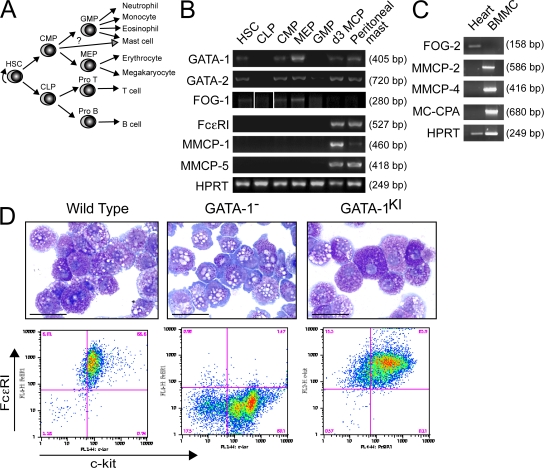
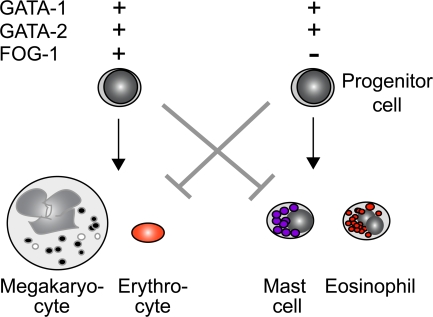
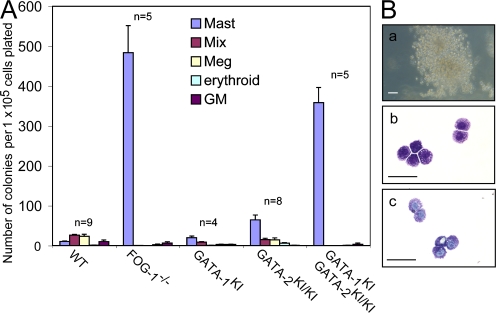
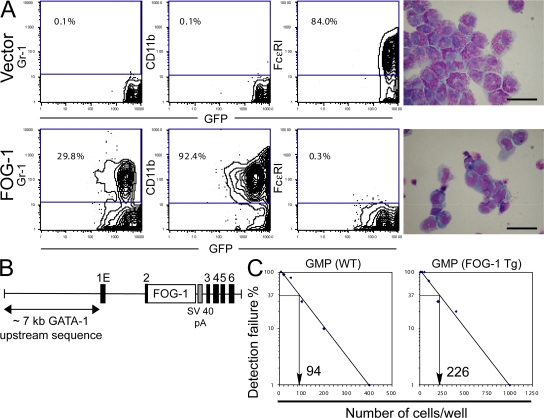
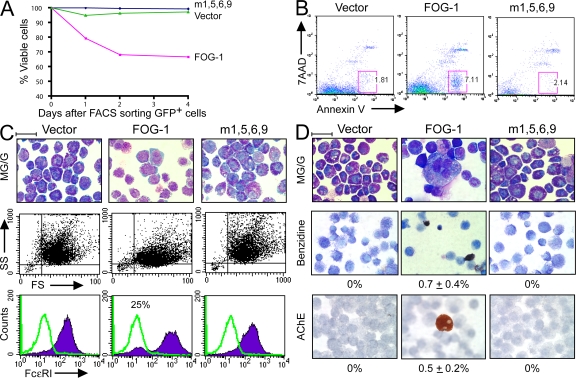
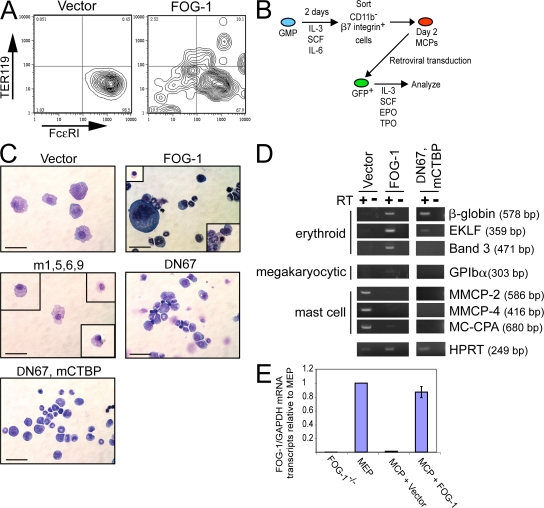
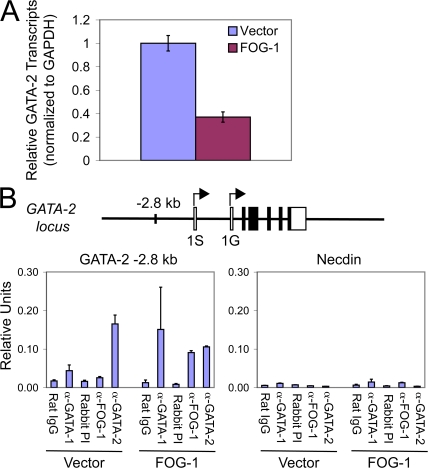
The zinc finger transcription factor GATA-1 requires direct physical interaction with the cofactor friend of GATA-1 (FOG-1) for its essential role in erythroid and megakaryocytic development. We show that in the mast cell lineage, GATA-1 functions completely independent of FOG proteins. Moreover, we demonstrate that FOG-1 antagonizes the fate choice of multipotential progenitor cells for the mast cell lineage, and that its down-regulation is a prerequisite for mast cell development. Remarkably, ectopic expression of FOG-1 in committed mast cell progenitors redirects them into the erythroid, megakaryocytic, and granulocytic lineages. These lineage switches correlate with transcriptional down-regulation of GATA-2, an essential mast cell GATA factor, via switching of GATA-1 for GATA-2 at a key enhancer element upstream of the GATA-2 gene. These findings illustrate combinatorial control of cell fate identity by a transcription factor and its cofactor, and highlight the role of transcriptional networks in lineage determination. They also provide evidence for lineage instability during early stages of hematopoietic lineage commitment.
锌指转录因子GATA-1在红细胞和巨核细胞发育中发挥关键作用,这需要它与辅因子GATA-1的朋友(FOG-1)直接进行物理相互作用。我们发现,在肥大细胞谱系中,GATA-1的功能完全独立于FOG蛋白。此外,我们证明FOG-1拮抗多能祖细胞向肥大细胞谱系的命运选择,并且其下调是肥大细胞发育的先决条件。值得注意的是,在已定向的肥大细胞祖细胞中异位表达FOG-1会使它们重定向到红细胞、巨核细胞和粒细胞谱系。这些谱系转换与GATA-2(一种必需的肥大细胞GATA因子)的转录下调相关,这是通过在GATA-2基因上游的一个关键增强子元件处将GATA-1替换为GATA-2实现的。这些发现阐明了转录因子及其辅因子对细胞命运身份的组合控制,并突出了转录网络在谱系确定中的作用。它们还为造血谱系定向早期阶段的谱系不稳定性提供了证据。