O'Connell Ryan M, Rao Dinesh S, Chaudhuri Aadel A, Boldin Mark P, Taganov Konstantin D, Nicoll John, Paquette Ronald L, Baltimore David
Department of Biology, California Institute of Technology, Pasadena, CA 91125, USA.
J Exp Med. 2008 Mar 17;205(3):585-94. doi: 10.1084/jem.20072108. Epub 2008 Feb 25.
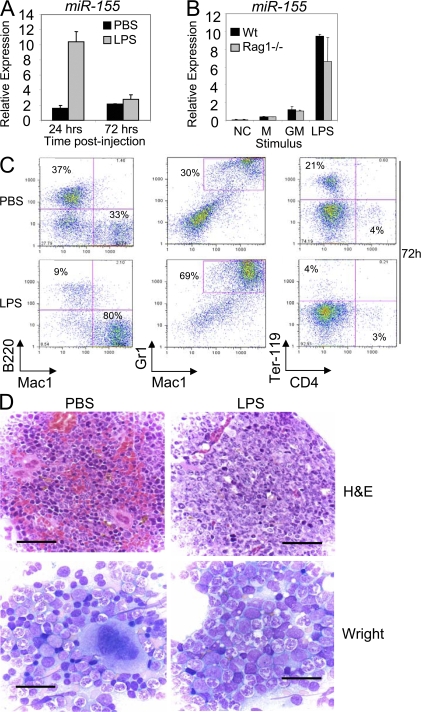
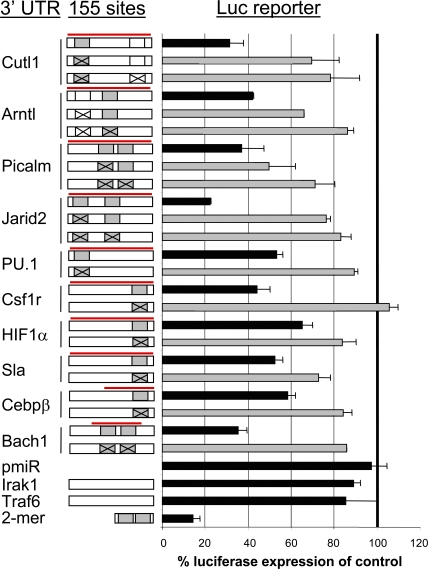
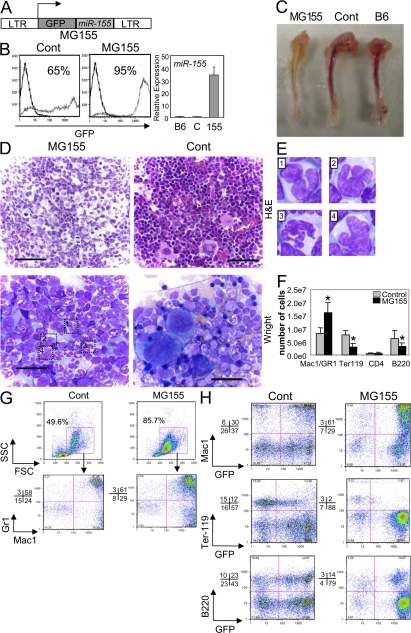
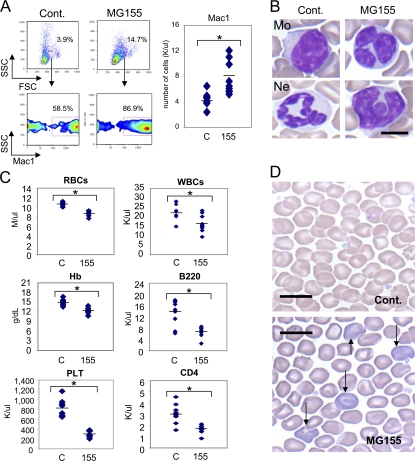
Mammalian microRNAs are emerging as key regulators of the development and function of the immune system. Here, we report a strong but transient induction of miR-155 in mouse bone marrow after injection of bacterial lipopolysaccharide (LPS) correlated with granulocyte/monocyte (GM) expansion. Demonstrating the sufficiency of miR-155 to drive GM expansion, enforced expression in mouse bone marrow cells caused GM proliferation in a manner reminiscent of LPS treatment. However, the miR-155-induced GM populations displayed pathological features characteristic of myeloid neoplasia. Of possible relevance to human disease, miR-155 was found to be overexpressed in the bone marrow of patients with certain subtypes of acute myeloid leukemia (AML). Furthermore, miR-155 repressed a subset of genes implicated in hematopoietic development and disease. These data implicate miR-155 as a contributor to physiological GM expansion during inflammation and to certain pathological features associated with AML, emphasizing the importance of proper miR-155 regulation in developing myeloid cells during times of inflammatory stress.
哺乳动物的微小RNA正逐渐成为免疫系统发育和功能的关键调节因子。在此,我们报道,注射细菌脂多糖(LPS)后,小鼠骨髓中miR-155会出现强烈但短暂的诱导,这与粒细胞/单核细胞(GM)扩增相关。通过证明miR-155足以驱动GM扩增,在小鼠骨髓细胞中强制表达会导致GM增殖,其方式类似于LPS处理。然而,miR-155诱导的GM群体表现出髓系肿瘤的病理特征。与人类疾病可能相关的是,发现miR-155在某些亚型急性髓系白血病(AML)患者的骨髓中过表达。此外,miR-155抑制了一部分与造血发育和疾病相关的基因。这些数据表明,miR-155在炎症期间对生理性GM扩增以及与AML相关的某些病理特征有作用,强调了在炎症应激期间对发育中的髓系细胞进行适当miR-155调节的重要性。