Khan Adil G, Thattai Mukund, Bhalla Upinder S
National Centre for Biological Sciences, Tata Institute of Fundamental Research, Bellary Road, Bangalore 560065, India.
Neuron. 2008 Feb 28;57(4):571-85. doi: 10.1016/j.neuron.2008.01.008.
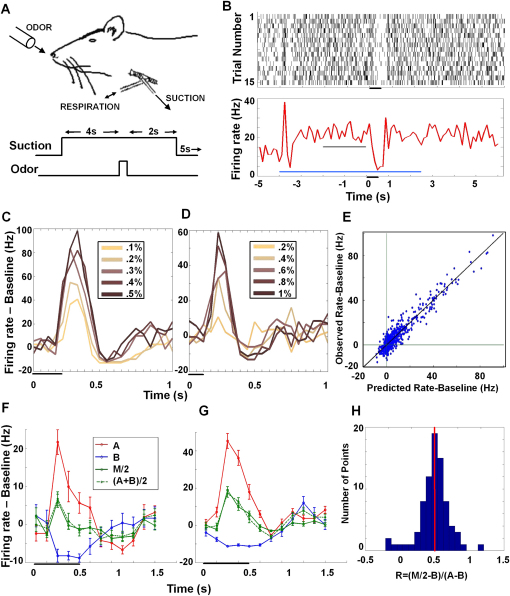
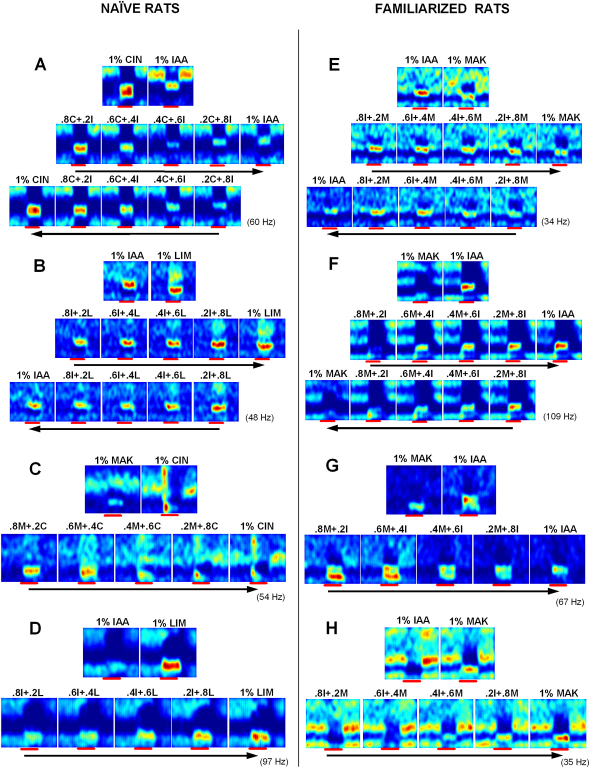
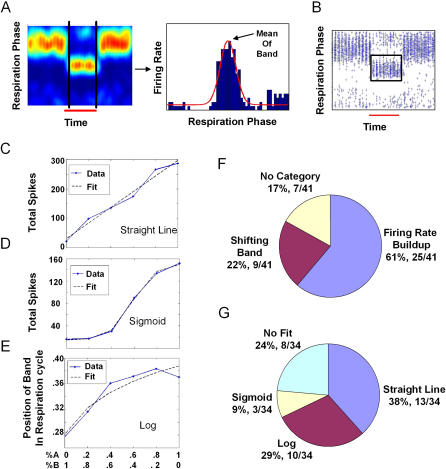
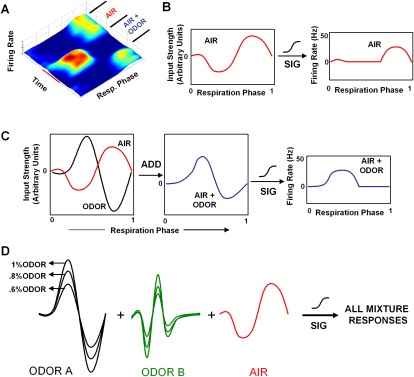
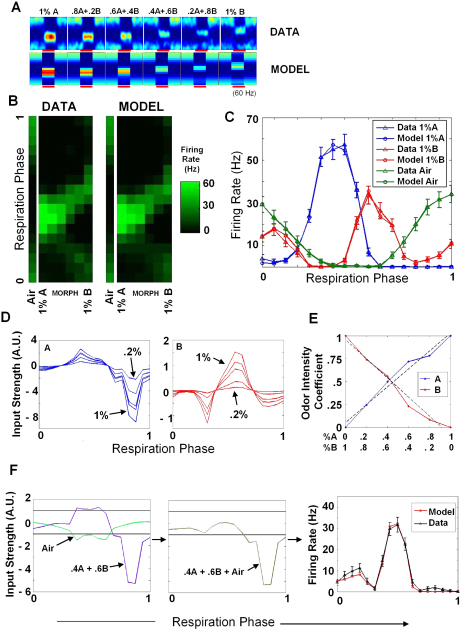
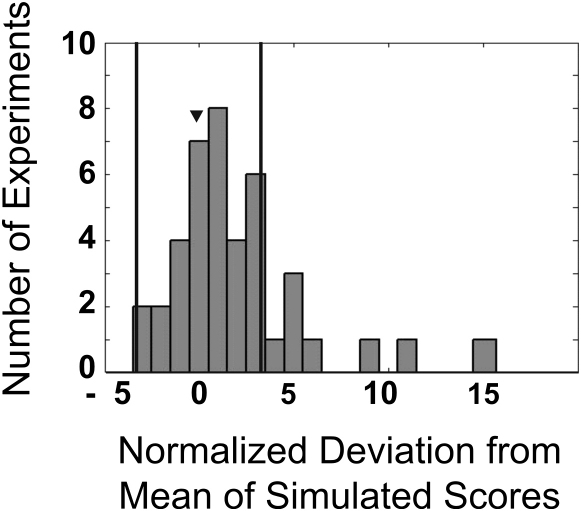
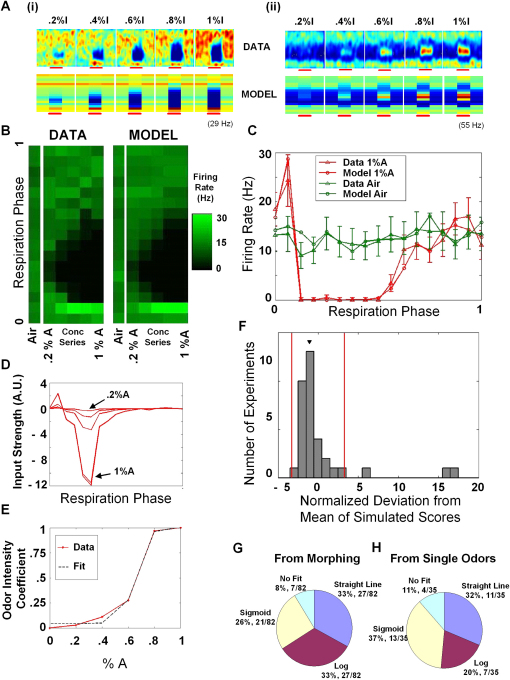
Many species of mammals are very good at categorizing odors. One model for how this is achieved involves the formation of "attractor" states in the olfactory processing pathway, which converge to stable representations for the odor. We analyzed the responses of rat olfactory bulb mitral/tufted (M/T) cells using stimuli "morphing" from one odor to another through intermediate mixtures. We then developed a phenomenological model for the representation of odors and mixtures by M/T cells and show that >80% of odorant responses to different concentrations and mixtures can be expressed in terms of smoothly summing responses to air and the two pure odorants. Furthermore, the model successfully predicts M/T cell responses to odor mixtures when respiration dependence is eliminated. Thus, odor mixtures are represented in the bulb through summation of components, rather than distinct attractor states. We suggest that our olfactory coding model captures many aspects of single and mixed odor representation in M/T cells.
许多哺乳动物物种都非常擅长对气味进行分类。关于这是如何实现的一种模型涉及在嗅觉处理通路中形成“吸引子”状态,这些状态汇聚到气味的稳定表征。我们使用从一种气味通过中间混合物“渐变”到另一种气味的刺激来分析大鼠嗅球的 mitral/tufted(M/T)细胞的反应。然后,我们开发了一个现象学模型来描述 M/T 细胞对气味和混合物的表征,并表明对不同浓度和混合物的 >80% 的气味剂反应可以用对空气和两种纯气味剂的平滑求和反应来表示。此外,当消除呼吸依赖性时,该模型成功预测了 M/T 细胞对气味混合物的反应。因此,气味混合物在嗅球中是通过成分的总和来表征的,而不是通过不同的吸引子状态。我们认为我们的嗅觉编码模型捕捉了 M/T 细胞中单一和混合气味表征的许多方面。