Lin Jianguo, Chen Anping
Department of Pathology, School of Medicine, Saint Louis University, St Louis, MO 63104, USA.
Lab Invest. 2008 May;88(5):529-40. doi: 10.1038/labinvest.2008.20. Epub 2008 Mar 10.
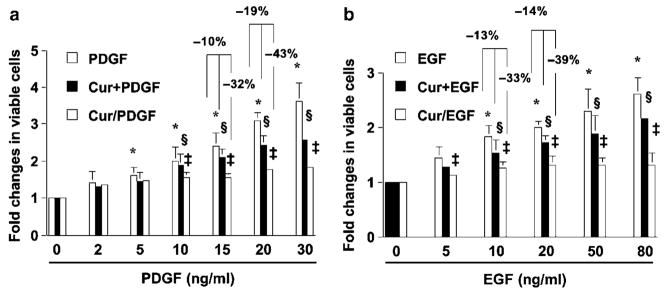
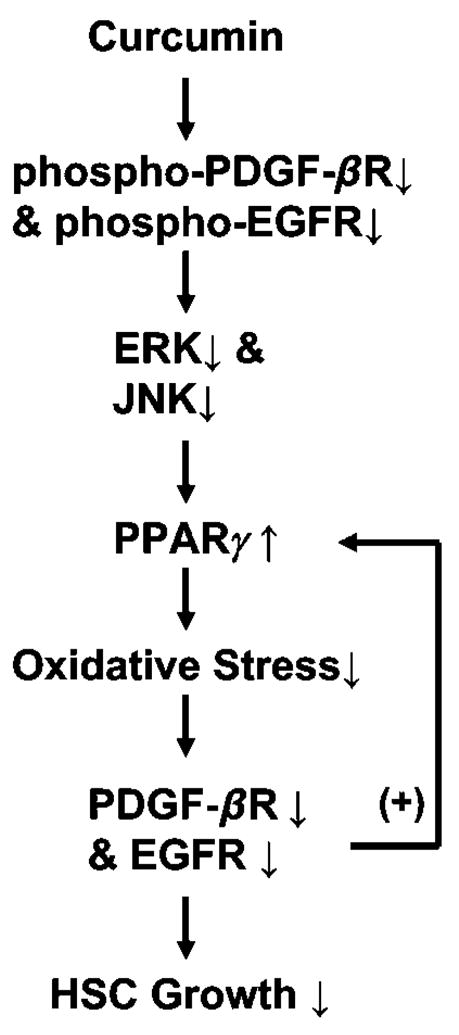
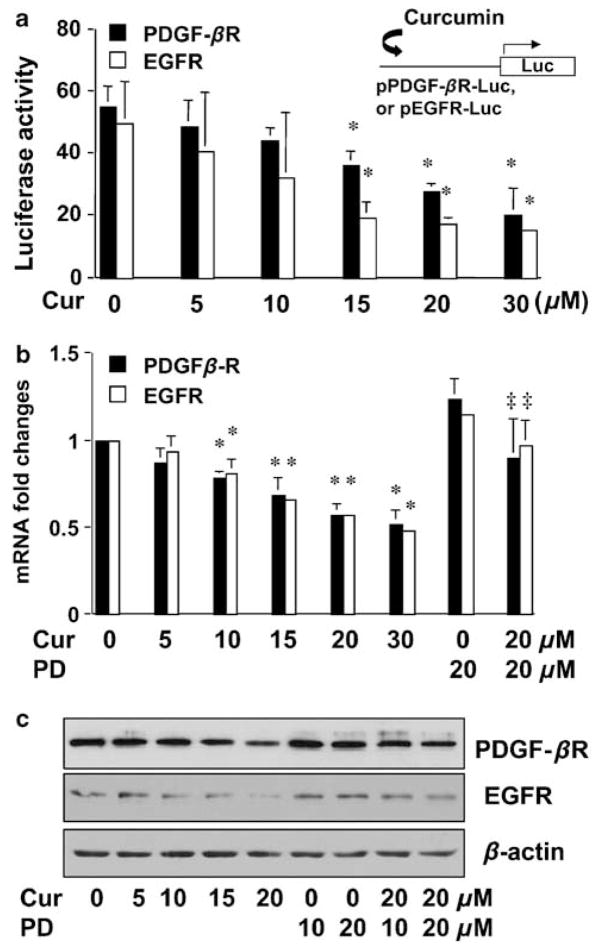
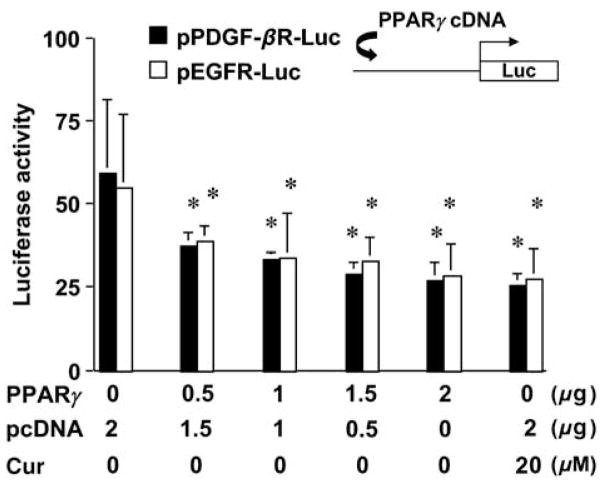
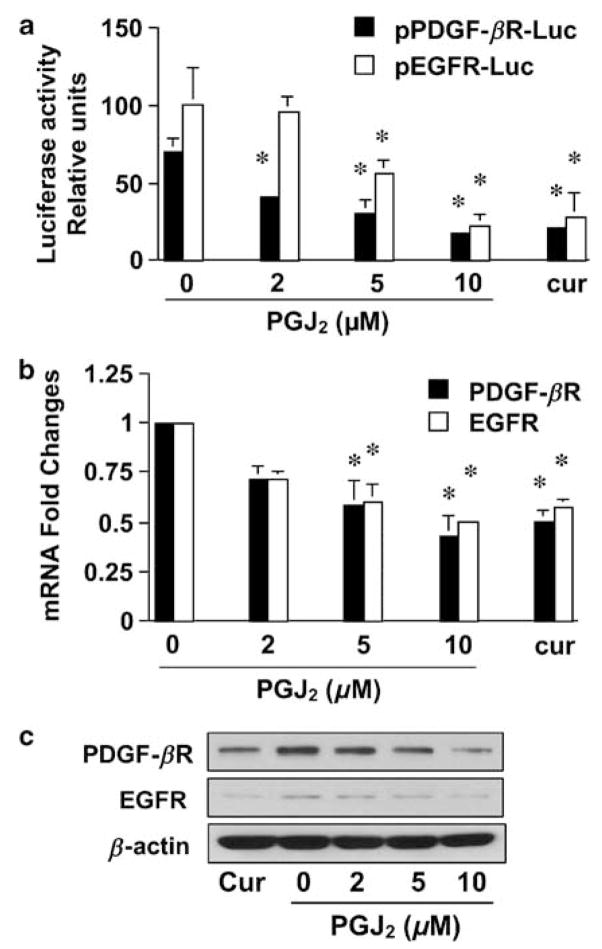
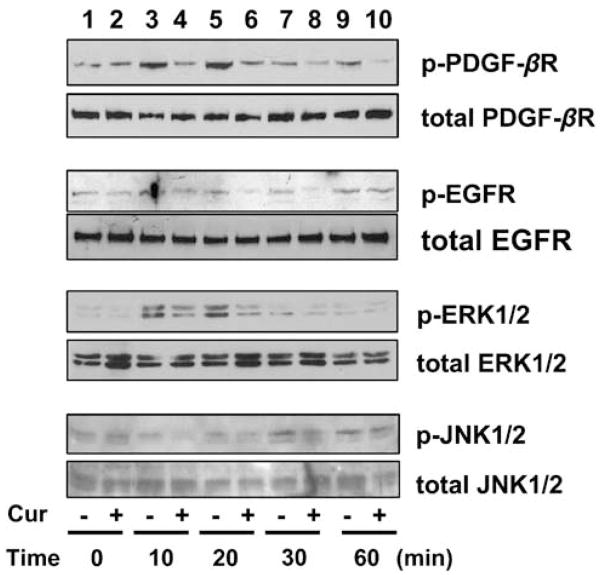
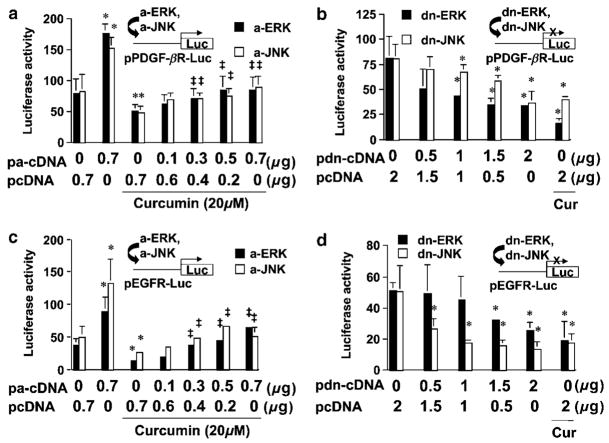
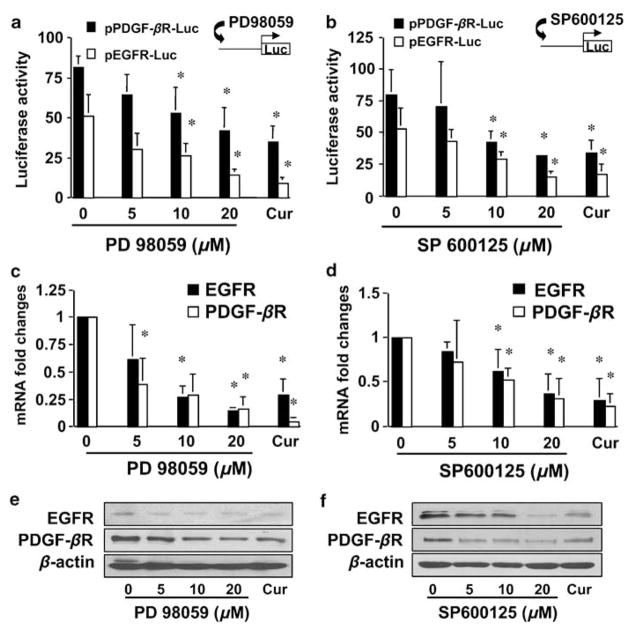
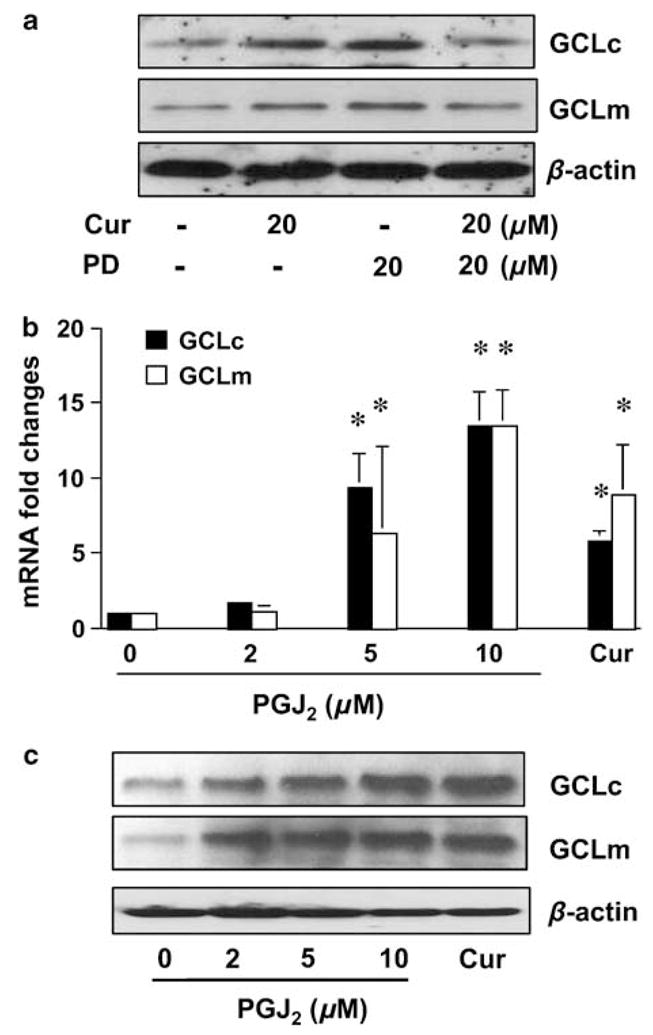
During hepatic fibrogenesis, reduction in the abundance of peroxisome proliferator-activated receptor-gamma (PPARgamma) is accompanied by activation of mitogenic signaling for platelet-derived growth factor (PDGF) and epidermal growth factor (EGF) in hepatic stellate cells (HSCs), the major effector cells. We previously reported that curcumin, the yellow pigment in curry, interrupted PDGF and EGF signaling, stimulated PPARgamma gene expression, and enhanced its activity, leading to inhibition of cell proliferation of activated HSC in vitro and in vivo. The aim of this study was to elucidate the underlying mechanisms. We hypothesized that the enhancement of PPARgamma activity by curcumin might result in the interruption of PDGF and EGF signaling. Our experiments demonstrated that curcumin, with different treatment strategies, showed different efficiencies in the inhibition of PDGF- or EGF-stimulated HSC proliferation. Further experiments observed that curcumin dose dependently reduced gene expression of PDGF and EGF receptors (ie, PDGF-betaR and EGFR), which required PPARgamma activation. The activation of PPARgamma by its agonist suppressed pdgf-betar and egfr expression in HSC. In addition, curcumin reduced the phosphorylation levels of PDGF-betaR and EGFR, as well as their downstream signaling cascades, including ERK1/2 and JNK1/2. Moreover, activation of PPARgamma induced gene expression of glutamate-cysteine ligase, the rate-limiting enzyme in de novo synthesis of the major intracellular antioxidant, glutathione. De novo synthesis of glutathione was required for curcumin to suppress pdgf-betar and egfr expression in activated HSCs. Our results collectively demonstrated that enhancement of PPARgamma activity by curcumin interrupted PDGF and EGF signaling in activated HSCs by reducing the phosphorylation levels of PDGF-betaR and EGFR, and by suppressing the receptor gene expression. These results provide novel insights into the mechanisms of curcumin in the inhibition of HSC activation and the suppression of hepatic fibrogenesis.
在肝纤维化形成过程中,过氧化物酶体增殖物激活受体γ(PPARγ)丰度的降低伴随着肝星状细胞(HSCs)中血小板衍生生长因子(PDGF)和表皮生长因子(EGF)促有丝分裂信号的激活,肝星状细胞是主要的效应细胞。我们之前报道过,咖喱中的黄色色素姜黄素可中断PDGF和EGF信号传导,刺激PPARγ基因表达并增强其活性,从而在体外和体内抑制活化的肝星状细胞的增殖。本研究的目的是阐明其潜在机制。我们推测姜黄素增强PPARγ活性可能导致PDGF和EGF信号传导中断。我们的实验表明,采用不同的处理策略,姜黄素在抑制PDGF或EGF刺激的肝星状细胞增殖方面表现出不同的效率。进一步的实验观察到,姜黄素剂量依赖性地降低了PDGF和EGF受体(即PDGF-βR和EGFR)的基因表达,这需要PPARγ激活。其激动剂激活PPARγ可抑制肝星状细胞中pdgf-betar和egfr的表达。此外,姜黄素降低了PDGF-βR和EGFR的磷酸化水平及其下游信号级联反应,包括ERK1/2和JNK1/2。此外,PPARγ的激活诱导了谷氨酸-半胱氨酸连接酶的基因表达,该酶是主要细胞内抗氧化剂谷胱甘肽从头合成中的限速酶。姜黄素抑制活化肝星状细胞中pdgf-betar和egfr的表达需要谷胱甘肽的从头合成。我们的结果共同表明,姜黄素增强PPARγ活性通过降低PDGF-βR和EGFR的磷酸化水平以及抑制受体基因表达,中断了活化肝星状细胞中的PDGF和EGF信号传导。这些结果为姜黄素抑制肝星状细胞活化和抑制肝纤维化的机制提供了新的见解。