Becker Stefan, Terlau Heinrich
Department of NMR-Based Structural Biology, Max-Planck-Institute for Biophysical Chemistry, Göttingen, Germany.
Appl Microbiol Biotechnol. 2008 May;79(1):1-9. doi: 10.1007/s00253-008-1385-6. Epub 2008 Mar 14.
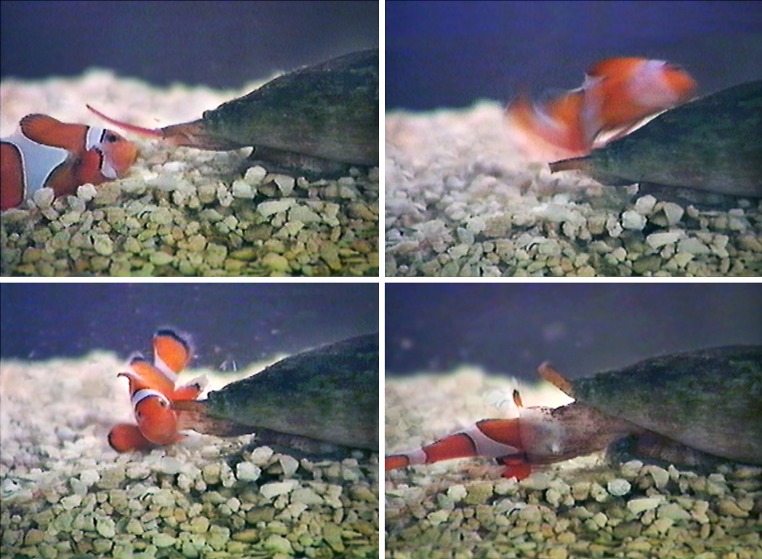
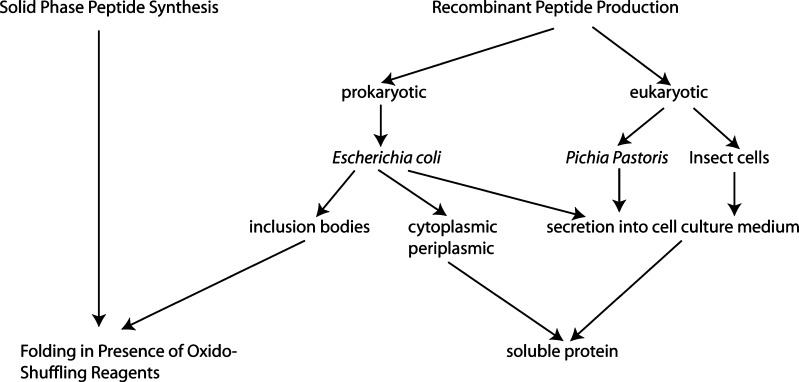
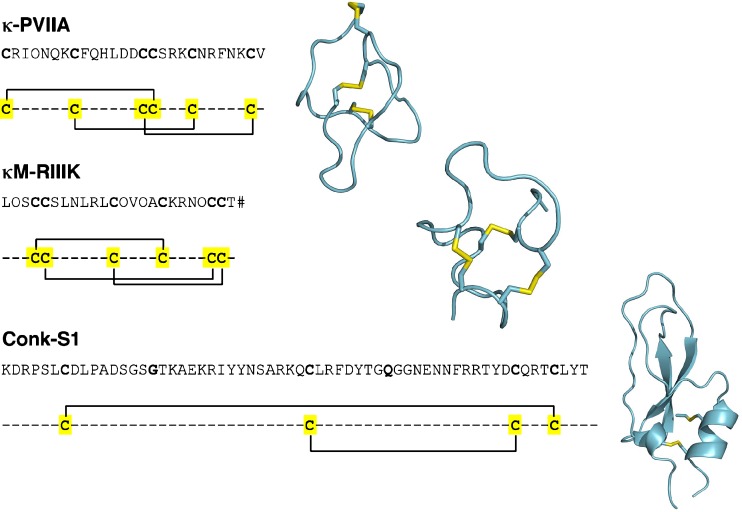
Cone snails are marine predators that use venoms to immobilize their prey. The venoms of these mollusks contain a cocktail of peptides that mainly target different voltage- and ligand-gated ion channels. Typically, conopeptides consist of ten to 30 amino acids but conopeptides with more than 60 amino acids have also been described. Due to their extraordinary pharmacological properties, conopeptides gained increasing interest in recent years. There are several conopeptides used in clinical trials and one peptide has received approval for the treatment of pain. Accordingly, there is an increasing need for the production of these peptides. So far, most individual conopeptides are synthesized using solid phase peptide synthesis. Here, we describe that at least some of these peptides can be obtained using prokaryotic or eukaryotic expression systems. This opens the possibility for biotechnological production of also larger amounts of long chain conopeptides for the use of these peptides in research and medical applications.
芋螺是利用毒液使猎物无法动弹的海洋捕食者。这些软体动物的毒液含有多种肽类混合物,主要作用于不同的电压门控和配体门控离子通道。通常,芋螺毒素由10至30个氨基酸组成,但也有超过60个氨基酸的芋螺毒素被描述过。由于其非凡的药理特性,芋螺毒素近年来越来越受到关注。有几种芋螺毒素正在进行临床试验,其中一种肽已获批用于治疗疼痛。因此,对这些肽的生产需求日益增加。到目前为止,大多数单个芋螺毒素是使用固相肽合成法合成的。在此,我们描述了至少其中一些肽可以使用原核或真核表达系统获得。这为生物技术生产大量长链芋螺毒素开辟了可能性,以便在研究和医学应用中使用这些肽。